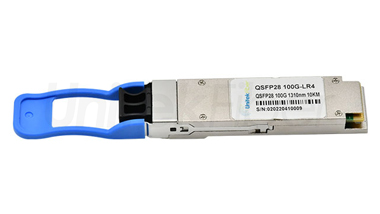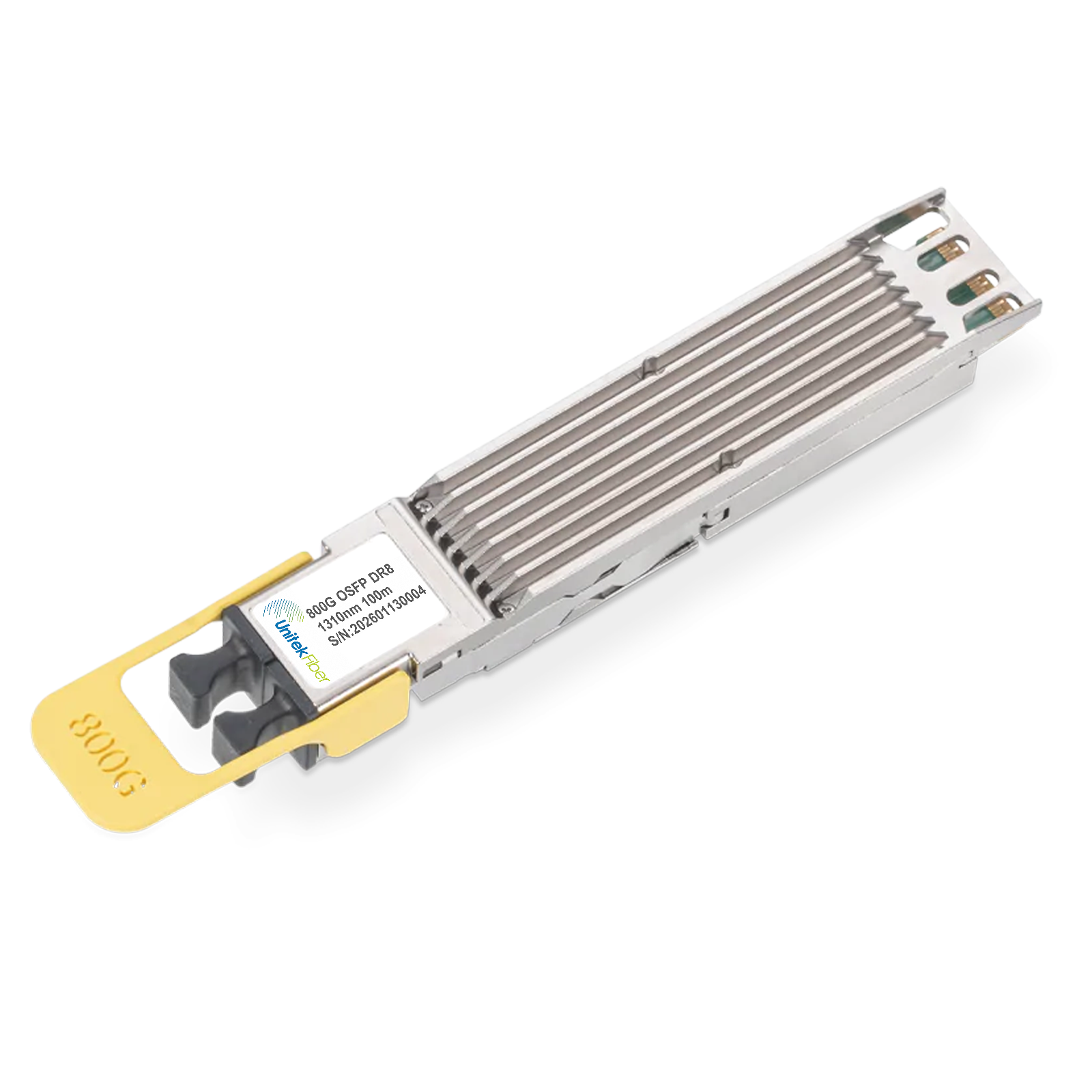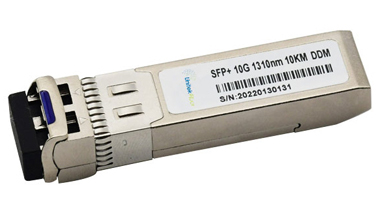

In modern network communication, data transmission speed and network stability are two key indicators for measuring network performance. With the development of technology, SFP optical transceivers have become an indispensable component in network equipment due to their small size, low cost, and good compatibility.
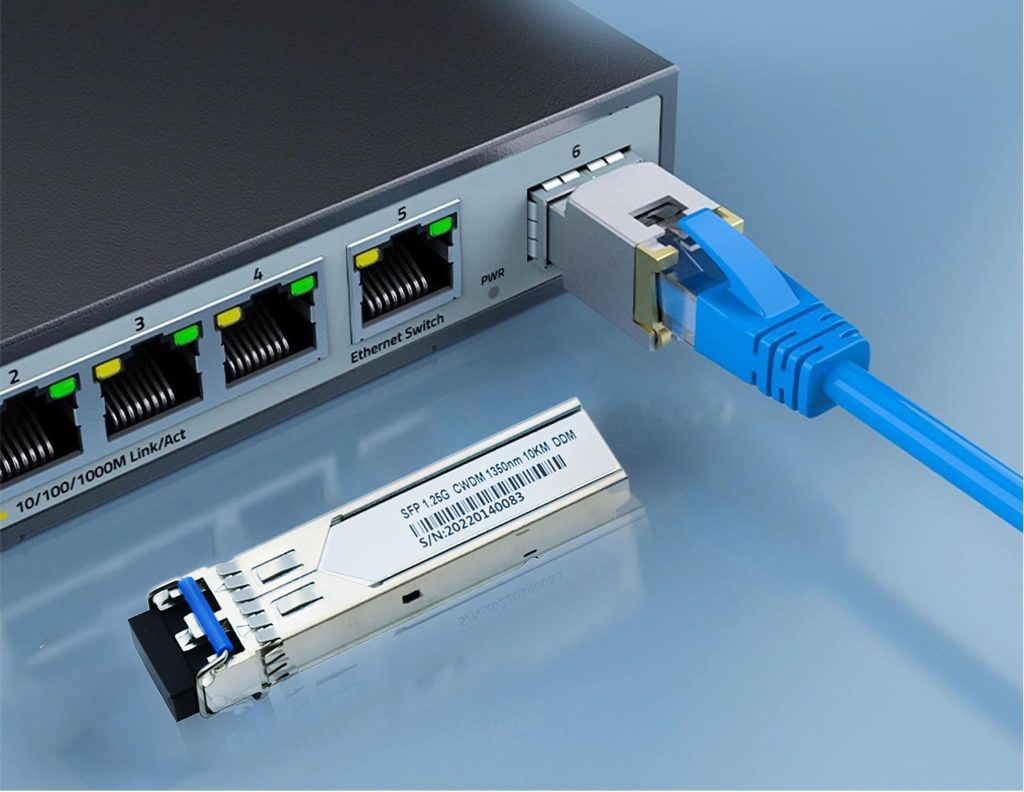
An SFP fiber optic transceiver is an transceiver module that conforms to the SFP (Small Form-factor Pluggable) standard and supports optical communication at various rates and distances. SFP fiber transceivers are typically used for high-speed network interfaces such as 10Gbps Ethernet (10GbE) and 40Gbps Ethernet (40GbE). Compared to traditional GBIC (Gigabit Interface Converter), SFP transceivers are smaller, consume less power, and are more cost-effective.
Transmission rate
The transmission rate supported by SFP optical transceivers directly affects network bandwidth. With technological advancements, SFP fiber transceivers have evolved from the initial 1Gbps to 10Gbps, 25Gbps, 40Gbps, and even 100Gbps. Higher transmission rates mean the network can handle more data traffic, thereby improving network performance.
Transmission distance
The transmission distance supported by SFP optical transceivers is also an important factor affecting network performance. Different SFP transceiver modules support different transmission distances, ranging from a few meters to tens of kilometers. For networks requiring long-distance transmission, selecting the appropriate SFP fiber optic transceiver can ensure stable signal transmission and reduce signal attenuation and latency.
Compatibility and interoperability
The compatibility and interoperability of SFP optical transceivers are crucial for network scalability and flexibility. The SFP standard allows fiber optic transceivers from different manufacturers to be used on devices with the same interface, which helps reduce costs and simplify network upgrades. Furthermore, SFP transceivers support a variety of transmission media, such as single-mode fiber, multimode fiber, and copper cable, further enhancing network flexibility.
Energy consumption and heat dissipation
As network devices process increasing amounts of data, energy consumption and heat dissipation become critical factors affecting network performance. SFP fiber optic transceivers, due to their miniaturized design, typically offer lower power consumption and better heat dissipation. This helps reduce the energy consumption of network devices, extend their lifespan, and lower maintenance costs.
Signal quality and reliability
The signal quality and reliability of SFP fiber optic transceivers directly affect network stability. High-quality SFP optical transceivers can reduce bit error rate and improve data transmission accuracy. Furthermore, some SFP fiber optic transceivers also have diagnostic functions, enabling real-time monitoring of the transceiver's status, timely detection and resolution of problems, thereby improving network reliability.
With the rapid development of data centers and high-speed networks, SFP fiber optic transceivers are also constantly improving. As network demands grow, the speed of SFP transceivers is continuously increasing. For example, SFP28 and QSFP28 fiber transceivers now support transmission rates of 25Gbps and 100Gbps, respectively, to meet the need for higher bandwidth. Secondly, to meet the demands of long-distance transmission, the transmission distance of SFP optical transceivers is also constantly increasing. Some new SFP transceivers can now support transmission distances exceeding 100 kilometers, which is particularly important for remote data centers and wide area networks (WAN) connections. Furthermore, with advancements in manufacturing technology, the cost of SFP fiber optic transceivers is continuously decreasing. This makes high-speed network upgrades more affordable for more enterprises and data centers, thereby improving overall network performance. In addition, to accommodate more compact network equipment designs, the size of SFP transceiver modules is also shrinking. For example, QSFP (Quad Small Form-factor Pluggable) and QSFP-DD (Quad Small Form-factor Pluggable Double Density) optical transceivers have emerged, providing higher port density in a smaller space.
SFP optical transceivers are key components in network communication, directly impacting network performance. Selecting appropriate SFP transceivers can improve network transmission rates, stability, and reliability, while reducing energy consumption and costs. Furthermore, SFP fiber transceivers are constantly evolving and will play an even more important role in modern network construction. As a leading supplier in the industry, UnitekFiber offers a wide range of high-quality optical transceivers to meet diverse network needs. Our extensive selection of transceiver module covers various speeds, transmission distances, and interface types, enabling us to provide tailored solutions for various industries.
 5G 6G Fronthaul & Backhaul
View More
5G 6G Fronthaul & Backhaul
View More
 Data Center & Cloud Interconnect
View More
Data Center & Cloud Interconnect
View More
 Enterprise & Industrial Optical
View More
Enterprise & Industrial Optical
View More
 FTTx & Access Solutions
View More
FTTx & Access Solutions
View More
 Metro & Access Networks
View More
Metro & Access Networks
View More
 Optical Cabling Systems
View More
Optical Cabling Systems
View More
 Optical Transceivers & Interconnect
View More
Optical Transceivers & Interconnect
View More
 WDM & High-Capacity Transmission
View More
WDM & High-Capacity Transmission
View More
+86-755-21034367