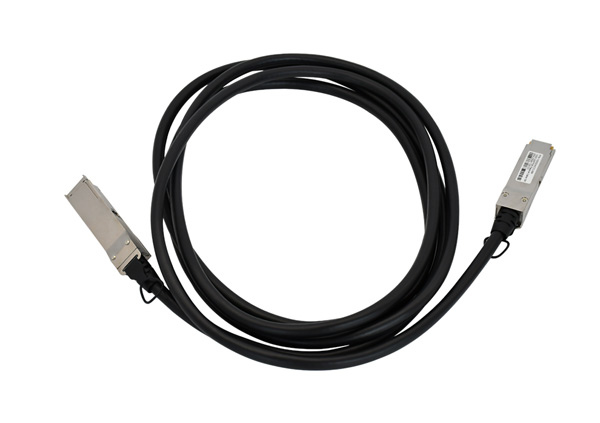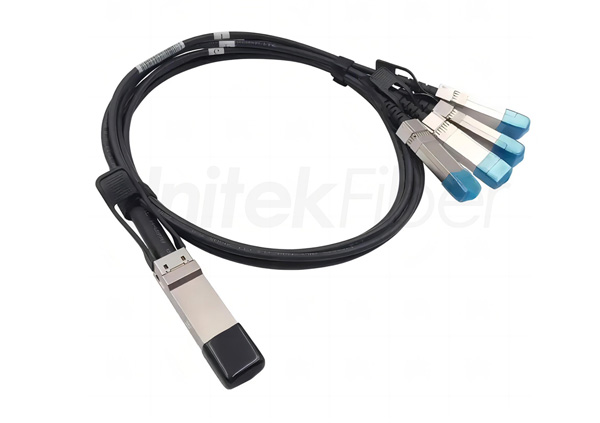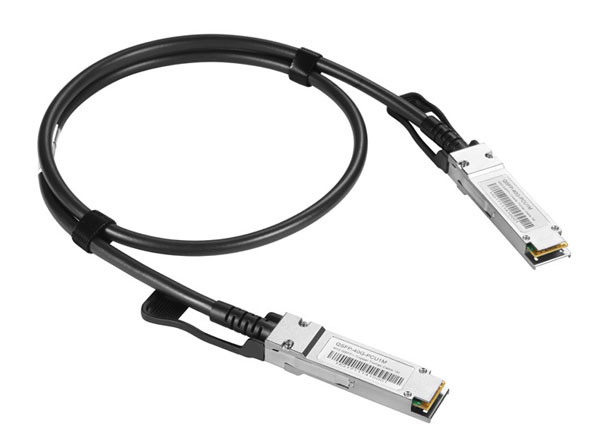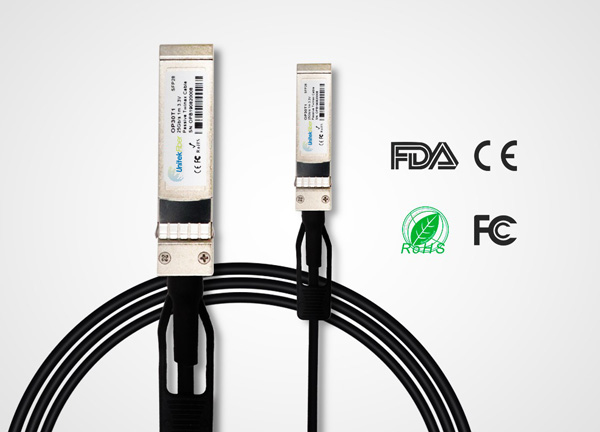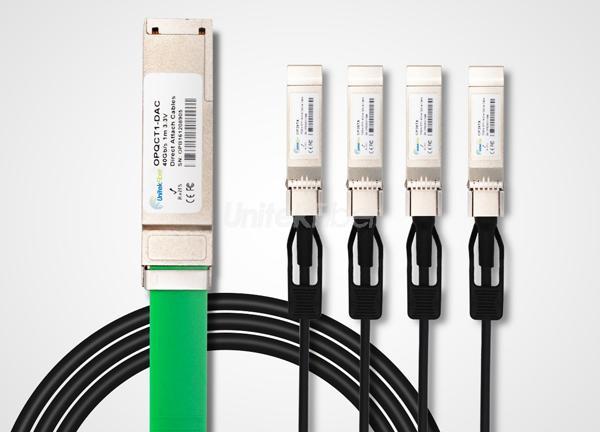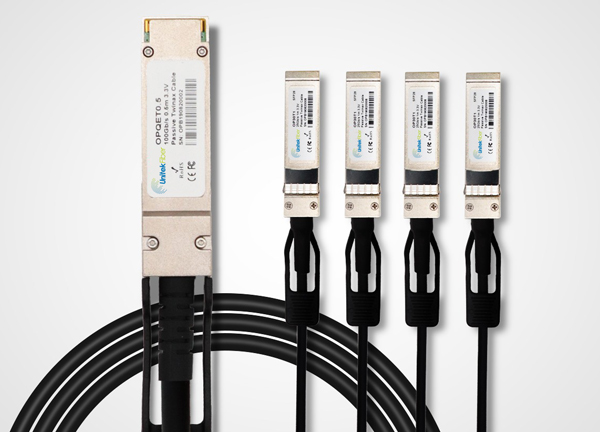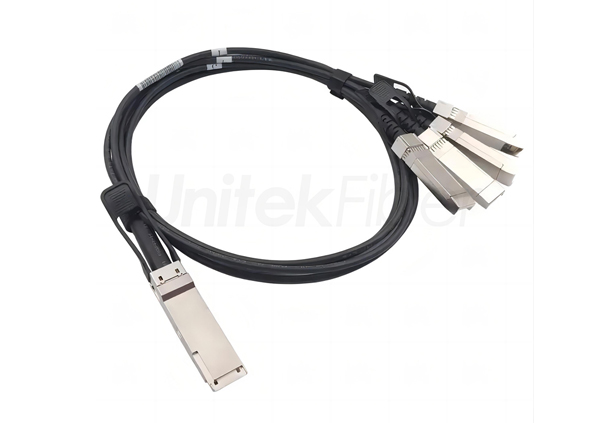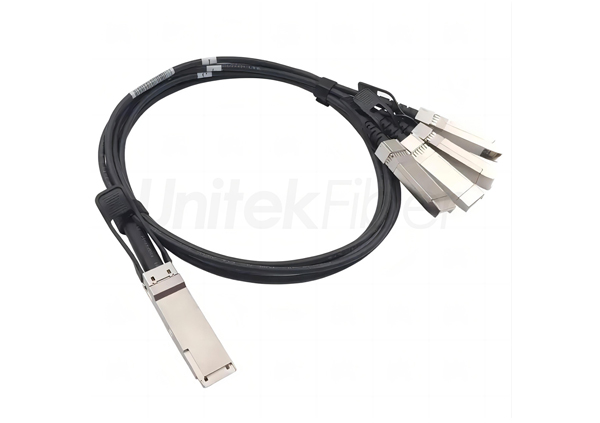

Direct Attach Copper (DAC) cables are high-performance twinax copper assemblies designed for ultra-short-reach interconnections (up to 7m) in data centers. Utilizing differential signal transmission technology, DACs provide a cost-effective, "zero-latency" alternative to optical transceivers for ToR (Top-of-Rack) and server-to-switch links. UnitekFiber, a professional DAC cable manufacturer, provides a comprehensive range of customized 10G SFP+, 25G SFP28, 40G QSFP+, and 100G QSFP28 DAC trunk and breakout cables tailored for high-density computing environments.
 5G 6G Fronthaul & Backhaul
View More
5G 6G Fronthaul & Backhaul
View More
 Data Center & Cloud Interconnect
View More
Data Center & Cloud Interconnect
View More
 Enterprise & Industrial Optical
View More
Enterprise & Industrial Optical
View More
 FTTx & Access Solutions
View More
FTTx & Access Solutions
View More
 Metro & Access Networks
View More
Metro & Access Networks
View More
 Optical Cabling Systems
View More
Optical Cabling Systems
View More
 Optical Transceivers & Interconnect
View More
Optical Transceivers & Interconnect
View More
 WDM & High-Capacity Transmission
View More
WDM & High-Capacity Transmission
View More
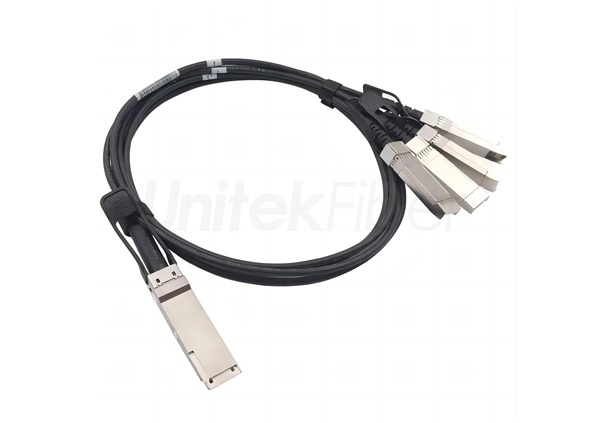
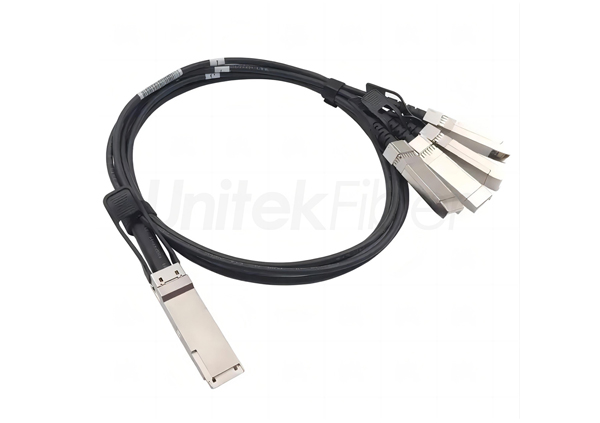
Direct attach copper cable (DAC) is a high-speed cable used to connect devices within a data center. It consists of a twinaxial copper cable with optical modules such as SFP+, SFP28, QSFP+, QSFP56 or QSFP28 on both ends, which can be connected to devices such as switches. DAC cable integrates optical modules and optical cables to avoid the possibility of optical ports being contaminated to improve reliability. High-speed DAC cables are usually used for short-distance data transmission, such as within a server rack or between adjacent racks. UnitekFiber not only provides 40G/100G DAC trunk cable, but also breakout DAC cable, which is connected one port to up to 4 other ports, such as 40G-4*10G breakout DAC cable, 100G-4*25G breakout DAC cable. Learn the difference between AOC cable and DAC cable.
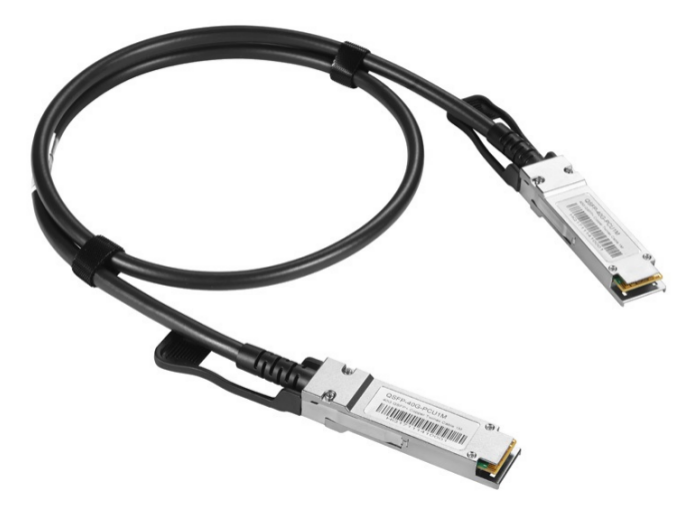
DAC cables are designed to integrate optical modules and optical cables, which is a durable structure and direct connection design help improve the stability of network connections and minimize the risk of signal loss or interruption. DAC cable could be hot-swappable, which simplifies the network setup process, reduces complexity, and simplifies connection configuration. DAC cable will provide simpler installation, maintenance, and upgrades, thereby improving the overall flexibility of network infrastructure.
With the direct data connection provided by DAC cable, data can be transmitted at extremely high speeds to meet the needs of bandwidth-intensive applications and services. UnitekFiber’s DAC cable offers a high-speed data transmission capabilities, supporting various data rates like 10Gbps, 25Gbps, 40Gbps, and 100Gbps. DAC cables enable low-latency and high-bandwidth connectivity within short distances, depending on the copper cable length specification (usually no more than 10 meters). The short reach limitation makes DAC cables suitable for interconnecting devices within the same rack or adjacent racks in a data center. Learn more about the applications of AOC cables and DAC cables in data centers.
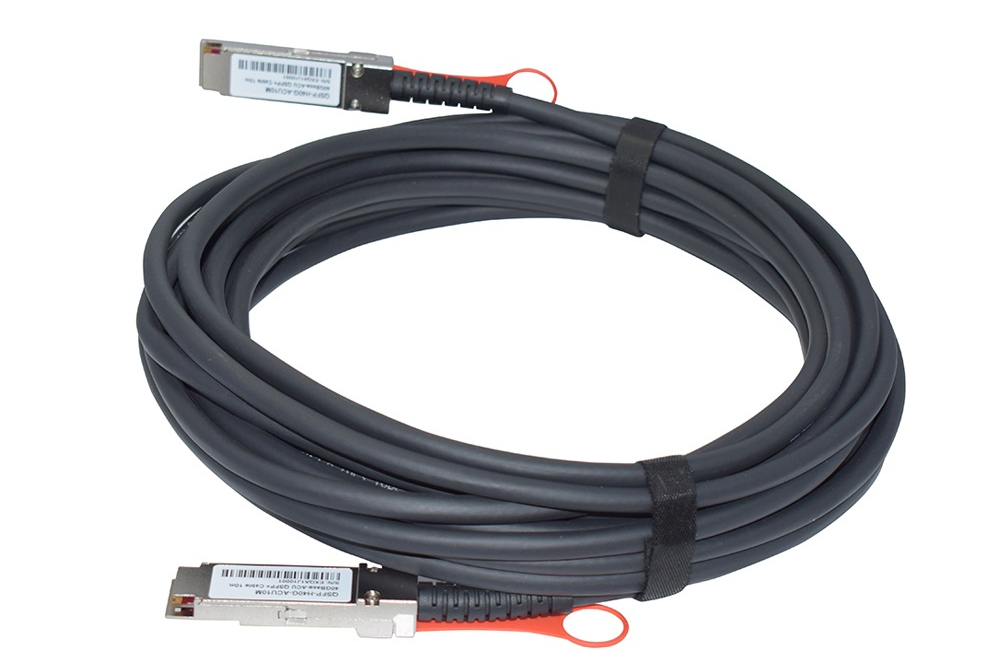
In the rapidly evolving landscape of AI supercomputing and Storage Area Networks (SAN), DAC cables remain the industry standard for short-range connectivity due to their unparalleled reliability and energy efficiency.
Energy Efficiency: Unlike Active Optical Cables (AOC), passive DAC cables consume near-zero power, significantly reducing the total electricity and cooling overhead of your data center.
Low Latency Architecture: The direct copper path eliminates the need for electro-optical conversion, providing the lowest possible latency for high-frequency trading and real-time data processing.
Massive Portfolio: We offer a serial of high-bandwidth solutions, including:
Trunk DAC Cables: 25G, 40G, 100G, and next-gen 400G configurations.
Breakout DAC Cables: Highly flexible 40G to 4×10G and 100G to 4×25G assemblies for efficient port migration.
Compatibility Hardening: Our cables are pre-coded to ensure 100% "plug-and-play" compatibility with major OEM brands like Cisco, Arista, and Mellanox.
UnitekFiber is a trusted and reputable supplier specializing in providing a wide range of fiber optic product for various networking and data communication applications. Whether you require DAC cable, AOC cable or transceiver module for data center. UnitekFiber has got you covered. For any inquiries or further information, please don't hesitate to reach out to us at sales@unitekfiber.com.
The Ultimate Guide to Direct Attach Copper (DAC) Cables
What is the functions of DAC Cable?
Data Center Transmission Solution: DAC Cable VS AOC Cable
DAC cables are the preferred choice for intra-rack connectivity (under 7m) due to three main factors: Cost, Power, and Latency. DACs are significantly less expensive than Active Optical Cables (AOC). They consume near-zero power (<0.1W for passive types), which improves data center PUE. Furthermore, because there is no electro-optical conversion, DACs offer zero-latency performance, which is critical for high-frequency trading.
The 10G DAC cable max length depends on whether it is passive or active. A passive 10G SFP+ DAC cable typically reaches up to 5 meters while maintaining signal integrity. If you require a 10m DAC cable, you must use an Active DAC or move to an AOC solution, as signal attenuation in copper becomes too high for passive transmission beyond 7 meters.
Yes, the AWG (American Wire Gauge) is critical for signal loss. A 5m DAC cable usually requires a thicker 24AWG or 26AWG wire to maintain signal integrity over the distance. Shorter cables, like a 1m DAC cable, can use thinner 30AWG wire, which is much more flexible and improves airflow within the server rack.
Yes. As AI supercomputing demands more bandwidth, the 800G DAC cable (utilizing QSFP-DD or OSFP form factors) is entering the market. These cables use PAM4 modulation to achieve 100Gbps per lane. However, due to extreme high-frequency signal loss, the reach of a passive 800G DAC is currently limited to about 1-2 meters, making them ideal for intra-rack AI server-to-switch links.
The primary difference lies in the signal conditioning electronics. A Passive DAC cable contains no active components and relies on the host port for signal driving, typically limited to 5 meters. An Active DAC cable (ACC) includes a silicon chip in the connector to amplify and equalize the signal, extending the reach of a 10G DAC cable max length to 10 meters and allowing for thinner, more flexible wiring.
Yes. A 100G QSFP28 DAC cable is frequently used in breakout DAC cable configurations, such as 100G to 4x25G SFP28. This allows a single 100Gbps switch port to connect to four 25Gbps server NICs. This is an industry-standard method for optimizing port density and reducing cabling complexity in Leaf-Spine architectures.
Physically, yes. A 25G SFP28 DAC cable uses the same form factor as 10G SFP+. However, compatibility depends on the switch's firmware. Most 25G ports can be manually configured to 10G speed via the CLI (Command Line Interface). At Unitekfiber, we provide customized EEPROM coding to ensure our 25g dac cable functions seamlessly in multi-rate environments.
The most common reason is a compatibility/coding mismatch. Many major switch OEMs (like Cisco, Arista, or HP) require specific vendor-locked codes in the cable's EEPROM. Unitekfiber specializes in dac cable wholesale with hardened coding, ensuring our 40g qsfp+ dac cable and 100gb dac cable products are 100% plug-and-play recognized by your specific hardware.

+86-755-21034367