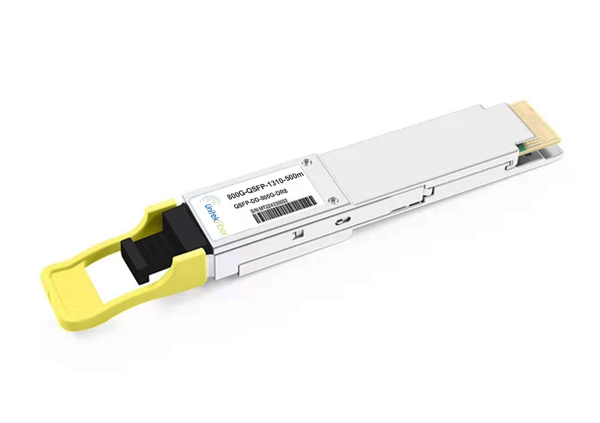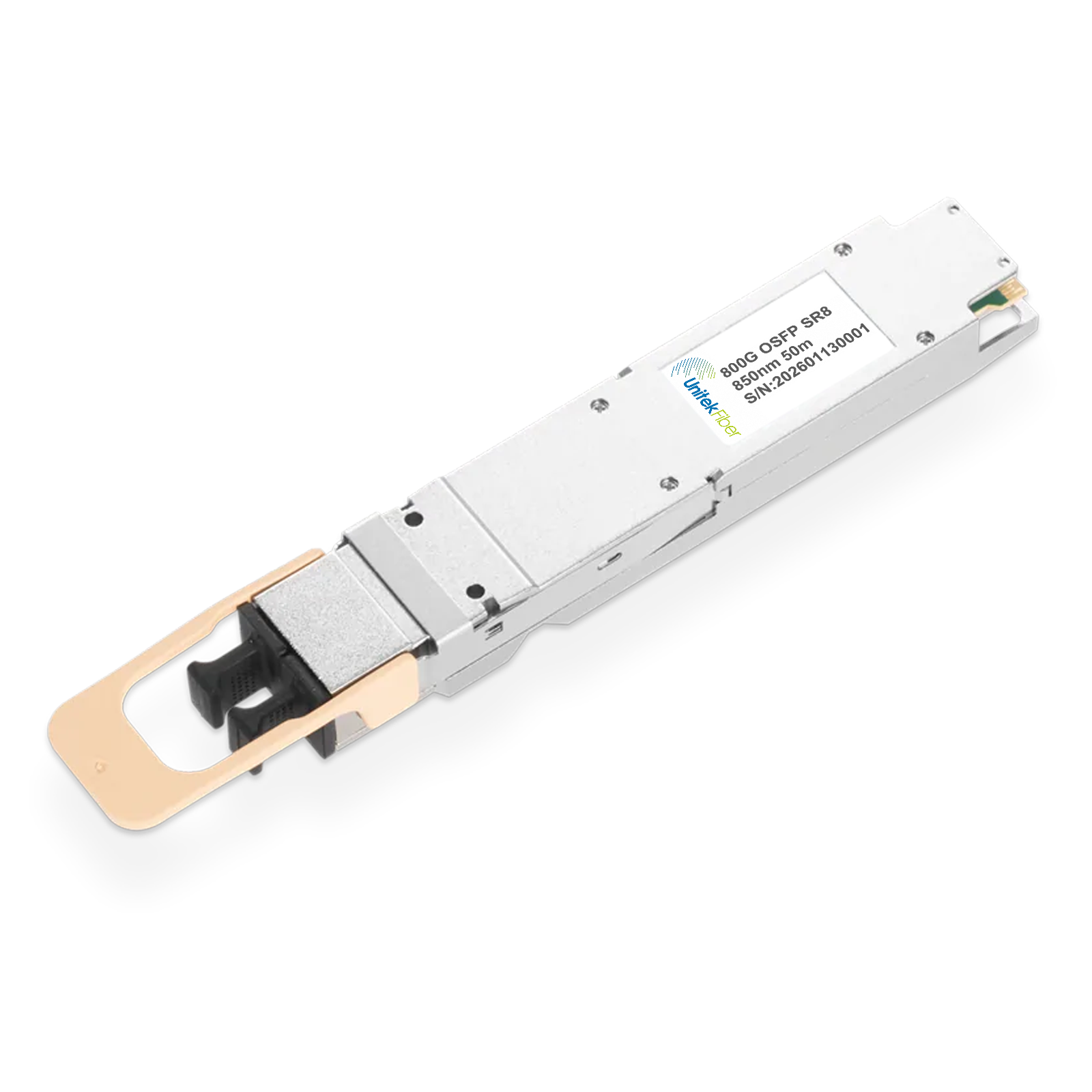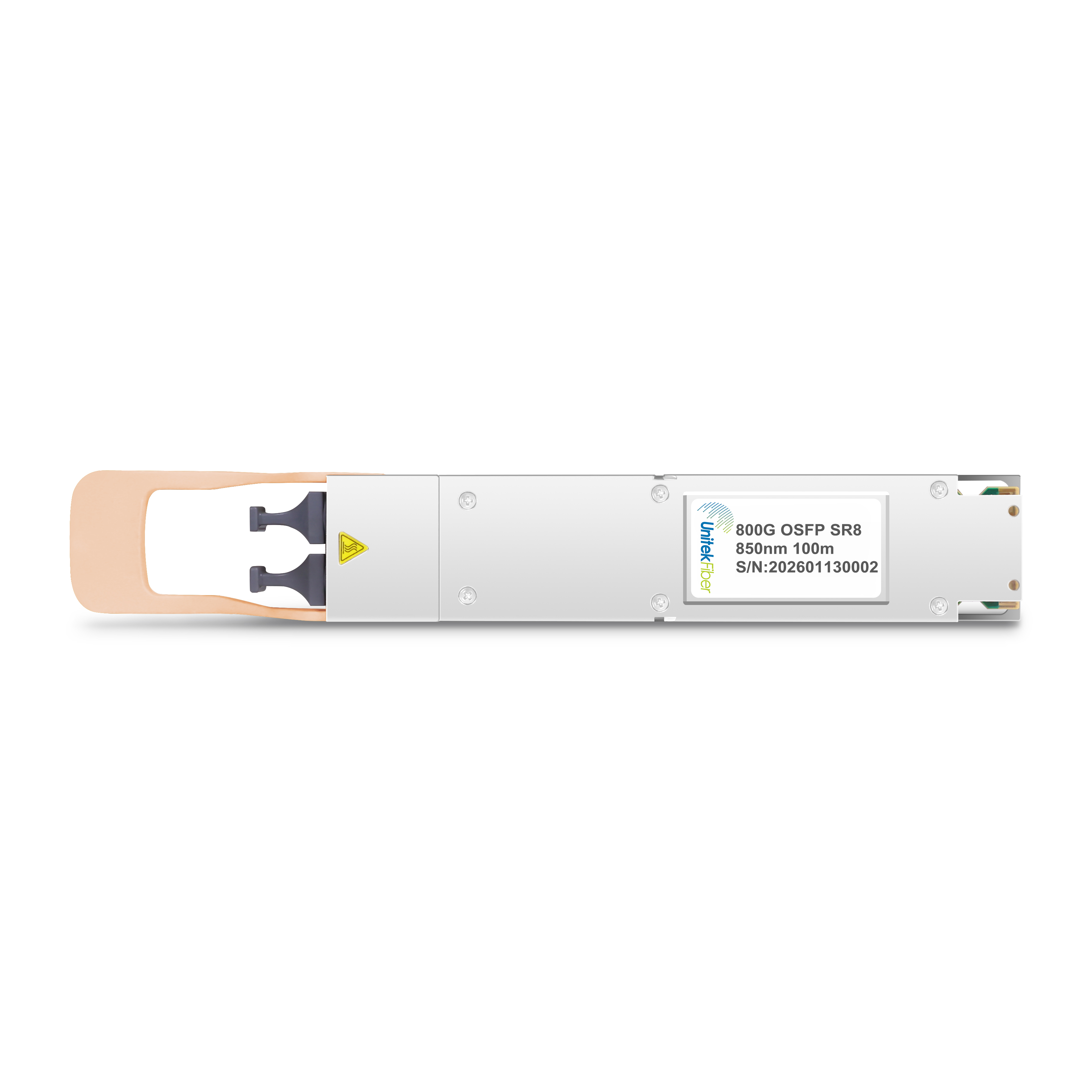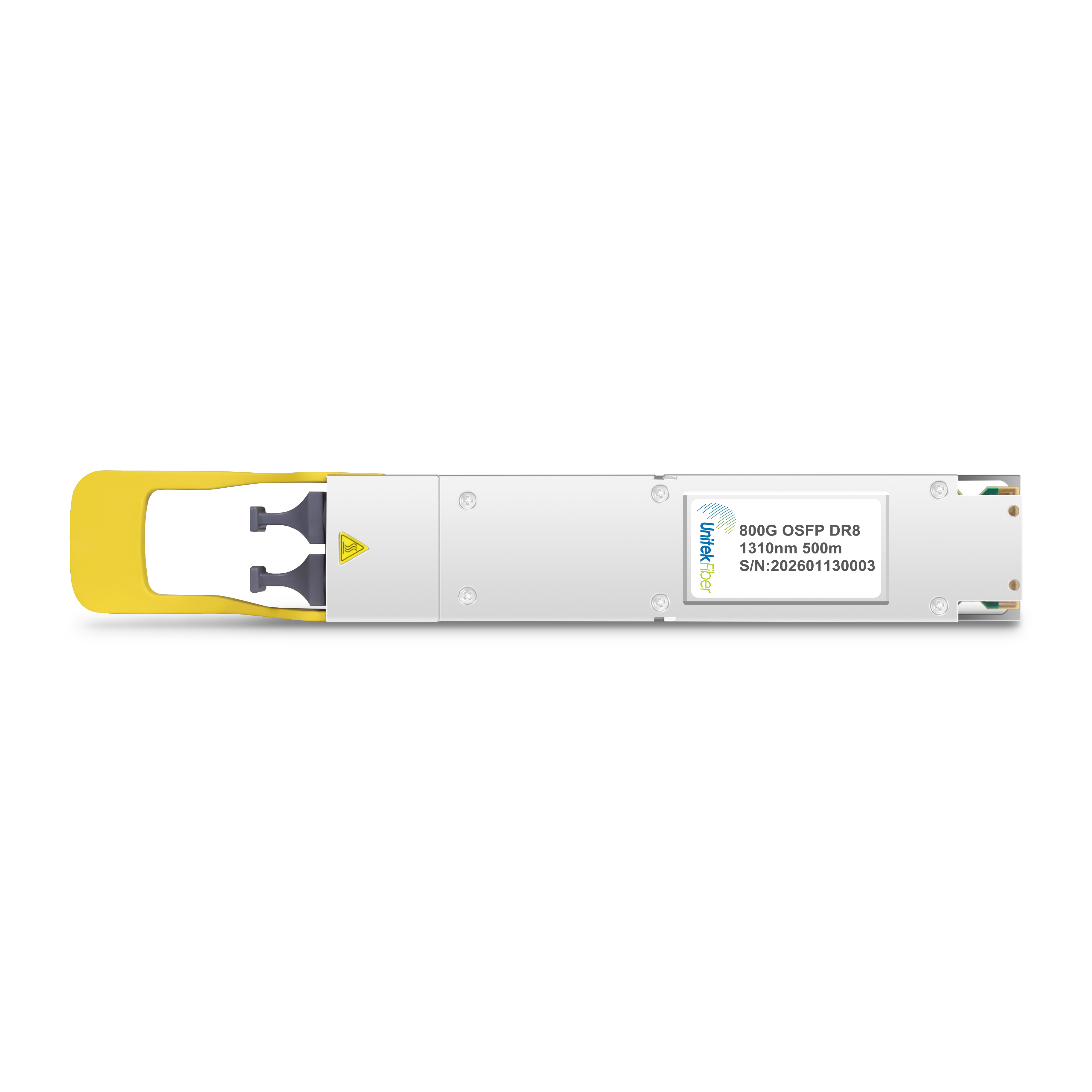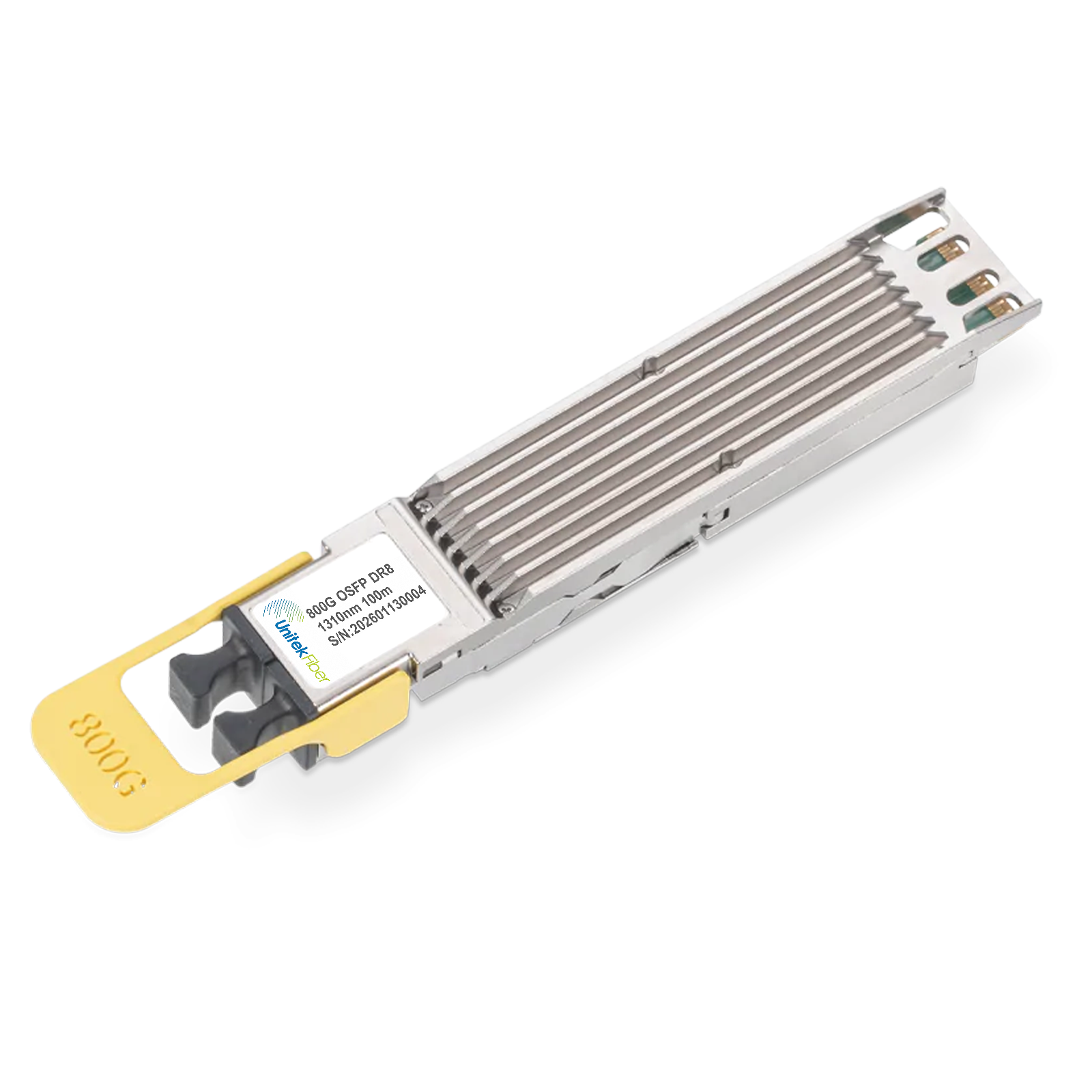

An 800G Optical Transceiver is a high-speed pluggable module designed for 800Gbps data transmission, primarily using 112G PAM4 signaling across 8 lanes. These modules are the backbone of AI-driven data centers, available in OSFP and QSFP-DD800 form factors. UnitekFiber provides a comprehensive 800G portfolio, including SR8, DR8, and 2xFR4 solutions, optimized for ultra-low latency and maximum thermal efficiency in high-density GPU clusters.
 5G 6G Fronthaul & Backhaul
View More
5G 6G Fronthaul & Backhaul
View More
 Data Center & Cloud Interconnect
View More
Data Center & Cloud Interconnect
View More
 Enterprise & Industrial Optical
View More
Enterprise & Industrial Optical
View More
 FTTx & Access Solutions
View More
FTTx & Access Solutions
View More
 Metro & Access Networks
View More
Metro & Access Networks
View More
 Optical Cabling Systems
View More
Optical Cabling Systems
View More
 Optical Transceivers & Interconnect
View More
Optical Transceivers & Interconnect
View More
 WDM & High-Capacity Transmission
View More
WDM & High-Capacity Transmission
View More
As an engineer, I advise clients to choose based on their switch architecture. OSFP is dominating the AI sector, while QSFP-DD800 maintains enterprise compatibility.
| Feature | 800G OSFP | 800G QSFP-DD800 |
| Thermal Design | Integrated Heat Sink (Superior) | Riding Heat Sink (Standard) |
| Power Capacity | Up to 18W - 20W | Up to 14W - 16W |
| Backward Compatibility | Limited (Requires Adapter) | High (SFP/QSFP Compatible) |
| Primary Use Case | InfiniBand / AI Compute | Ethernet / Hyperscale Cloud |
| Connector Type | MPO-16 / Dual LC | MPO-16 / Dual LC |
Get more ideas about How to Choose the Right 800G Optical Transceiver?
800G optical modules achieve their massive throughput by utilizing 8 lanes of 112.5Gbps PAM4 modulation. The signal integrity is managed by a sophisticated 7nm/5nm DSP (Digital Signal Processor), ensuring a Bit Error Rate (BER) that meets IEEE 802.3ck standards.
800G SR8 (Short Reach): Up to 100m via OM4 MMF. Best for Intra-rack AI server-to-switch links.
800G DR8 (500m) / DR8+ (2km): Uses Silicon Photonics (SiPh) and SMF. Ideal for Leaf-Spine architectures.
800G 2xFR4: Combines 2x400G CWDM4 interfaces into one 800G port, saving fiber duct space over 2km.
At 800G speeds, the biggest challenge isn't just data—it's Heat and Power. We are seeing a major shift towards LPO (Linear Drive Pluggable Optics) which removes the DSP to cut power consumption by up to 40%. At UnitekFiber, we ensure our 800G modules are optimized for the airflow requirements of modern liquid-cooled and air-cooled AI racks.
800G optics are the critical link for Large Language Model (LLM) training, High-Frequency Trading, and Terabit Ethernet backbones. They enable the massive I/O required by NVIDIA H100/B200 and AMD Instinct™ clusters. Explore our
The jump from 400G to 800G requires careful planning of your FEC (Forward Error Correction) settings and thermal budget. UnitekFiber’s engineering team can provide interoperability testing reports and custom coding for Arista, Cisco, and NVIDIA-Mellanox environments to ensure a seamless deployment.
Consult with our 800G Engineers:
Direct Attach Copper(DAC) Cable
800G Optical Transceivers for Data Centers And The AI Era
How Can 800G Optical Modules Power Future Network Innovations?
Why do AI Data Centers Need 400G and 800G Optical Module?
The Differences between 100G, 400G, and 800G Optical Transceivers
The industry primarily uses two form factors: OSFP (Octal Small Form-factor Pluggable) and QSFP-DD800 (Quad Small Form-factor Pluggable Double Density). OSFP is favored for its superior thermal management in AI compute clusters, while QSFP-DD800 offers backward compatibility with legacy QSFP-based systems.
All 800G transceivers utilize 112G PAM4 (Pulse Amplitude Modulation 4-level) signaling per lane. By using 8 lanes of 112G PAM4, the module achieves a total aggregate bandwidth of 800Gbps. This requires advanced DSP (Digital Signal Processing) for error correction.
Yes. Through breakout cabling (AOC/DAC/Fan-out), a single 800G port can be split into 2x400G (QSFP112) or 8x100G (SFP112). This "breakout mode" is critical for connecting 800G core switches to 100G/400G leaf nodes.
No, they are physically different. OSFP is slightly wider and taller with an integrated heat sink. However, many new 800G switches offer OSFP ports that can support QSFP-DD modules via specialized adapters.
Yes, 800G SR8 and DR8 typically use MPO-16 or MPO-12 (APC) connectors to manage the 8 parallel transmit and 8 receive lanes.
800G SR8 (Short Reach) uses multimode fiber (OM3/OM4) for distances up to 60m-100m, typically within a single rack. 800G DR8 (Data center Reach) utilizes single-mode fiber (PSM8) with Silicon Photonics for distances up to 500m, ideal for spine-leaf interconnects.
Depending on the reach and technology (EML vs. SiPh), an 800G OSFP module typically consumes between 14W and 18W. UnitekFiber’s latest 800G designs focus on reducing this to under 16W to mitigate thermal stress in high-density AI data centers.
The 800G 2xFR4 (also known as 800G-FR8) uses CWDM technology over single-mode fiber to achieve a reach of 2km. This is the standard solution for connecting data centers within a campus environment.

+86-755-21034367