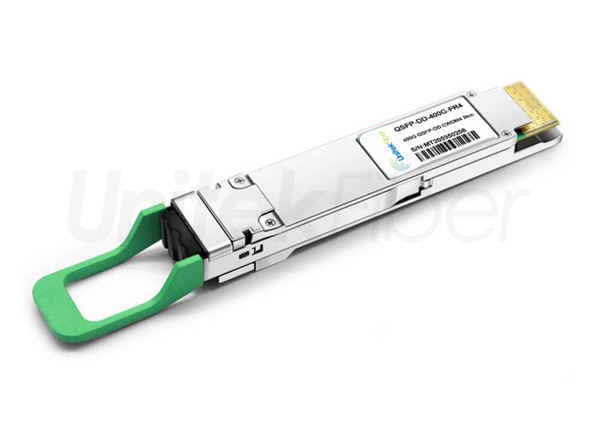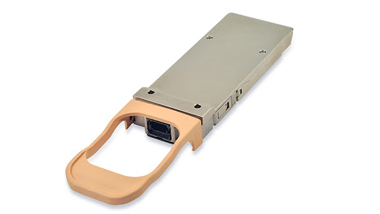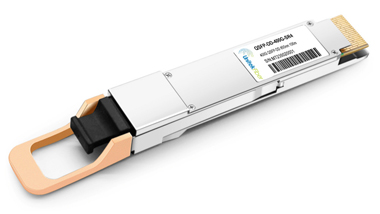

Against the backdrop of technological innovation and data center development, the 400G DR4 fiber transceiver is becoming a focal point in the industry as a core device for increasing network bandwidth and reducing latency.
With the continuous growth of global data traffic, data centers and cloud networks are facing demands for higher bandwidth, lower latency, and more scalable interconnections. Among various standards, the 400G DR4 fiber optic transceiver is widely adopted due to its cost-effectiveness and high-performance characteristics.
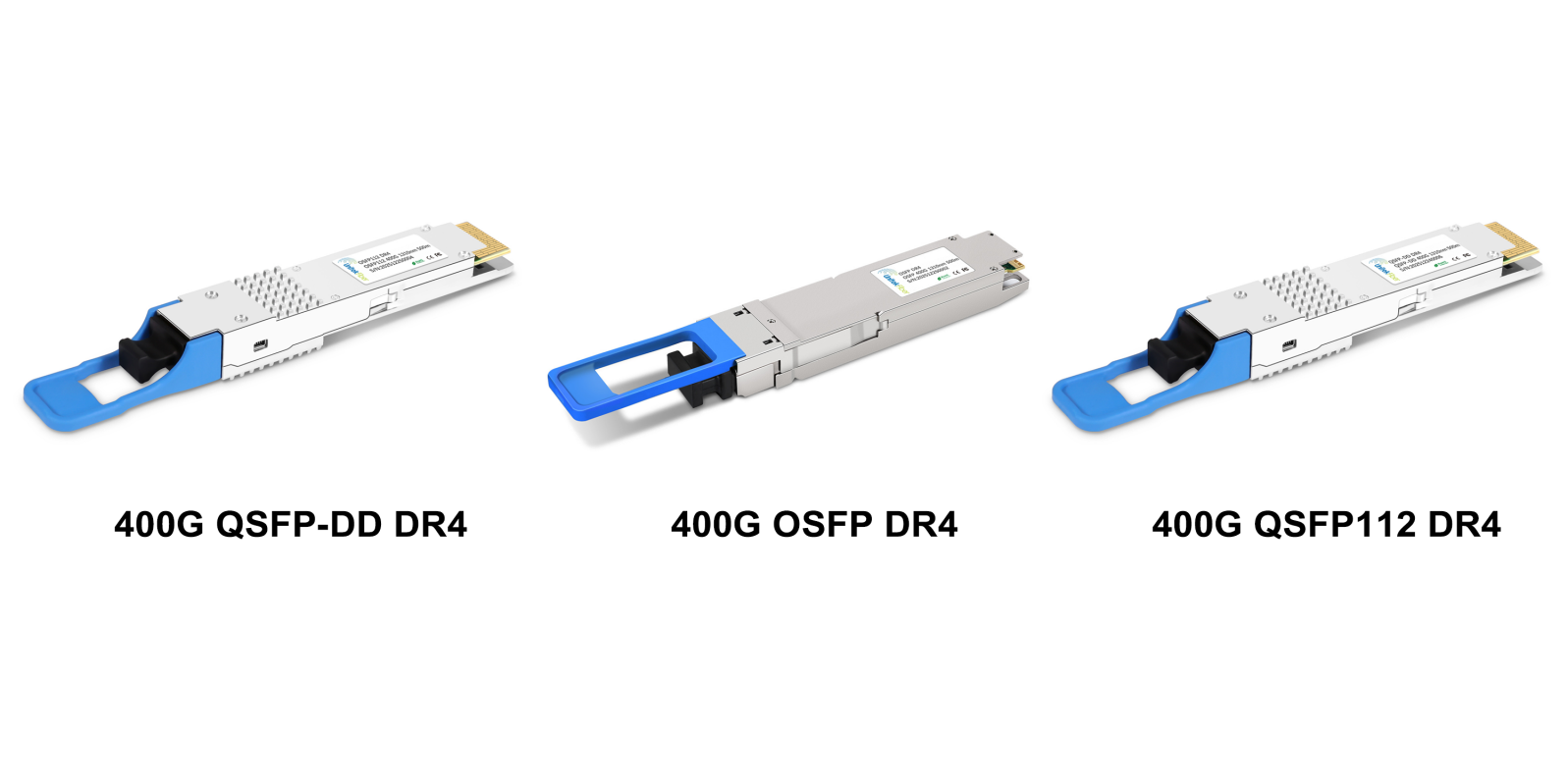
This transceiver is designed to comply with the IEEE 400GBASE-DR4 specification, providing a cost-effective, energy-efficient, and high-performance connectivity solution for next-generation networks. Most 400G DR4 transceiver modules use the QSFP-DD (Quad Small Form-factor Pluggable Double Density) package, while OSFP and QSFP-DD versions are also available to meet the needs of different vendors.
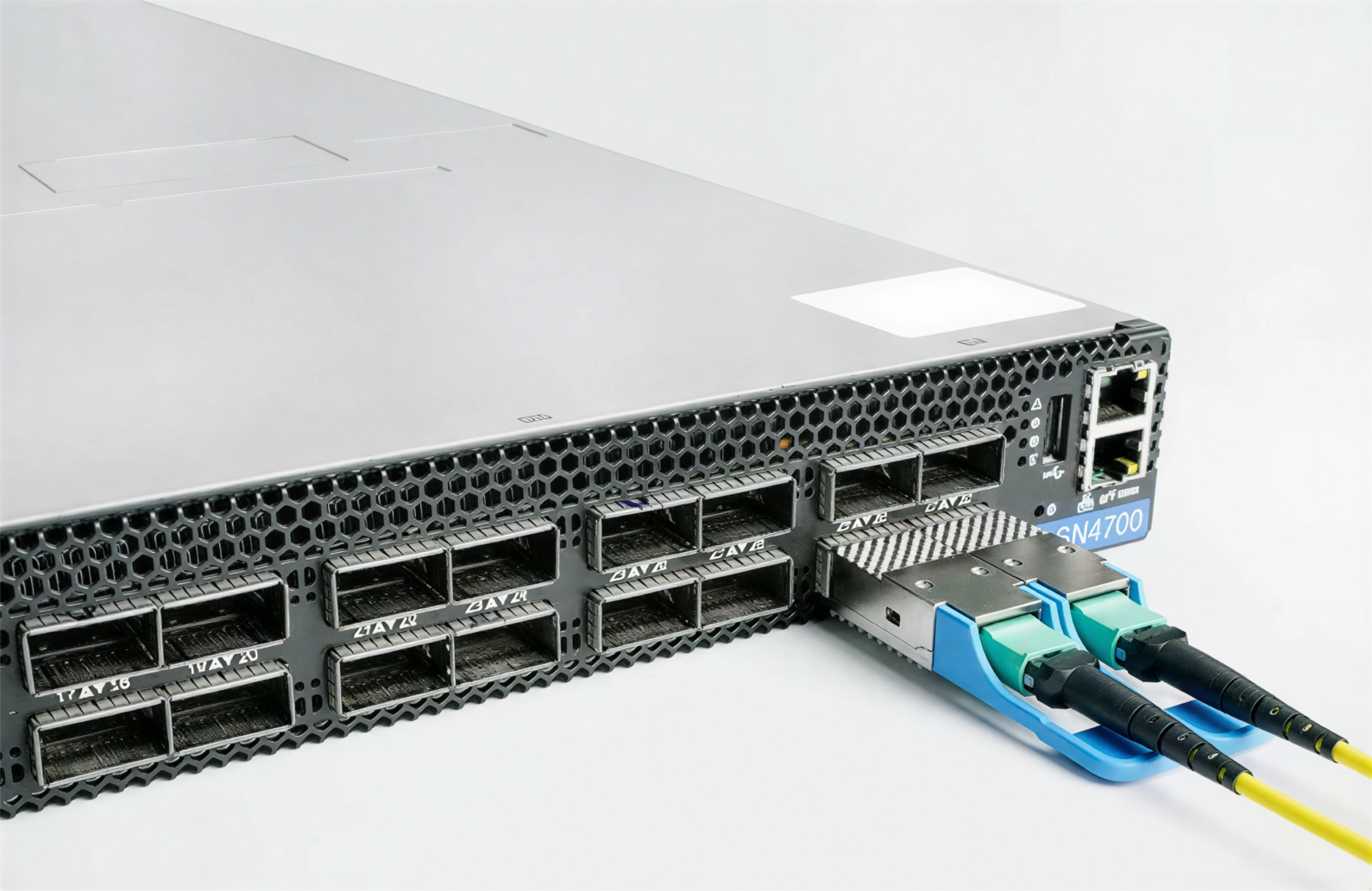
According to the IEEE 802.3bs standard, the 400GBASE-DR4 optical transceivers’ specification defines the following characteristics:
Data Rate: 400Gbps
Interface: QSFP-DD, OSFP, QSFP112
Connector Type: MPO-12/APC
Optical Transmission Distance: Up to 500m over single-mode fiber
Breakout Support: 4 × 100G connections (to 100G DR1 modules)
Compliance: MSA standards, such as 400G DR4 MSA
This means that a single 400G DR4 fiber optic transceiver can be deployed as a 400G link or split into 4 × 100G DR1 links, providing flexible connectivity for leaf-spine architectures.
400G DR4 and 400G FR4 are two common types of 400G transceiver modules, differing significantly in transmission distance and technical implementation. The 400G DR4 optical transceiver uses single-mode fiber and achieves data transmission through four parallel 100G channels, with a maximum transmission distance of up to 500 meters, making it more suitable for short-distance connections within data centers. The 400G FR4 optical transceiver, on the other hand, uses CWDM4 technology, based on wavelength multiplexing of four wavelengths, supporting longer transmission distances of up to 2 kilometers, making it suitable for slightly longer-distance interconnection scenarios. In summary, DR4 optical transceivers are primarily used for connections within data centers, while FR4 transceivers are suitable for scenarios requiring longer transmission distances.
400G DR4 optical transceivers are high-performance transceivers designed for high-speed data transmission over single-mode fiber. Due to their capabilities and characteristics, these transceivers are commonly used in various applications where large bandwidth and high-speed connectivity are essential. Here are some of the primary applications for 400G DR4 optical transceivers:
Short to Mid-range Connections: 400G DR4 fiber transceivers are well-suited for interconnecting network equipment within a data center, such as switches, routers, and servers, over distances up to 500 meters. They offer high bandwidth and low latency, making them ideal for high-performance computing (HPC) environments, cloud infrastructure, and storage networks.
Top-of-Rack (ToR) and End-of-Row (EoR) Connectivity: They are often deployed in data center architectures where equipment needs to communicate within racks or between rows of racks, facilitating fast and reliable data transfer.
Cluster Interconnects: HPC environments, which often consist of large clusters of compute nodes, rely on low-latency, high-bandwidth interconnects to enable fast data processing. 400G DR4 transceivers are ideal for these environments, providing the necessary throughput to support large-scale simulations, scientific research, and other demanding tasks.
Supercomputing Facilities: Supercomputers require ultra-fast interconnects to ensure that vast amounts of data are transferred between processors without bottlenecks. 400G DR4 fiber optic transceivers provide the necessary speed and reliability for such facilities.
Data Aggregation Networks: ISPs and telecom companies that need to aggregate traffic from multiple locations and transport it over medium distances (up to 500 meters) can deploy 400G DR4 fiber transceivers to efficiently route data within their networks.
High-speed Enterprise Backbone: Large enterprises that operate private data centers or have multiple facilities requiring high-speed communication can use 400G DR4 optical transceivers to support their internal networks. This ensures fast data exchange between locations, improving productivity and reducing latency for business-critical applications.
Data-Centric Workloads: AI and machine learning workloads require high throughput for processing large datasets in real-time. 400G DR4 transceivers provide the necessary bandwidth to support high-speed data exchange between compute nodes, storage systems, and GPUs used for AI/ML training and inference.
Most 400G DR4 fiber optic transceivers use the [QSFP-DD] form factor because it is backward compatible with existing 100G/200G optical equipment. However, an OSFP DR4 version is also available, offering improved thermal performance and supporting future 800G scalability.
Both form factors adhere to the 400GBASE-DR4 IEEE standard, but vendor preference may determine which form factor is deployed.
400G DR4 Optical Transceivers vs 400G DR4-2 Optical Transceivers
400G DR4 transceivers has several variants, including 400GBASE-DR4-2 fiber transceivers, which uses eight parallel 50G channels instead of four 100G channels. While DR4-2 transceiver offers flexibility in some scenarios, 400G DR4 optical transceivers remains the mainstream choice for 400G deployments.
As the industry moves towards 800G and 1.6T optical modules, 400G DR4 transceiver modules remain crucial for backward compatibility. Many next-generation modules will support DR8 or FR8, which are essentially evolutions of DR4 technology.
Therefore, investing in 400G DR4 optics now ensures a smoother migration path to future architectures.
400G DR4 fiber optic transceivers have become one of the most practical and scalable solutions for high-speed data center interconnects. Their compliance with the IEEE 400GBASE-DR4 standard, support for MPO-12 connectors, cost-effectiveness compared to other 400G standards, and widespread vendor adoption make them a crucial technology for modern network connectivity.
As hyperscale operators and enterprises continue to expand their networks, 400G DR4 fiber transceivers will remain central to reliable, efficient, and future-proof connectivity.
 5G 6G Fronthaul & Backhaul
View More
5G 6G Fronthaul & Backhaul
View More
 Data Center & Cloud Interconnect
View More
Data Center & Cloud Interconnect
View More
 Enterprise & Industrial Optical
View More
Enterprise & Industrial Optical
View More
 FTTx & Access Solutions
View More
FTTx & Access Solutions
View More
 Metro & Access Networks
View More
Metro & Access Networks
View More
 Optical Cabling Systems
View More
Optical Cabling Systems
View More
 Optical Transceivers & Interconnect
View More
Optical Transceivers & Interconnect
View More
 WDM & High-Capacity Transmission
View More
WDM & High-Capacity Transmission
View More
+86-755-21034367