
With the rapid development of cloud computing, big data, and artificial intelligence, the demand for bandwidth and efficiency in data centers and high-speed networks continues to rise. 400G and higher speed optical interconnect technologies are gradually becoming mainstream. Among them, the QSFP112 fiber optic transceiver, as a next-generation high-speed interconnect solution, is receiving widespread attention in the industry due to its higher single-channel speed, lower power consumption, and good compatibility. This article will introduce the basic concepts, main advantages, common types, and differences between the QSFP112 optical transceiver and other mainstream transceiver modules, helping readers better understand this important technology for future data center networks.
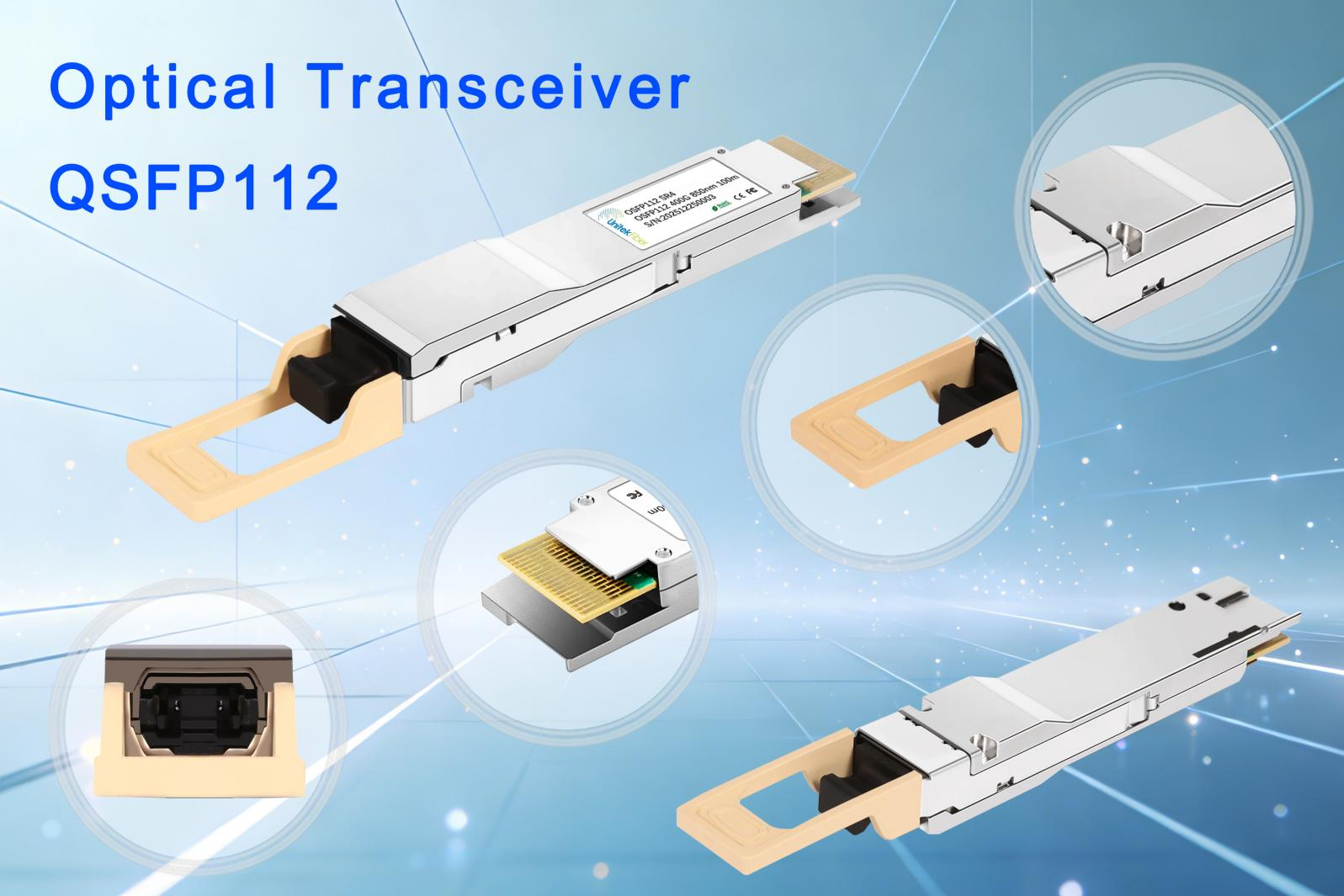
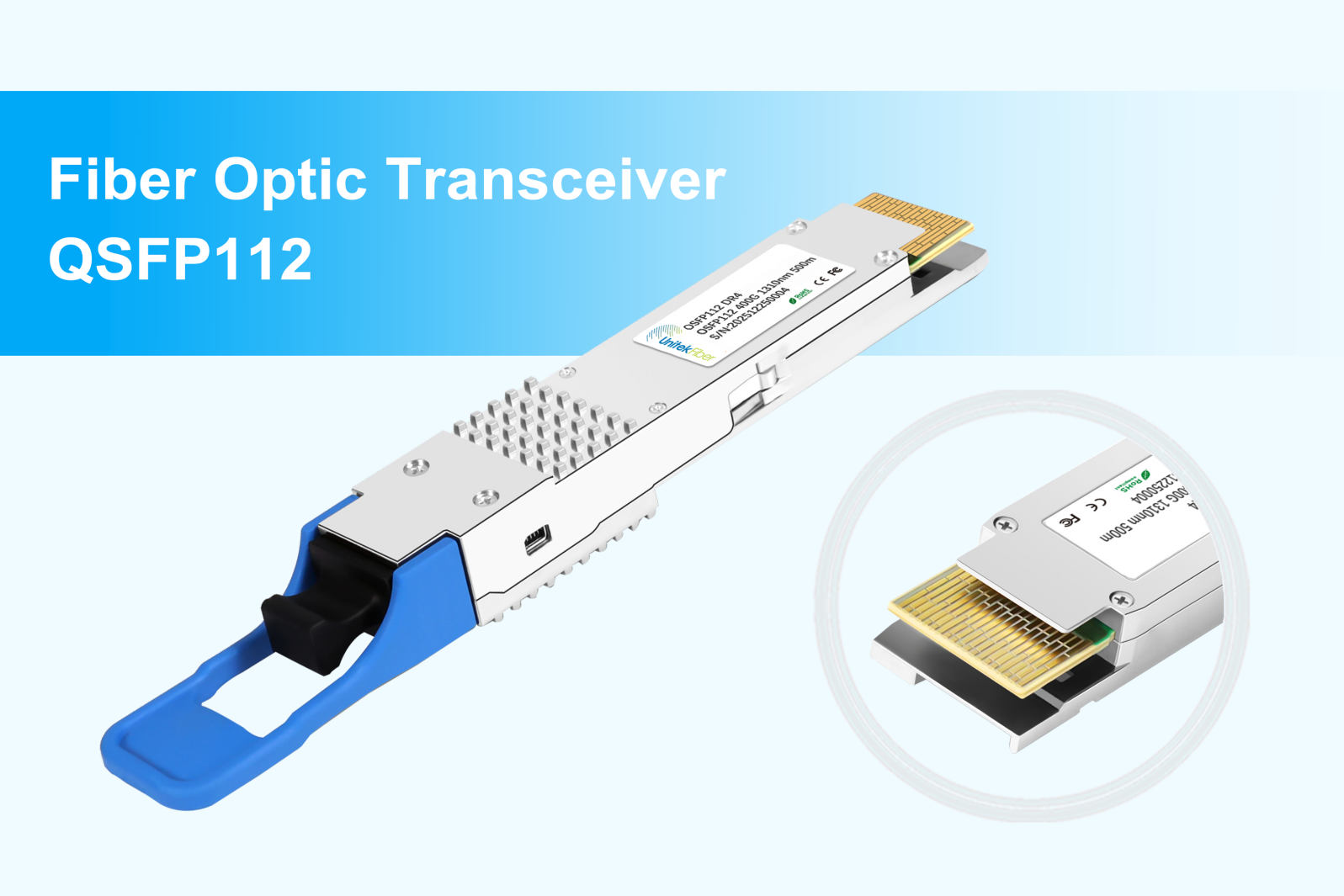
The QSFP112 is a transceiver and housing connector system built upon existing QSFP designs, specifically designed to support speeds of 112Gb/s per channel in 4-channel QSFP configurations. It aims to foster the QSFP 400G interconnect ecosystem, enabling legacy QSFP users to smoothly and cost-effectively upgrade to 400G per port with minimal transition time.
As part of the RoCE, the QSFP112 (Quad Small Form Factor 112) offers superior performance and efficiency, making it ideal for modern data center environments. Its streamlined four-channel electrical architecture results in nearly 30% lower power consumption compared to the previous generation QSFP-DD, making it the preferred transceiver technology for 400G interconnects seeking superior data center efficiency.
High Speed: The QSFP112 fiber transceiver can transmit data at speeds up to 400 Gbps, meeting the needs of current data centers and telecommunications networks. Its single-channel rate reaches 112 Gb/s, and with four high-speed channels transmitting in parallel, it significantly improves overall bandwidth capacity, enabling networks to handle massive data transmission tasks more efficiently.Low Power Consumption: Designed with energy efficiency in mind, they consume less power than previous models, using 3.5W less power than other 400G modules, improving energy efficiency.
Enhanced Signal Integrity and EMI Performance: The improved design of the QSFP112 fiber transceiver ensures better signal quality and reduces electromagnetic interference, thus maintaining stable and reliable performance during high-speed data transmission. This optimized design helps reduce signal distortion and bit error rate, ensuring the accuracy and consistency of data transmission even in high-density data center environments.
Compatibility: Compatible with multiple protocols, QSFP112 fiber transceiver can be easily integrated into any existing network infrastructure without requiring changes or the purchase of new equipment. Compatible with QSFP56 and QSFP28, it enables seamless upgrades and integration.
Lower Cost: The QSFP112 optical transceiver reduces the number of required electrical connections, meaning fewer internal electronic components and a simpler manufacturing process. Compared to previous QSFP-DD fiber optic transceivers, the streamlined design of the QSFP112 significantly reduces unit cost.
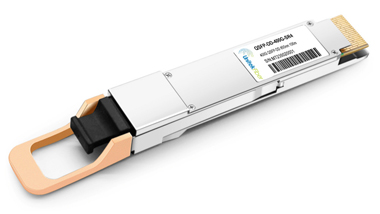
The SR4 fiber optic transceivers are multimode solutions optimized for short-distance applications. They utilize VCSEL lasers and support 4×100G PAM4 parallel transmission over OM3 or OM4 multimode fiber, enabling transmission distances up to 100 meters. The SR4 modules employ an MPO-12 interface and feature low power consumption (≤8W).
The DR4 transceiver modules are based on single-mode fiber and utilize four parallel channels at a 1310 nm wavelength, supporting transmission distances up to 500 meters. They are equipped with an EML laser and an MPO-12 connector, with optional DSP integration. For ultra-low-power deployments, the DR4 modules can be configured with an LPO (Linear Pluggable Fiber) architecture, reducing power consumption to below 6W.
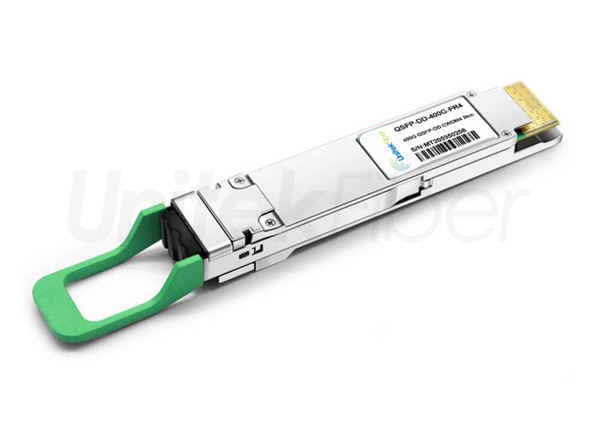
The FR4 transceivers use CWDM4 wavelength multiplexing (1270–1330 nm) and support transmission distances up to 2 kilometers over duplex single-mode fiber (OS2). These modules integrate EML or silicon photonics technology and offer high compatibility via standard LC connectors. FR4 is ideal for spine-leaf architectures and mid-range data center connections.
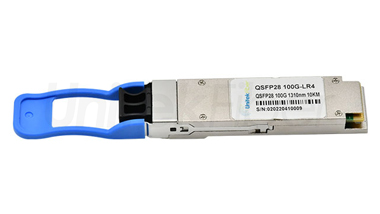
The LR4 fiber transceivers are long-distance transceivers designed for transmission distances up to 10 kilometers. They utilize CWDM4 wavelength division multiplexing technology, are equipped with high-performance EML lasers, and feature a full-duplex LC interface. LR4 fiber optic transceivers typically consume 12-14W of power, making them ideal for data center interconnects requiring reliable long-distance transmission.
The main differences between QSFP112 and QSFP-DD transceiver modules lie in data rate, size, and application suitability. QSFP112 fiber transceivers utilize PAM4 and other advanced modulation schemes, supporting data rates up to 400 Gbps. QSFP-DD optical transceivers feature an 8-channel design supporting 800 Gbps (100 Gbps per channel), achieving better scalability. Higher density allows for a higher number of ports, thus providing greater aggregate bandwidth.
The main differences between QSFP112 and QSFP28 transceivers lie in their data rates, modulation technologies, and application scenarios. The QSFP112 fiber transceiver uses PAM4 and other advanced modulation technologies, supporting data rates up to 400 Gbps. Conversely, NRZ modulation limits the QSFP28 transceiver to a maximum of 100 Gbps. These optical transceivers are typically used in 100G Ethernet networks, serving data centers that require a reliable and cost-effective way to transmit smaller aggregate bandwidths. The QSFP112 appears to be more suitable for next-generation applications requiring ultra-high speeds and advanced modulation technologies. On the other hand, in situations where compatibility is critical, such as current infrastructure designed around 100Mbps Ethernet standardization or with a cost-effectiveness focus, the QSFP28 transceiver is preferred.
QSFP112 optical transceiver represents a significant advancement in high-speed optical interconnect technology for modern data centers. With its 400G transmission capability, improved power efficiency, strong compatibility, and flexible deployment options such as SR4, DR4, FR4, and LR4, QSFP112 fiber optic transceiver provides a balanced solution for a wide range of networking scenarios—from short-reach intra-data-center links to longer-distance interconnects. As network infrastructures continue to evolve toward higher bandwidth and greater efficiency, QSFP112 fiber transceiver is expected to play an increasingly important role in enabling scalable, cost-effective, and high-performance data center networks for the next generation of cloud and AI-driven applications. UnitekFiber is a leading optical transceivers manufacturer , offering a wide range of high-quality transceiver modules with various rates, wavelengths, and transmission distances to meet your diverse needs. For more information, please contact at sales@unitekfiber.com.
+86-755-21034367