Fiber Optic Patchcord is the best choice for data centers because it offers superior bandwidth, extremely low latency, and immunity to electromagnetic interference (EMI). It supports significantly faster transmission speeds (up to 1.6T) and longer distances, making it essential for AI, cloud computing, and high density environments. In this article, we will explores the key benefit of fiber optic patch cord and provides key fiber optic product for efficient data center fiber optic patchcord deployment.
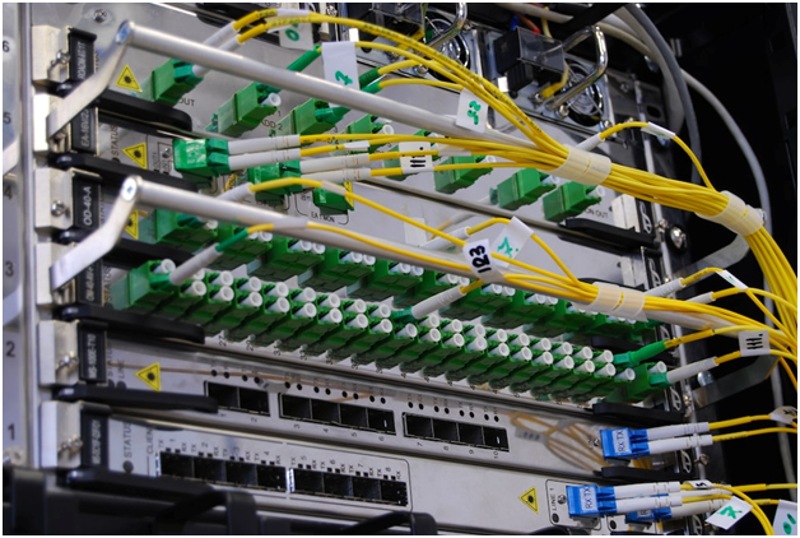
Fiber optic patchcord transmit data using light pulses, enabling extremely fast data transfer speeds that range from 100G to 1.6TG. Compare with copper cables, the fiber optic patchcord is more faster which is perfect for applications that require big volume computing power, such as AI and big data processing.
Singlemode fiber optic patchcord has a smaller core and can support long distance transmission, for example, up to 10 km or more for connections across a campus or a city. This ensures that distributed AI training tasks can stay in smoothly. Meanwhile, multimode fiber optic patchcord is known for being cost effective and having high data throughput. It is widely used for short range connections, such as those between servers in the same rack or adjacent racks. It is especially suited for GPU server clusters, which exchange large amounts of gradient parameters (up to terabytes) during AI model training.
Fiber optic patchcord are thinner and more flexible than copper cables, so they take up less space when connecting devices. Higher density lets data centers use their server racks more efficiently, which helps improve Power Usage Effectiveness (PUE). As AI computing needs keep growing, data centers require flexible infrastructure to handle the increasing amount of data and computing demands.
High density fiber optic networks can be expanded easily without causing major disruptions to daily operations, even when cabling needs to be changed. Using small, compact fiber optic patchcord, like MPO cable, and MDC cable, can significantly increase connection density. For example, an MDC cable can triple the number of cabling ports compared to LC fiber patch cords. This allows data centers to add more servers and storage devices smoothly without making major changes to their infrastructure.
Fiber optic patchcord use less power than copper cables, which is very important for AI data centers. High power GPU server clusters already use the most energy in data centers. With low loss transmission, fiber optic cabling features can effectively reduce the power consumption of network equipment, lowering operational costs. In addition, proper cable management helps optimize airflow in the data center.
AI computing involves processing huge amounts of data, so the accuracy of data and the stability of transmission are critical. Fiber optic patchcord is resistant to electromagnetic interference (EMI), ensuring stable, which means they can transmit data stably even in high density server environments. This prevents signal quality from dropping or error rates from increasing.
From a security perspective, fiber optic patchcord do not emit electromagnetic signals and are virtually immune to illicit eavesdropping. This is particularly important when transmitting high-value data, such as AI training datasets and financial transactions. For businesses, using fiber optic patchcord can reduce the risk of data breaches and ensure the confidentiality of core business operations.
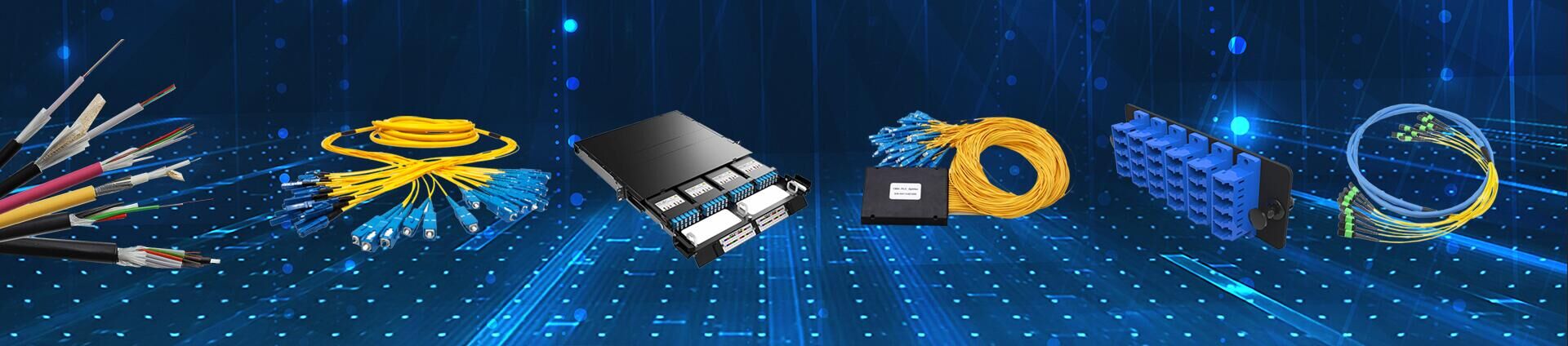
UnitekFiber, as a perfessional fiber optic manufacturer, delivers high performance fiber cabling product for high density, high speed networking environments. The following is an overview of the key products and their application scenarios:
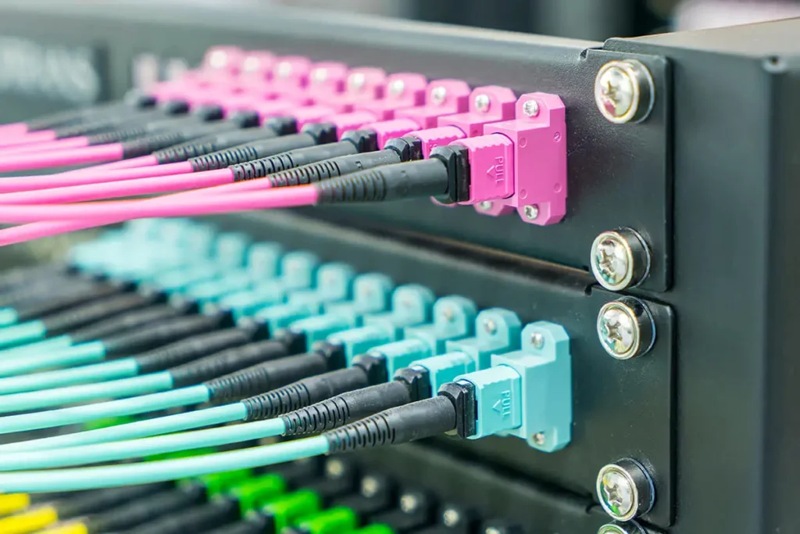
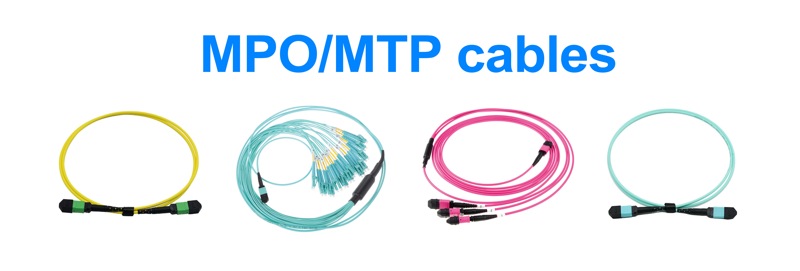
MPO/MTP® cable is ideal for spine leaf architectures, large scale cloud computing, and high density backbone cabling. MTP®/MPO cable can house 8, 12, 16 or even 24fibers in a single connector, greatly increasing port density compared to traditional LC duplex patchcord solutions. This enables data centers to support more connections in limited rack and floor space, optimizing space utilization while keeping cabling organized.
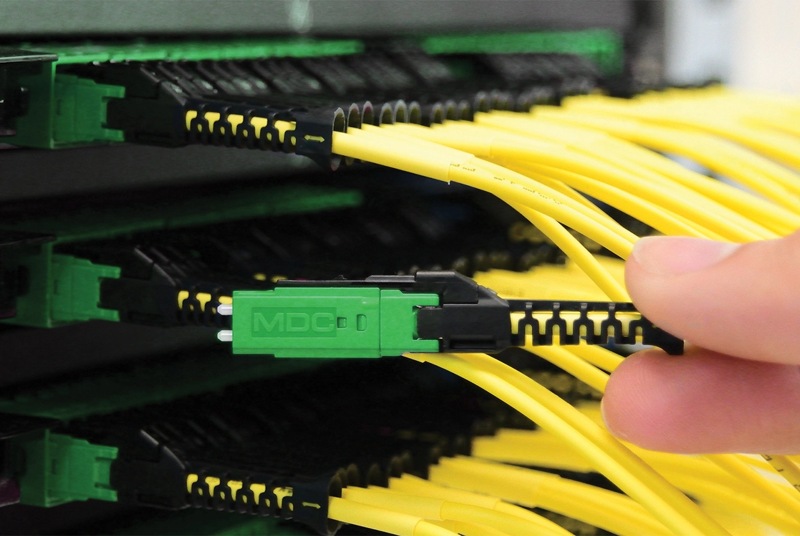
MDC to MDC cable represents the latest generation of duplex fiber connectivity designed for ultra-high-density environments. Developed by US Conec, the MDC cable’s interface achieves three times the density of standard LC connectors while maintaining superior optical performance. MDC cable is ideal for 400G/800G networks, hyperscale data centers, and modern cloud infrastructure.
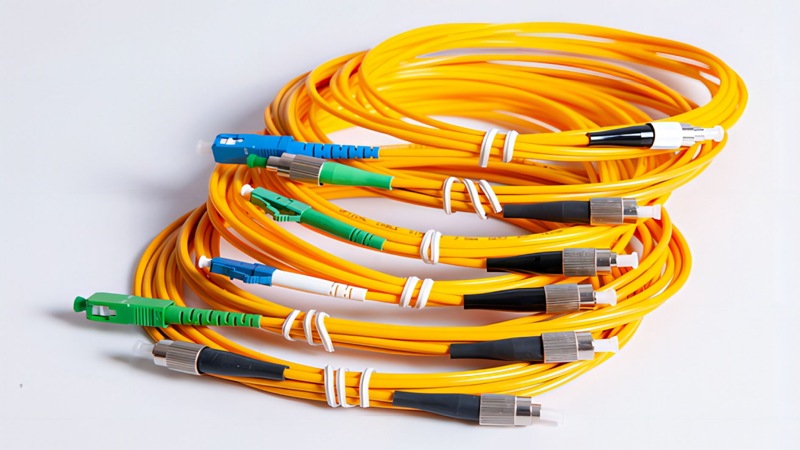
LC/SC fiber optic patch cord is the common type of patch cord in data center using. Used for interconnect and cross-connect between devices in data centers and enterprise networks. Ideal for space constrained data centers, supporting high speed 10G/40G/100G networks with low insertion loss, secure latching, and optional uniboot designs that improve airflow and simplify cable management.
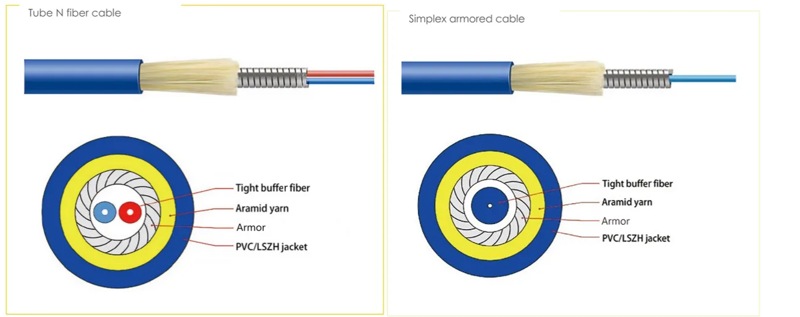
Suitable for harsh environments prone to moisture, rodents, abrasion, or mechanical stress. Armored fiber patch cord enhance network reliability by withstanding the force of standard fiber, allowing for direct installation in high traffic or industrial areas without protective conduits.
Armored vs Unarmored Fiber Optic Patchcord: Which One Should You Choose?
Fiber optic cabling provides the performance, efficiency, and future-proofing capabilities that modern data centers require. Partner with UnitekFiber, a professional fiber optic patchcord manufacturer, to drive your data center digital transformation.
+86-755-21034367