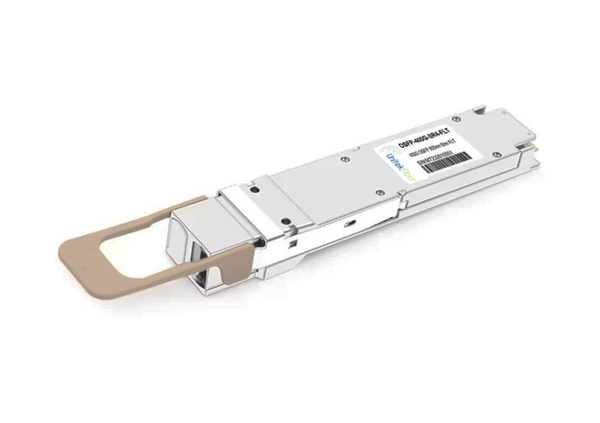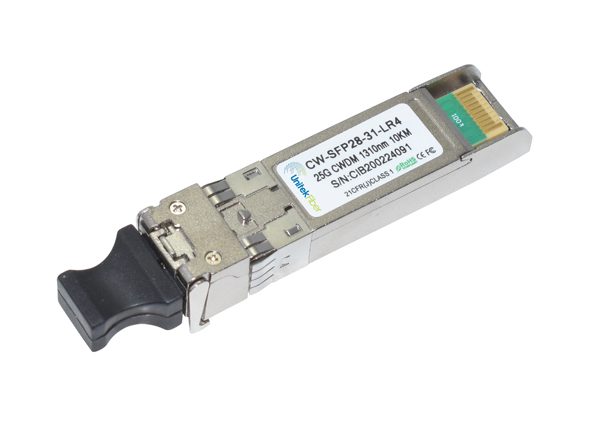

MPO/MTP 40G QSFP+ optical transceivers use parallel transmission over 8fiber MPO/MTP interface, support 4x10G breakout, work with multimode fiber for short‑reach (up to 150m) high density links. LC 40G QSFP+ transceivers employ duplex WDM transmission via dual LC interface, lack breakout capability, use singlemode fiber for long distance (up to 40km+) backbone connections.
As more data centers roll out 40G Ethernet infrastructure, the market has seen a steady surge in 40G network equipment and optical components, with 40G fiber optic transceivers standing out as one of the most critical parts. 40G QSFP+ optical transceivers can be classified into two types: MTP/MPO and LC. In this article, we conduct an in depth analysis of the features, types and differences of 40G QSFP+ MTP/MPO and LC transceiver modules.
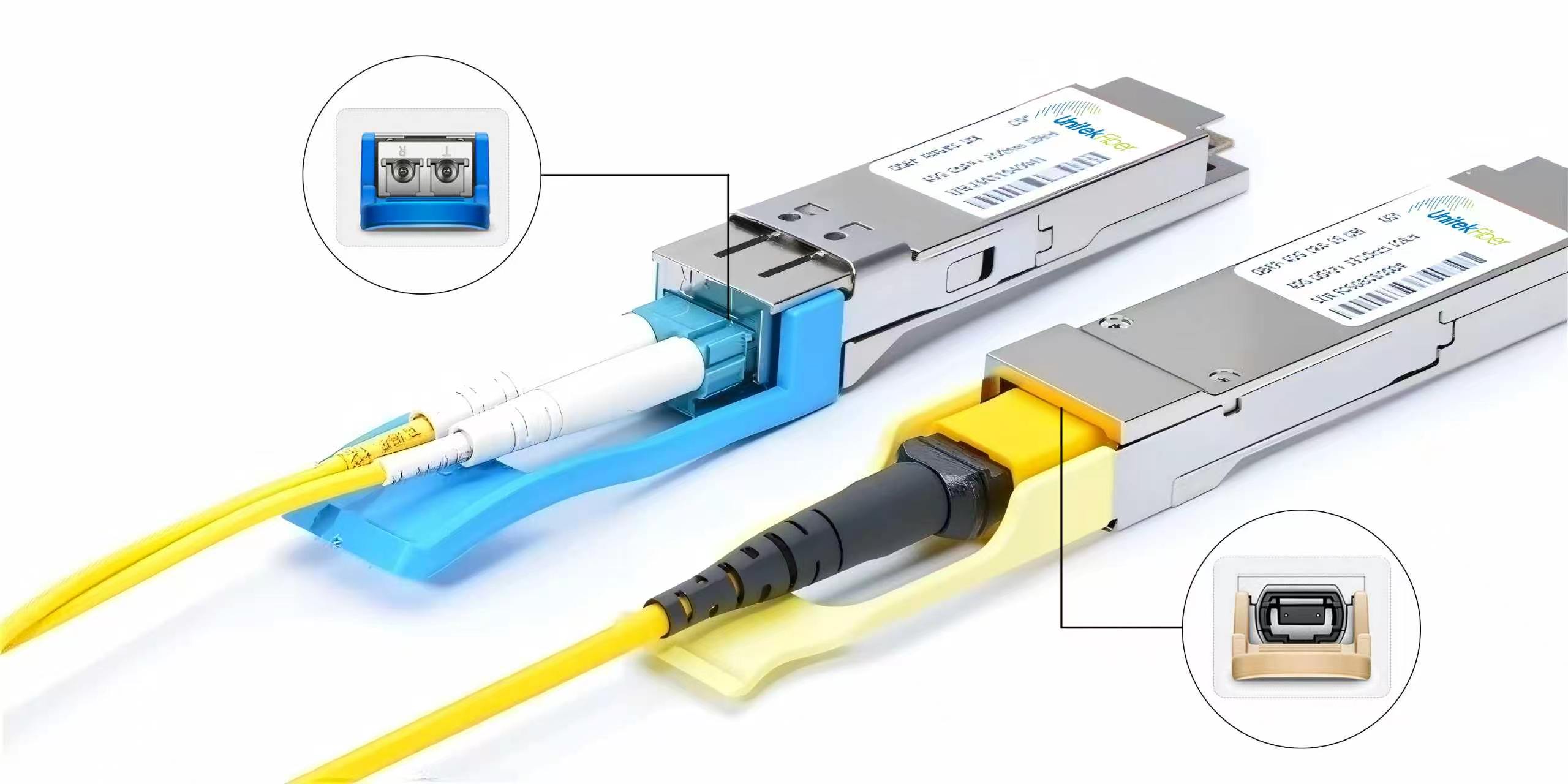
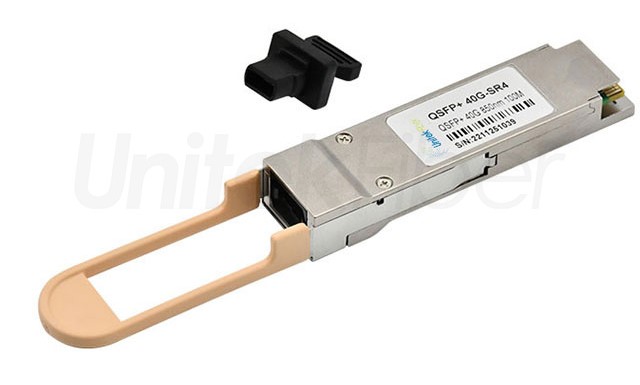
40G QSFP+ fiber transceivers equipped with MPO/MTP (Multi-Fiber Push-On) interfaces are high-density optical components built on parallel fiber transmission technology to deliver 40 Gbps full bandwidth. Unlike standard duplex optical transceivers that rely on a single fiber pair, these transceiver modules use multiple fiber strands, usually 8 or 12 fibers, within a single MPO/MTP connector. Data transmission happens across four separate 10 Gbps channels, running in parallel to achieve the full 40G throughput.
40G QSFP+ SR4: The most common short-reach transceiver module. It uses Multimode Fiber (MMF) and supports distances up to 100m on OM3 and 150m on OM4/OM5.
40G QSFP+ CSR4: It is an extended-reach version of the SR4, supporting distances of up to 300 meters over OM3 fiber and 400 meters over OM4 fiber.
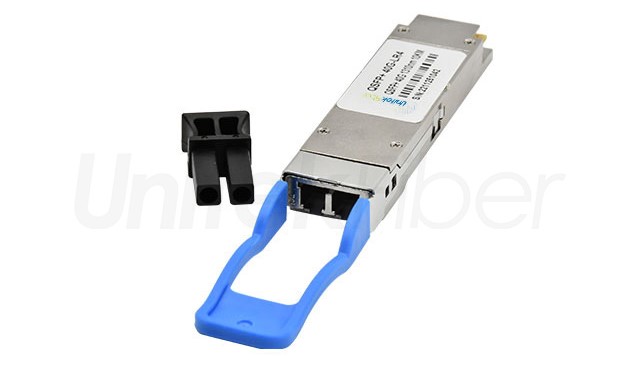
40G QSFP+ LC transceivers adopt standard duplex LC connectors, and most models are engineered for single-mode fiber (SMF) to support long-distance transmission. In contrast to MPO/MTP fiber optic transceivers that use parallel fiber strands for multi-channel transmission, LC transceiver modules use wavelength division multiplexing (WDM) technology, combining four separate 10G optical signals onto one duplex fiber pair for efficient transmission.
40G QSFP+ LR4: This optical transceiver is designed for long-distance data transmission. It utilizes four distinct wavelengths for multiplexed transmission over single-mode fiber, achieving a transmission distance up to 10 kilometers.
40G QSFP+ ER4: It is a hot-pluggable optical transceiver designed specifically for long-distance, high-density 40 Gigabit Ethernet links. Under standard conditions, it offers a transmission distance of up to 40 kilometers.
40G QSFP+ Optical Transceivers with MTP/MPO Interface: On the transmit side, the fiber transceiver’s laser driver array converts incoming parallel electrical signals into parallel optical signals. These synchronized optical signals are then transmitted simultaneously through the fibers inside an MTP/MPO fiber patchcord. On the receive end, a PIN photodetector array and a Transimpedance Amplifier (TIA) work together to convert optical signals back into electrical signals for output. One major advantage of this design is that a single 12-fiber MTP-to-LC breakout patch cord can split the 40G connection into four independent 10G links, supporting flexible 40G-to-10G interconnections.
40G QSFP+ Fiber Optic Transceivers with LC interface: At the transmitting end, four channels of 10G serial data are sent out at the same time. Each channel’s laser driver uses a directly modulated semiconductor laser to generate a unique optical wavelength. A multiplexer then combines these four wavelength-specific signals into one stream for transmission over a single duplex fiber. On the receiving end, a demultiplexer separates the combined optical signal back into four individual 10G channels, each with a distinct wavelength. After passing through a PIN photodetector array and TIA, the optical signals are restored to electrical signals. This transceiver module uses duplex bidirectional transmission and does not support 4x10G breakout connections, only enabling 40G-to-40G links.

Single-Mode Fiber (SMF) features a tiny core diameter, narrow wavelength range, and strong signal stability, making it perfect for high-bandwidth, long-haul data transmission. Most LC 40G QSFP+ fiber transceivers are paired with single-mode fiber patch cords for long-distance connections. One exception is the 40GBASE-BiDi LC optical transceiver, which uses multi-mode fiber (MMF) for short-range transmission, reaching up to 100 meters with OM3 fiber patch cords and 150 meters with OM4 fiber patch cables.
Multi-Mode Fiber (MMF) has a larger core diameter and wider wavelength tolerance, making it easier to couple light from multi-mode lasers, and it is more cost-effective for short-distance cabling. Standard MTP/MPO 40G QSFP+ transceiver modules are typically used with multi-mode fiber patch cords for short-reach transmission inside data centers.

MPO/MTP and LC 40G QSFP+ optical transceivers each address different networking requirements with their own advantages, offering flexibility for various deployment scenarios. As a professional optical transceiver manufacturer, UnitekFiber provides high-quality optical transceivers 10G SFP+, 40G QSFP+, 100G QSFP28, 200G QSFP56, 400 QSFP-DD and 800G OSFP fiber transceivers that deliver reliable performance, excellent compatibility, and stable data transmission, making them ideal for high-speed data center and enterprise network applications.
 5G 6G Fronthaul & Backhaul
View More
5G 6G Fronthaul & Backhaul
View More
 Data Center & Cloud Interconnect
View More
Data Center & Cloud Interconnect
View More
 Enterprise & Industrial Optical
View More
Enterprise & Industrial Optical
View More
 FTTx & Access Solutions
View More
FTTx & Access Solutions
View More
 Metro & Access Networks
View More
Metro & Access Networks
View More
 Optical Cabling Systems
View More
Optical Cabling Systems
View More
 Optical Transceivers & Interconnect
View More
Optical Transceivers & Interconnect
View More
 WDM & High-Capacity Transmission
View More
WDM & High-Capacity Transmission
View More
+86-755-21034367