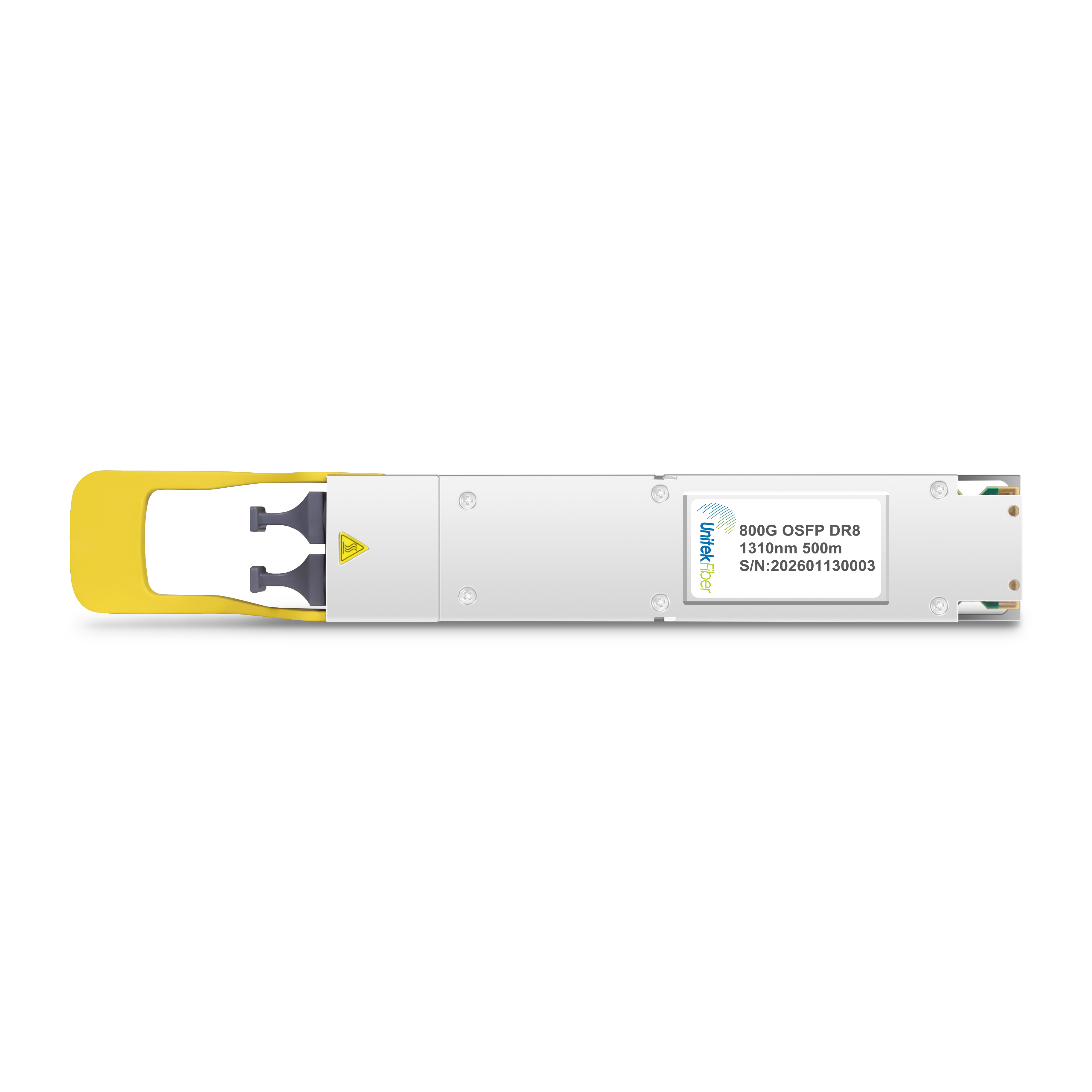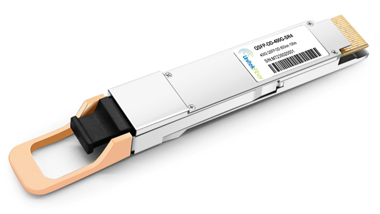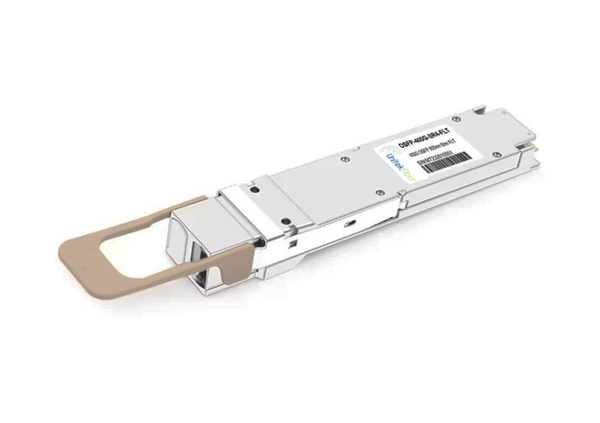

In the wave of digitalization, with the rapid development of AI and cloud computing, data traffic is exploding. Statistics show that global IP traffic reached 40 ZB per second in 2023, placing extremely high demands on network transmission speeds. Traditional 100G transceiver modules are no longer sufficient to meet the growing demand, and data centers are accelerating their upgrades to 400G and above. At this critical juncture of technological transformation, OSFP (Octal Small Formfactor Pluggable) optical transceivers, with their superior performance and innovative design, have become the preferred interconnect solution for hyperscale data centers and high-performance computing centers. UnitekFiber as a professional fiber optic transceiver supplier, we will introduce you to relevant knowledge about OSFP optical transceivers in this article.
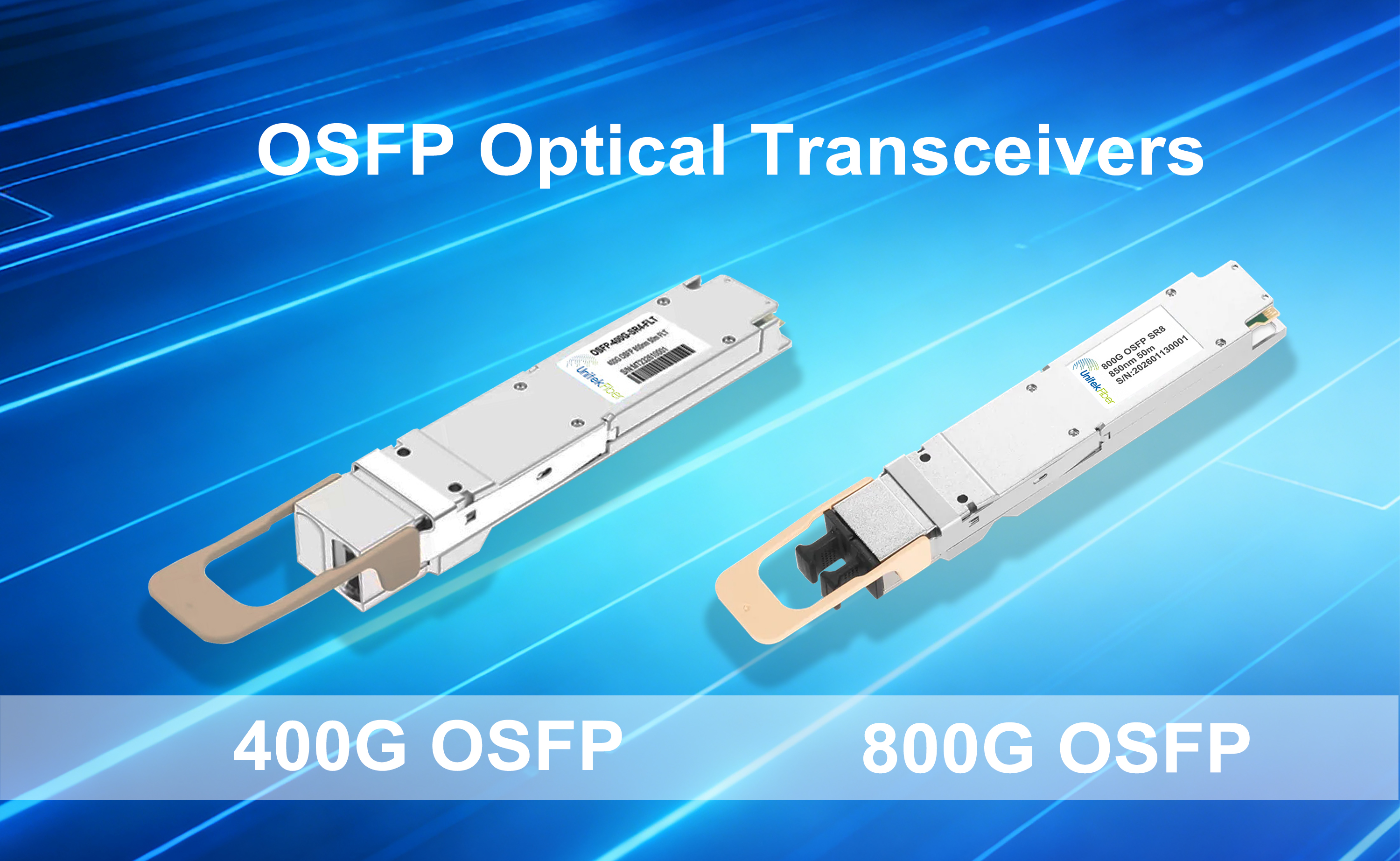
Name resolution
OSFP, namely Octal Small Formfactor Pluggable, distinguishes itself from traditional four-channel QSFP fiber optic transceivers by "Octal" (eight-channel design), "Small Formfactor" (compact packaging for efficient functionality within a limited space), and "Pluggable" (hot-swappable for easy module replacement and maintenance during operation).
Physical size and bandwidth density
The physical dimensions of an OSFP optical transceiver are 100.4 × 22.5 × 13 mm³, slightly larger than a QSFP package. However, its bandwidth density per unit area is significantly improved. This size optimization allows a single switch to deploy more high-speed ports, perfectly meeting the high-density deployment needs of modern data centers, saving valuable space resources and improving space utilization efficiency.
Technical architecture and data transmission
From a technical architecture perspective, OSFP optical transceivers achieve high-speed data transmission through eight electrical interfaces. The 400G version uses 8×50G PAM4 modulation technology, while the 800G version uses 8×100G PAM4 modulation technology. Each channel operates independently, transmitting data in parallel through optical fibers, ultimately aggregating to form a total bandwidth of 400G or 800G. This parallel transmission architecture greatly improves data transmission rates, reduces transmission latency, and provides strong support for the rapid transmission of large amounts of data.
Innovation in heat dissipation performance
Heat dissipation is crucial in high-speed fiber transceivers. OSFP optical transceivers offer two design options: top-mounted heatsink and flat-top design.
Top-mounted heatsink design: The top-mounted heatsink design integrates a metal heatsink, significantly improving heat dissipation efficiency by increasing the surface area, reducing module operating temperature by 15-20%. This design is specifically tailored for high-power air-cooled switches, effectively addressing the significant heat generated during operation and ensuring stable device operation.
Flat-top design: The flat-top design is optimized for space-constrained environments, such as GPU servers and liquid cooling systems. Its flat structure facilitates installation in limited vertical spaces. While its own heat dissipation capacity is relatively weaker, it can rely on system-level cooling solutions to achieve efficient heat dissipation and device installation in space-constrained environments.
Scalability
Scalability is a major advantage of OSFP transceivers. The same OSFP package can support speeds evolving from 400G, 800G, and even 1.6T. This scalability allows data centers to upgrade their networks in the future without large-scale hardware replacements, reducing upgrade costs and complexity and protecting initial investments.
Low energy consumption
In terms of energy management, OSFP fiber optic transceivers perform exceptionally well. Compared to traditional CFP8 solutions, OSFP power consumption is reduced by 40%. Taking an 800G OSFP fiber transceiver as an example, its typical power consumption is 13.5-15W, achieving a significant breakthrough in energy efficiency through optimized signal processing and power management technologies. This not only helps reduce data center operating costs and energy consumption but also aligns with the current global advocacy for green and environmentally friendly practices.
Standard Classification
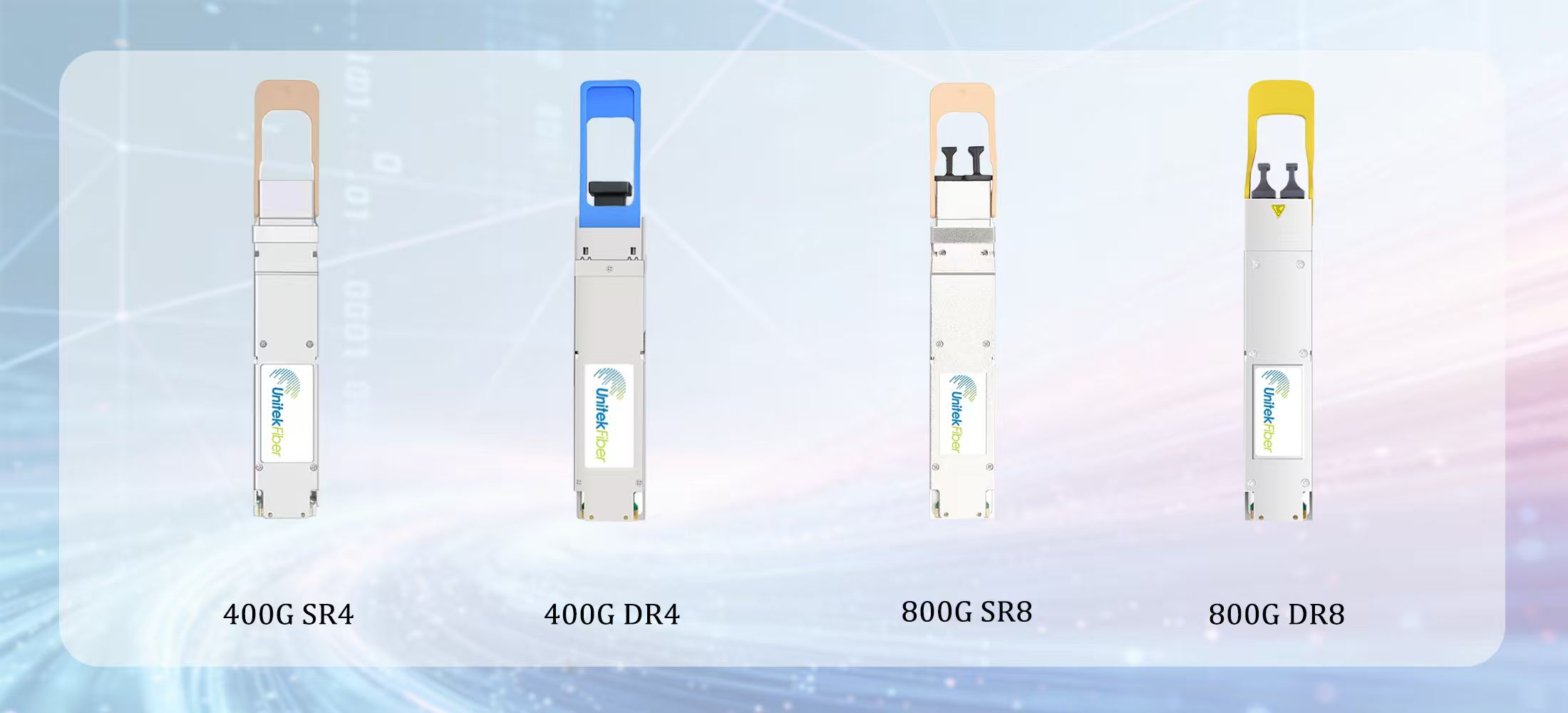
Based on protocol standards, the most commonly used OSFP transceiver modules are as follows:
400G SR4: Uses multimode fiber, with a transmission distance of 70-100 meters, suitable for short-distance high-speed data transmission scenarios.
400G DR4: Uses single-mode fiber, supporting a transmission distance of 500 meters, meeting data transmission needs over certain distances.
400G FR4: Supports mid-distance transmission up to 2 kilometers, suitable for medium-distance data center connections.
400G LR4: Transmission distance up to 10 kilometers, suitable for long-distance applications.
800G SR8: Uses multimode fiber, with a transmission distance of 50-100 meters, suitable for short-distance high-speed data transmission scenarios.
800G DR8: The latest 800G DR4 extends the transmission distance to 100 meters/500 meters, further improving the range of high-speed data transmission distances.
Application scenarios
Data Center Rack Connectivity: The OSFP-SR8 optical transceiver is primarily used for rack connectivity within data centers. Utilizing multimode fiber and VCSEL lasers, it enables low-cost, short-distance transmission, making it particularly suitable for switch-to-server interconnects, allowing for fast and stable data transmission within the rack.
Data Center Interconnection: OSFP-DR4/FR4 fiber optic transceivers are used for data center interconnection. Utilizing single-mode fiber and EML lasers, they support distances from 500 meters to 2 kilometers, meeting the connectivity needs between data center buildings and ensuring reliable data transmission between different data centers.
High-performance computing (HPC): In the field of high-performance computing (HPC), OSFP transceiver plays a crucial role. It enables high-speed interconnection of HPC clusters, provides ultra-low latency data transmission, and offers robust network support for large-scale scientific computing, engineering simulations, and other applications. Simultaneously, it is used to build storage area networks (SANs), supporting high-bandwidth storage access and accelerating data-intensive tasks such as AI training.
Data center:In distributed data center scenarios, OSFP fiber optic transceivers also perform exceptionally well. Their 20km transmission capacity supports cross-campus resource pooling, providing a robust infrastructure for applications such as 5G edge computing and cloud gaming, and enabling rapid data exchange and sharing between different campuses.
As global data traffic continues to surge and AI-driven workloads reshape network architectures, OSFP transceiver modules have emerged as a cornerstone technology for next-generation data centers. With their eight-lane high-speed architecture, superior thermal design, strong scalability from 400G to 800G and beyond, and significantly improved energy efficiency, OSFP fiber transceivers effectively address the growing demands for higher bandwidth, lower latency, and reduced power consumption. As digital infrastructure continues to evolve, OSFP optical transceiver is poised to play an increasingly critical role in enabling ultra-high-speed, high-density, and sustainable optical interconnect solutions.
 5G 6G Fronthaul & Backhaul
View More
5G 6G Fronthaul & Backhaul
View More
 Data Center & Cloud Interconnect
View More
Data Center & Cloud Interconnect
View More
 Enterprise & Industrial Optical
View More
Enterprise & Industrial Optical
View More
 FTTx & Access Solutions
View More
FTTx & Access Solutions
View More
 Metro & Access Networks
View More
Metro & Access Networks
View More
 Optical Cabling Systems
View More
Optical Cabling Systems
View More
 Optical Transceivers & Interconnect
View More
Optical Transceivers & Interconnect
View More
 WDM & High-Capacity Transmission
View More
WDM & High-Capacity Transmission
View More
+86-755-21034367