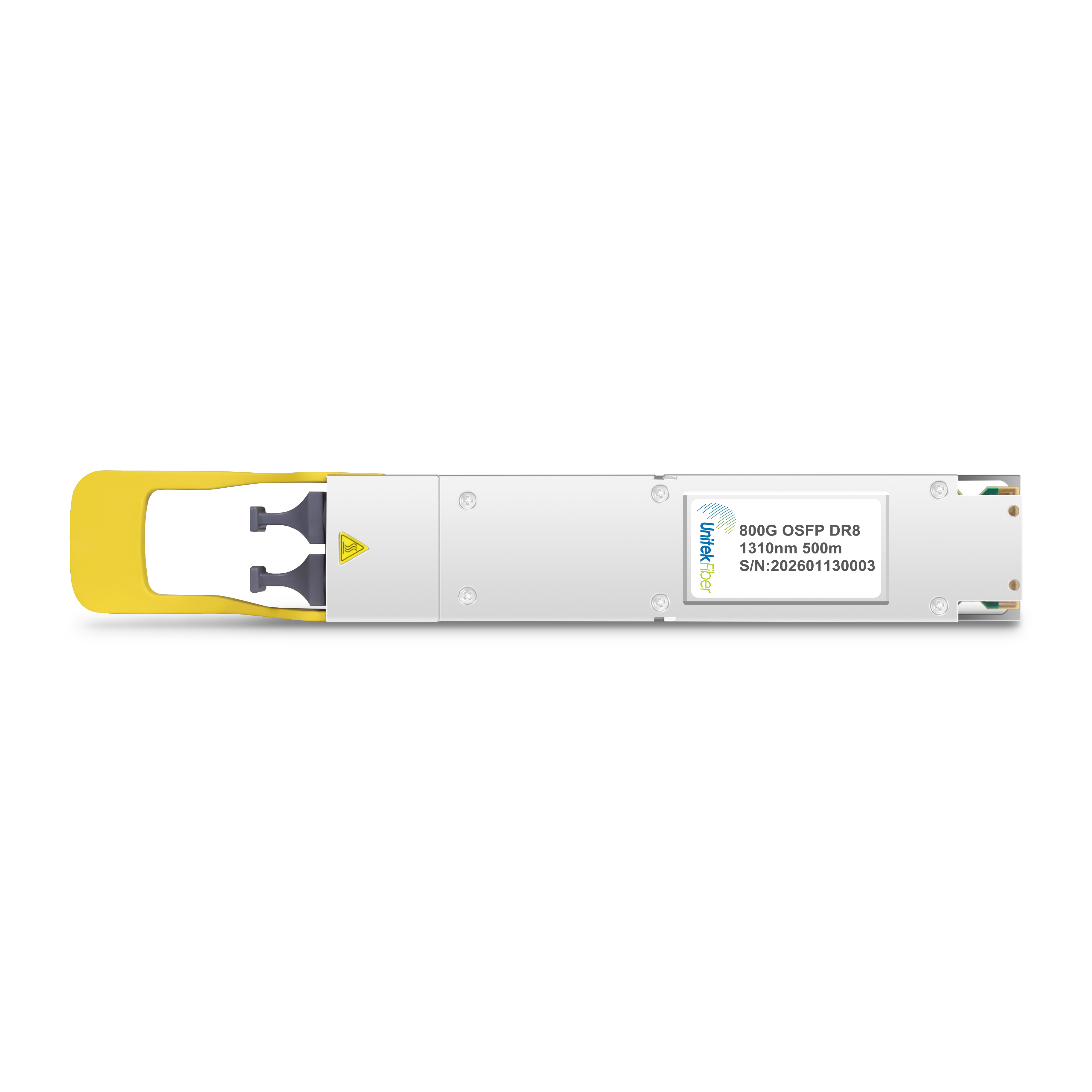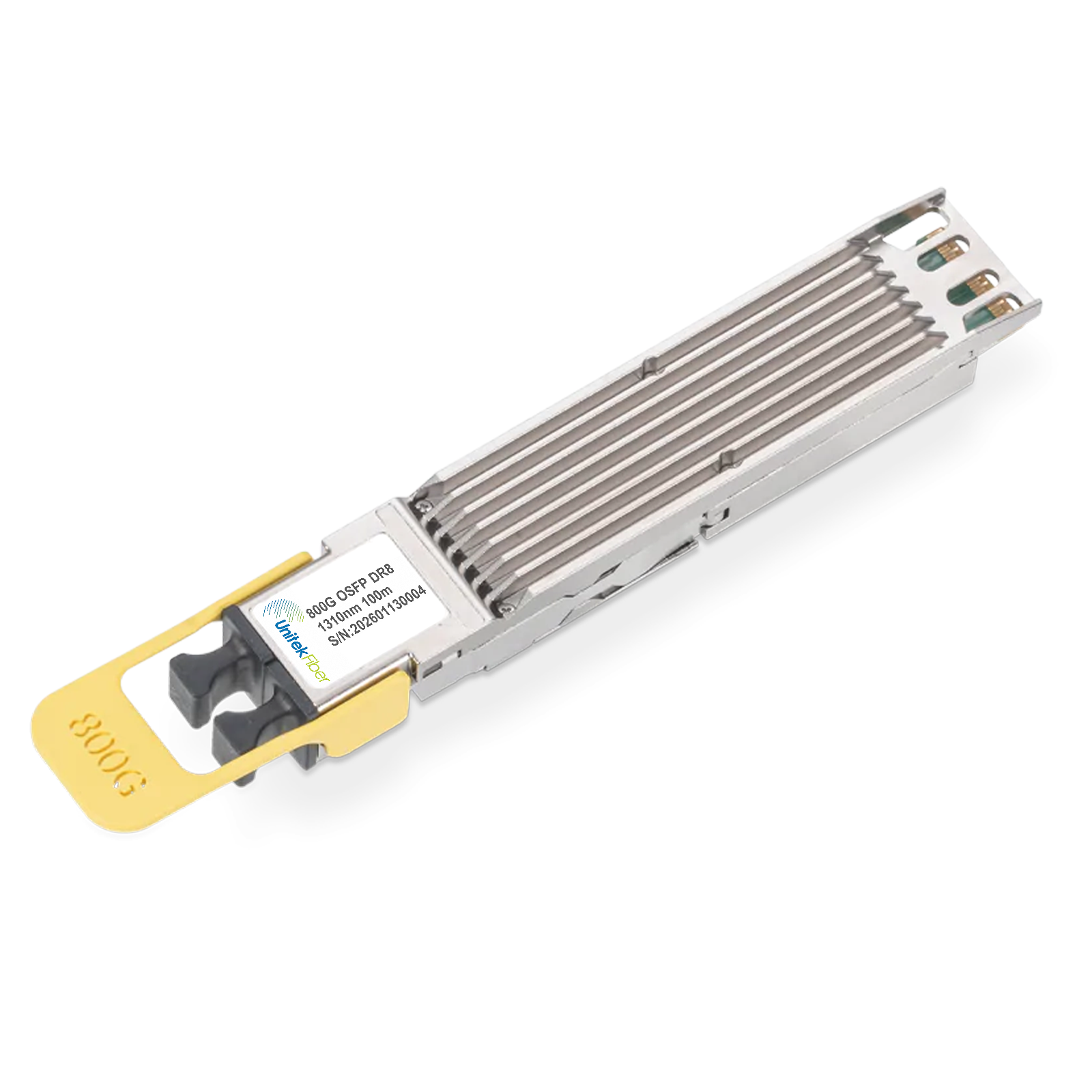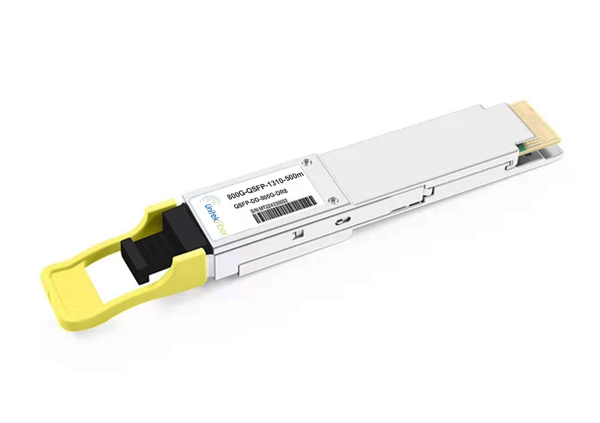

With the rapid development of cloud computing, artificial intelligence, and high-performance computing (HPC), the demand for bandwidth within and between data centers continues to grow. As networks enter the 800G era, optical transceivers not only need to support higher data rates, but also need to strike a balance between port density, power consumption, heat dissipation performance, and platform compatibility. Unitekfiber, a professional 800G optical transceiver manufacturer and leading global supplier of fiber optic patchcords, MTP/MPO and Adapters, engineers end-to-end connectivity solutions that align with these critical 800G deployment requirements.
Among these factors, transceiver form factor has become a key consideration in 800G deployment strategies. This article will compare OSFP and QSFP-DD, with a detailed analysis as follows:
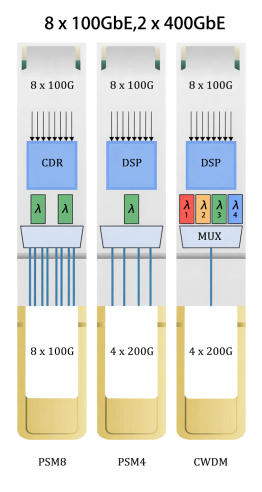
800G = 8 * 100G = 4 * 200G. Therefore, based on single-channel speed, it can be mainly divided into two categories: single-channel 100G and 200G, with the corresponding architecture shown in the figure below. Single-channel 100G optical transceivers modules can be deployed relatively quickly, while 200G has higher requirements for optical devices. Currently, the maximum supported speed at the electrical interface is 112Gbps PAM4. For single-channel 200G, a gearbox is required for conversion.
For multimode applications, there are two main standards for 800G fiber optic transceivers, corresponding to transmission distances below 100m.
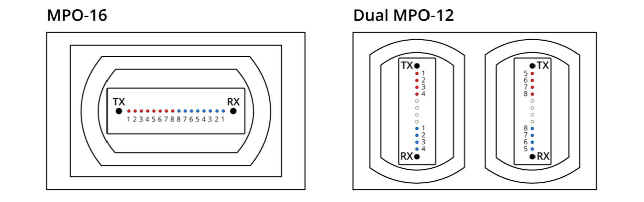
Using a VCSEL solution with a wavelength of 850nm and a single-channel rate of 100Gbps PAM4, 16 optical fibers are required. This can be seen as an upgrade to the 400GSR4, doubling the number of channels. Its optical interface is either MPO-16 or a 2-row MPO-12, as shown in the figure below.
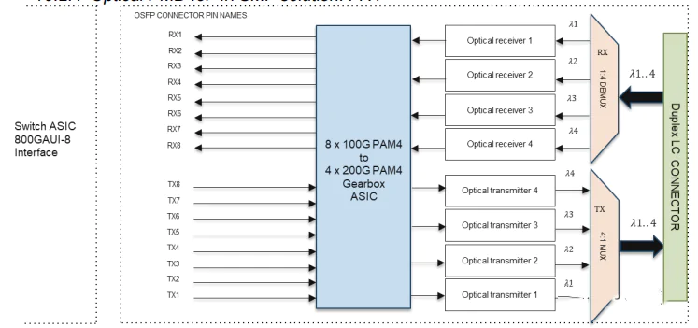
This scheme uses two wavelengths, 850nm and 910nm, to transmit signals of both wavelengths bidirectionally within a single optical fiber, a technique known as bidirectional transmission. The module requires a DeMux module to split the two wavelengths. The single-channel rate is 100Gbps PAM4, requiring eight optical fibers, which is half the number of fibers compared to SR8. Its block diagram is shown below.
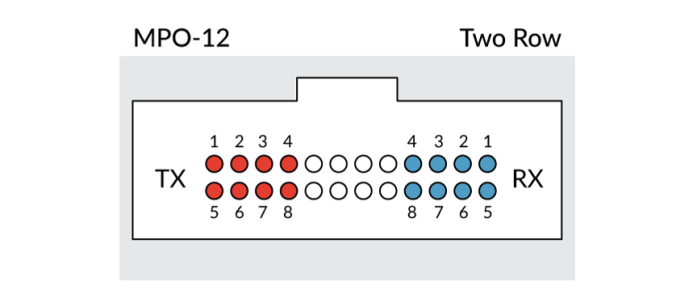
Its optical interface is shown in the figure below, and it uses the MPO-12 interface.
For single-mode applications, there are multiple standards for 800G optical modules.
These three standards have similar internal architectures, including 8 Tx and 8 Rx, with a single channel rate of 100Gbps and requiring 16 optical fibers.
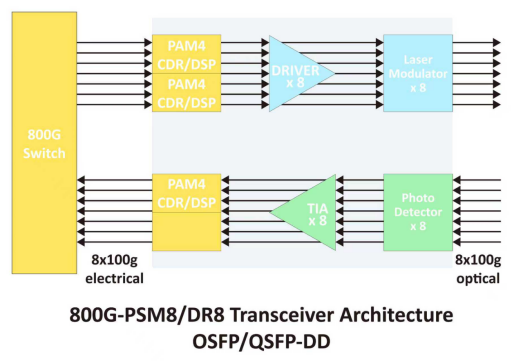
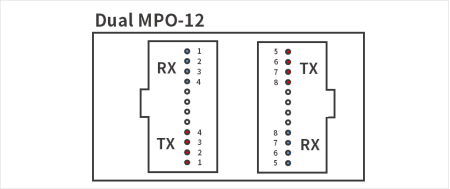
The PSM8 has a transmission distance of 100m, while the DR8 and 2*DR4 have a transmission distance of 500m. The 2xDR4 has two MPO-12 optical interfaces, as shown in the diagram, which can interconnect with the 400GDR4 optical transceiver module for easy data center upgrades. The PSM8 and DR8 have MPO-16 optical interfaces.
These two standards have similar internal structures, containing four wavelengths and a single-channel rate of 100Gbps. The number of optical fibers is reduced by using Mux, requiring four optical fibers, as shown in the figure below.
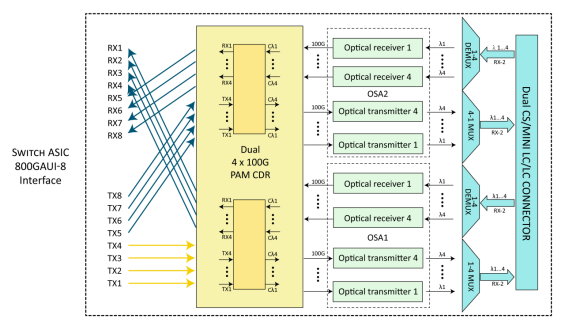
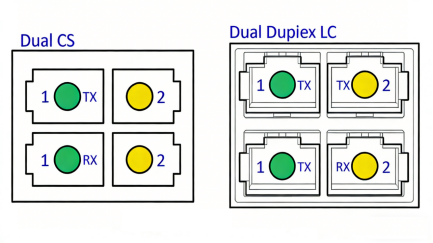
Both solutions are upgrades to the 400G FR4 and LR4 optical transceivers modules, using CWDM4 wavelengths of 1271/1291/1311/1331nm. Two FR4 modules support a transmission distance of 2km, while two LR4 modules support a transmission distance of 10km. Their optical interfaces use either dual CS or dual duplex LC interfaces.
This scheme uses four wavelengths, with a single-channel rate of 200Gbps, requires two optical fibers, and supports a transmission distance of 2km, as shown in the figure below.
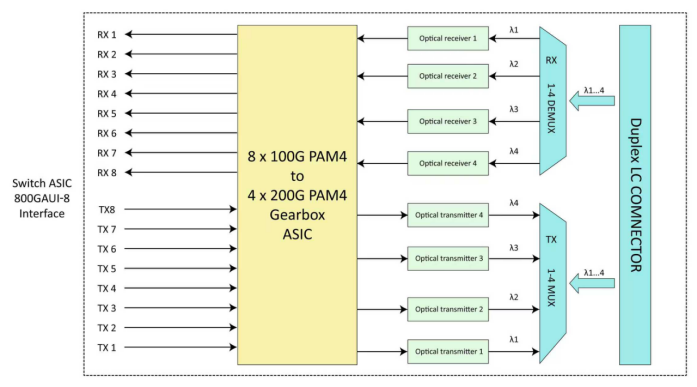
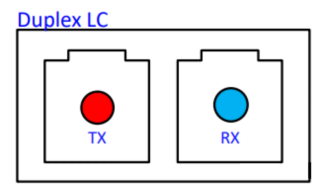
It uses a duplex LC optical interface, as shown in the figure below.
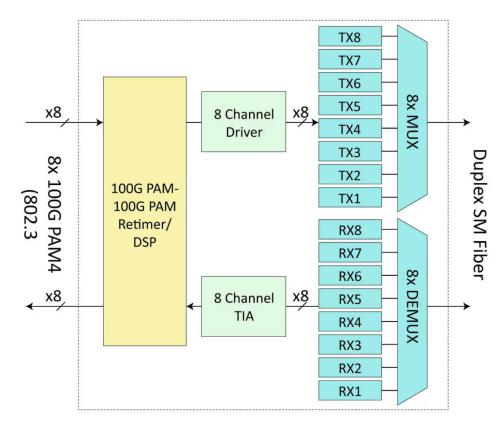
This scheme uses eight wavelengths, each with a data rate of 100Gbps, requires two optical fibers, and supports a transmission distance of 2km, as shown in the figure below. The eight wavelength channels are 1271/1291/1311/1331/1351/1371/1391/ 1411nm.
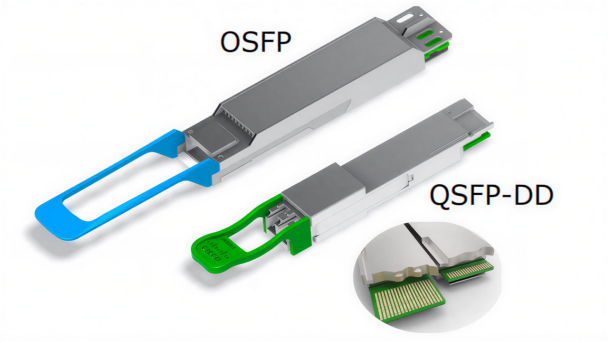
Both QSFP-DD and OSFP support 800G, and a comparison of the two is shown in the figure below. For 800G optical transceivers, QSFP-DD has undergone some supplementary updates, namely QSFP-DD800.
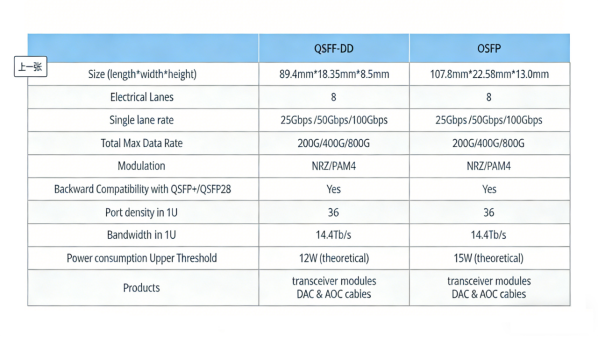
The main differences between the two are:
Size: OSFP is slightly larger.
Power consumption: OSFP consumes slightly more power than QSFP-DD.
Compatibility: QSFP-DD is perfectly compatible with QSFP28 and QSFP+, while OSFP is not.
Currently, mass-produced single-mode 800G optical transceivers mainly use the EML solution. Whether silicon photonics can gain a foothold remains to be seen, mainly depending on cost and power consumption. For the Fang2 No. 2 Optoelectronics project with a single-wavelength 200G, EML or thin-film lithium niobate are two possible technical routes. If you have any questions or need, please feel much free to contact us at Email sales@unitekfiber.com.
 5G 6G Fronthaul & Backhaul
View More
5G 6G Fronthaul & Backhaul
View More
 Data Center & Cloud Interconnect
View More
Data Center & Cloud Interconnect
View More
 Enterprise & Industrial Optical
View More
Enterprise & Industrial Optical
View More
 FTTx & Access Solutions
View More
FTTx & Access Solutions
View More
 Metro & Access Networks
View More
Metro & Access Networks
View More
 Optical Cabling Systems
View More
Optical Cabling Systems
View More
 Optical Transceivers & Interconnect
View More
Optical Transceivers & Interconnect
View More
 WDM & High-Capacity Transmission
View More
WDM & High-Capacity Transmission
View More
+86-755-21034367