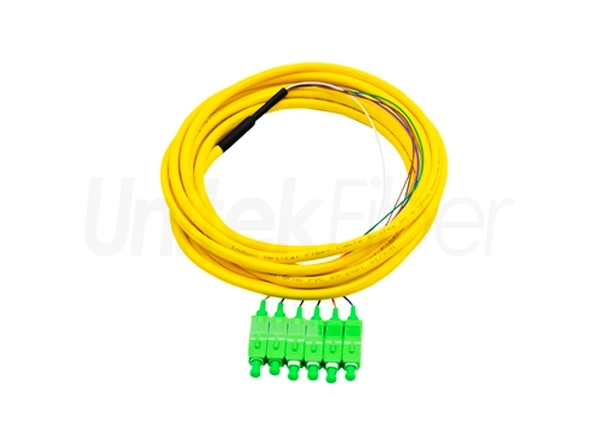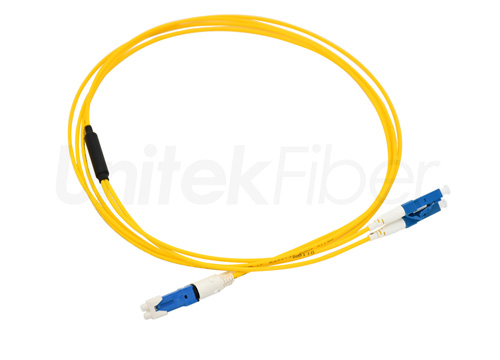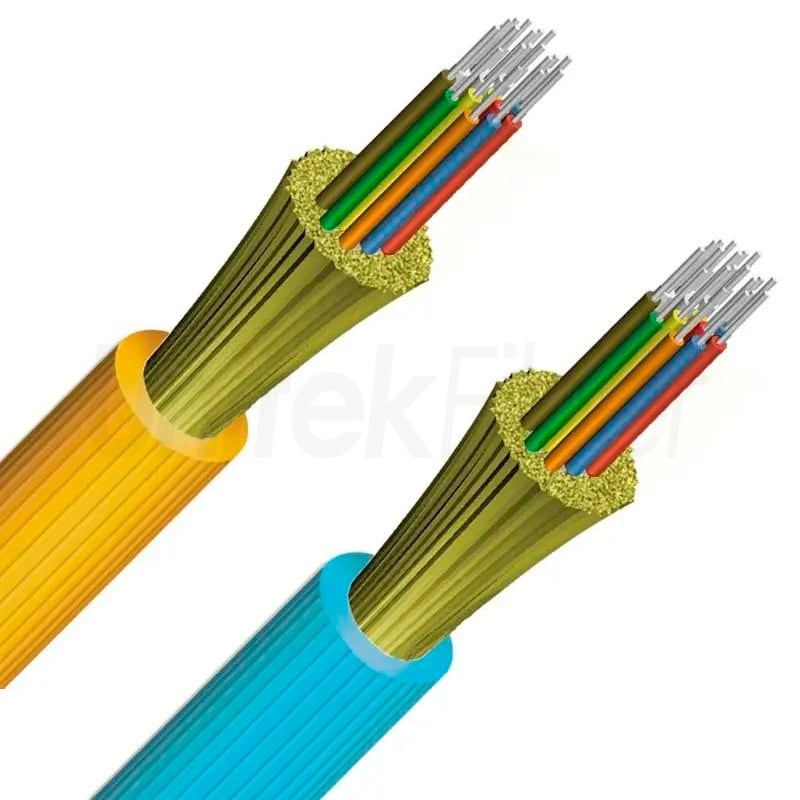

Fiber optic cables are categorized by their mode (Single-mode OS2 vs. Multimode OM3/4/5), construction (Loose Tube vs. Tight Buffered), and application environment (Indoor/LSZH, Outdoor/ADSS, or Armored). In 2026, the most critical types for high-bandwidth networks include MTP/MPO for data centers, ADSS for electrical grids, and G.657.A2 BIF for space-constrained FTTH deployments.
Choosing the right cable requires balancing tensile strength, environmental resistance, and optical loss. As a 20-year veteran at Unitekfiber Solution, I emphasize that the jacket material is often as critical as the glass core itself.
| # | Cable Type | Mode | Primary Environment | Key Advantage |
| 1 | ADSS | Single-mode | High-voltage Spans | Self-supporting, No metal |
| 2 | OPGW | Single-mode | Power Grid Ground | Dual function: Ground + Data |
| 3 | GYTS | SM / MM | Outdoor Duct/Buried | Steel tape crush resistance |
| 4 | GYTA | SM / MM | Outdoor Duct/Aerial | Aluminum tape moisture barrier |
| 5 | MTP/MPO | SM / MM | Data Center / SAN | Ultra-high density (Base-8/12) |
| 6 | FTTH Drop | G.657.A2 | Last Mile / Indoor | Excellent bend radius ($7.5mm$) |
| 7 | Armored Patch | SM / MM | Industrial / Campus | Rodent and crush protection |
| 8 | Tactical Fiber | SM / MM | Military / Broadcast | High flexibility & durability |
| 9 | Ribbon Fiber | Single-mode | Hyperscale DC | Mass fusion splicing speed |
| 10 | Micro Cable | Single-mode | Air-blown Micro-duct | Maximum space utilization |
Designed for installation on power transmission lines, ADSS fiber optic cable contains no metallic components, preventing "tracking" in high-voltage electromagnetic fields.
Expert Insight: At Unitekfiber, we use high-modulus aramid yarns to ensure the cable maintains its integrity under ice and wind loads. The sag-tension calculation is governed by:

OPGW replaces standard ground wires on high-voltage towers. It serves the dual purpose of shielding conductors from lightning while providing a high-speed fiber backbone. It is the ultimate "hidden" infrastructure of the modern grid.
The workhorse of outdoor telecommunications. It uses a corrugated steel tape (CST) armor.
Application: Ideal for direct burial or high-risk ducts where rodent protection is mandatory.
Similar to GYTS, but uses aluminum tape.
Technical Fact: Aluminum provides superior moisture resistance (APL) compared to steel, making it the preferred choice for humid, tropical environments or damp ducts.
The heart of 400G and 800G data centers. A single MPO-24 connector can replace 12 duplex LC connectors, drastically reducing cable bulk.
Soft CTA: Transitioning to 800G? Unitekfiber’s Elite MPO connectors achieve an ultra-low insertion loss of ≤ 0.35dB.
Recognizable by its flat profile, this cable is designed for the "Last Mile." It utilizes G.657.A2 (BIF) glass, which allows it to be stapled or bent around sharp apartment corners without signal loss.
These are indoor cables wrapped in a flexible stainless steel spiral tube. They provide "ruggedized" connectivity for floor-level patching where standard LSZH jackets would be damaged by heavy equipment or foot traffic.
Built for rapid deployment and retrieval, tactical cables use a specialized Polyurethane (PU) jacket. They are designed to be run over by trucks and flexed thousands of times without fatigue—perfect for military field ops and outside broadcast (OB) vans.
Ribbon fiber organizes fibers into flat strips (usually 12 fibers per ribbon).
The Benefit: It allows for Mass Fusion Splicing, where 12 fibers are spliced in a single cycle, reducing labor time by up to 80% in high-count (864+ fiber) cables.
Ultra-slim cables designed to be "blown" into micro-ducts using compressed air.
Why it matters: It allows operators to scale fiber capacity as needed without new trenching. A 2.0mm micro cable can hold up to 144 fibers.
The most common mistake in procurement is confusing the Fiber Mode.
Single-mode (OS2): Uses a 9 um core. Optimized for 1310nm and 1550nm.
Attenuation: ≤ 0.35 dB/km.
Multimode (OM4/OM5): Uses a 50 um core. Optimized for 850nm.
Distance Limit: OM4 supports 100G up to 100m.
Unsure which mode fits your 2026 upgrade? At Unitekfiber Solution, our engineers provide free link-budget simulations to ensure your cable choice matches your transceiver's reach. Consult with my engineering team today.
--- Learn more about the Difference between Single Mode vs Multimode FiberOptic Cables
Jacket Rating: Always specify OFNP (Plenum) for ceiling spaces or LSZH for public areas to comply with fire safety codes.
Fiber Brand: High-purity silica (like the glass used in Unitekfiber products) prevents Hydrogen Darkening, which can increase signal loss over 10-15 years.
Testing: Every cable should come with an Insertion Loss (IL) and Return Loss (RL) report.
The "Jacket Trap": Using PE (Outdoor) cables indoors is a major fire code violation. Solution: Always verify LSZH (Low Smoke Zero Halogen) or OFNP (Plenum) ratings for indoor segments.
Compatibility Issues: Mixing G.652.D (Standard SM) with G.657.A2 (BIF) is generally fine, but mixing Single-mode and Multimode will cause a total link failure.
The Contamination Crisis: In high-density MPO systems, 85% of failures are due to dirty end-faces. Solution: Use "Click-cleaners" before every mating.
By 2030, we expect Hollow Core Fiber to emerge for ultra-low latency applications, but for today’s hyperscale builds, G.654.E (Ultra-low-loss Single-mode) is the new frontier for long-haul 400G/800G transmission, offering 20% better reach than standard OS2.
 5G 6G Fronthaul & Backhaul
View More
5G 6G Fronthaul & Backhaul
View More
 Data Center & Cloud Interconnect
View More
Data Center & Cloud Interconnect
View More
 Enterprise & Industrial Optical
View More
Enterprise & Industrial Optical
View More
 FTTx & Access Solutions
View More
FTTx & Access Solutions
View More
 Metro & Access Networks
View More
Metro & Access Networks
View More
 Optical Cabling Systems
View More
Optical Cabling Systems
View More
 Optical Transceivers & Interconnect
View More
Optical Transceivers & Interconnect
View More
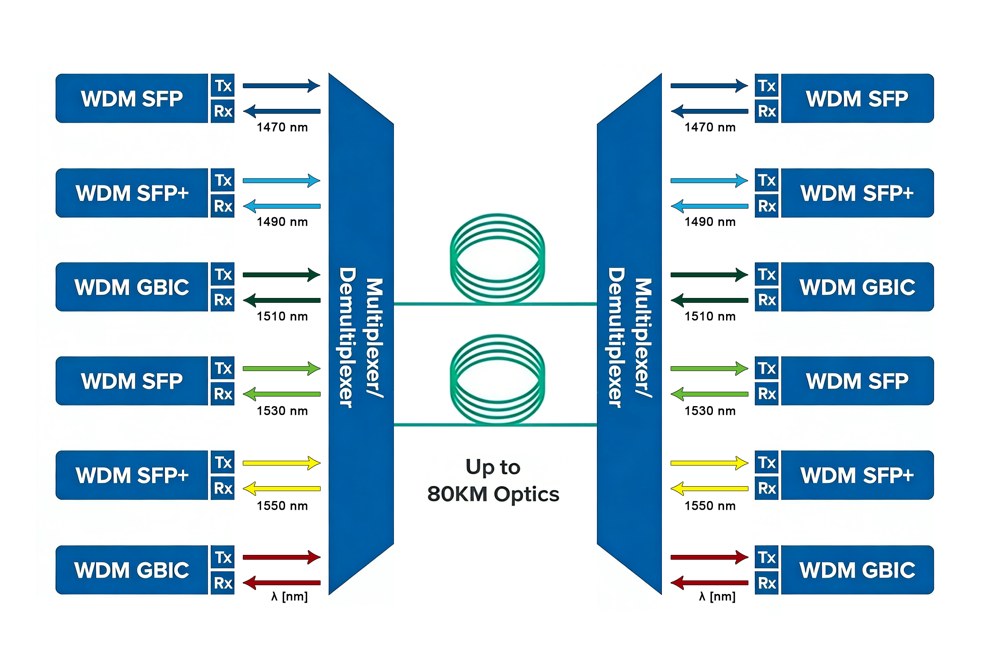 WDM & High-Capacity Transmission
View More
WDM & High-Capacity Transmission
View More
+86-755-21034367