
Selecting the correct outdoor fiber optic cable is the single most critical decision in any broadband, campus, or long-haul network deployment. Unlike indoor environments where climate control and physical security are guaranteed, the outdoors presents an actively hostile environment for delicate optical glass. Network engineers must account for extreme temperature fluctuations, hydrostatic pressure, ultraviolet degradation, and physical threats ranging from heavy ice loads to aggressive burrowing rodents.
Making an incorrect choice during the procurement phase inevitably leads to catastrophic network failures, exorbitant repair costs, and unacceptable downtime. In this comprehensive engineering guide, Unitekfiber Solution provides expert, field-tested methodologies to ensure your network infrastructure survives and thrives in the harshest outdoor conditions. We will explore structural architectures, deployment scenarios, and precise technical specifications required for modern high-bandwidth networks.
Identify the deployment environment first to determine whether an aerial, direct burial, or underground duct architectural design is required.
Prioritize water blocking technology using either traditional thixotropic gels or modern dry-block super absorbent polymers to prevent micro-bending and glass degradation.
Select the appropriate jacketing material with High-Density Polyethylene (HDPE) remaining the industry standard for superior ultraviolet and moisture resistance.
Deploy Corrugated Steel Tape armor for direct burial scenarios to provide maximum crush resistance and an impenetrable barrier against rodent attacks.
Partner with established manufacturers like Unitekfiber Solution to ensure stringent testing standards, customized fiber counts, and verified long-term reliability.
Assessing environmental threats is the mandatory first step in cable selection. Modern network designs must specifically mitigate water ingress, temperature extremes, mechanical stress, and biological threats to guarantee a standard 25-year operational lifespan.
When engineering an outdoor optical network, understanding the enemies of silica glass is paramount. The primary cause of fiber degradation is water ingress. When water permeates a cable jacket and freezes, the expansion causes extreme pressure on the optical cores, leading to micro-bending and immediate signal attenuation. To combat this, outdoor fiber optic cables must integrate robust water-blocking mechanisms. Older designs relied heavily on messy thixotropic gels, while modern engineering increasingly favors dry water-swellable tapes and yarns that absorb moisture and expand to block further ingress instantly.
Temperature fluctuations also present a severe threat. Materials naturally expand and contract with thermal variations. If the cable jacket shrinks faster than the internal optical fibers during freezing conditions, the fiber can buckle. Conversely, in extreme heat, jacket expansion can stretch the fiber beyond its tension limits. Therefore, cables require a Central Strength Member (CSM), typically made of Fiberglass Reinforced Plastic (FRP) or steel wire, to provide thermal stability and mechanical rigidity.
The structural architecture of the cable dictates its physical resilience and ideal use case. The most dominant designs include Loose Tube, Ribbon, Armored, and All-Dielectric Self-Supporting constructs, each engineered for specific deployment methodologies.
Loose tube cable design is the gold standard for outdoor fiber optic networks. In this architecture, individual bare fibers (usually 250 microns) are housed inside flexible plastic buffer tubes. These tubes have an inner diameter significantly larger than the fibers themselves, allowing the optical cores to float freely. This floating mechanism isolates the delicate glass from external mechanical forces, such as pulling tension during installation or environmental expansion and contraction. Loose tube cables are highly versatile and represent the majority of underground duct and lashed aerial deployments.
As bandwidth demands from hyperscale data centers and 5G networks exponentially increase, maximizing fiber density within limited duct spaces has become a critical engineering challenge. Ribbon fiber cables solve this by organizing fibers into flat, linear arrays—typically 12 fibers wide—which are then stacked on top of one another. The greatest operational advantage of ribbon cable is the ability to utilize mass fusion splicing. Instead of splicing individual fibers one by one, technicians can splice an entire 12-fiber ribbon simultaneously, drastically reducing expensive labor hours during the deployment of high-fiber-count (864 to 3456 fibers) backbone routes.
When installing a cable directly into the earth without the protection of a rigid conduit, armored cables are absolutely mandatory. The primary threat in direct burial applications is the local rodent population—specifically gophers, rats, and squirrels—whose constantly growing incisors drive them to chew through standard plastic jacketing. Corrugated Steel Tape (CST) armor provides an impenetrable metallic barrier against rodents while offering immense crush resistance against the weight of the backfilled earth and heavy machinery passing overhead.
All-Dielectric Self-Supporting (ADSS) cables are specialized structures designed entirely without metallic components. This unique "all-dielectric" property makes them immune to electromagnetic interference, allowing them to be safely installed directly alongside high-voltage electrical transmission lines. ADSS relies on robust outer jackets and dense layers of aramid yarns (Kevlar) to provide incredible tensile strength, allowing the cable to support its own weight and withstand severe wind and ice loading across long spans between utility poles.
Selecting the right cable architecture requires balancing deployment environment constraints, mechanical protection requirements, and overall project budgets. Use this comparative matrix to align your network needs with the correct physical design.
Cable Architecture Primary Deployment Rodent Protection Crush Resistance Cost Profile Standard Loose Tube Underground Ducts Low Medium Cost-Effective Ribbon Cable Data Center Interconnects Low Medium High Initial / Low Labor Armored (CST) Direct Burial Earth Extremely High Very High Moderate ADSS Aerial Utility Poles / High Voltage None Medium Moderate Initial / Fast Install
The physical method of placing the cable heavily dictates the required specifications. Aerial installations prioritize tensile strength and UV resistance, while underground systems demand superior crush resistance and robust water blocking capabilities.
Aerial deployments involve stringing fiber optic cables between existing utility poles. Network planners must choose between lashing a standard loose tube cable to a galvanized steel messenger wire or deploying a self-supporting ADSS or Figure-8 cable. Figure-8 cables integrate a steel messenger wire directly into the jacket cross-section, streamlining installation. However, in regions prone to severe weather, the "sag and tension" calculations become complex. Engineers must account for Maximum Operating Tension (MOT) and the National Electrical Safety Code (NESC) loading zones (Light, Medium, Heavy) to prevent the cable from breaking under the weight of accumulated winter ice.
Underground deployment typically offers better long-term security than aerial routes, shielding the network from storms, falling trees, and vehicular pole strikes. In duct installations, a standard unarmored loose tube cable is pulled or blown into a pre-installed High-Density Polyethylene (HDPE) conduit. Air-blown fiber techniques are highly efficient for long distances, utilizing compressed air to float the cable through the micro-ducts, minimizing pulling tension. For direct burial, where trenching or vibratory plowing places the cable directly into the soil, double-jacket double-armor (DJDA) designs are recommended to survive the harsh installation process and rocky subsoils.
Beyond the physical jacket, selecting the appropriate optical glass core determines the bandwidth capacity and maximum distance of your network. Single-mode OS2 fibers absolutely dominate the outdoor landscape.
When transitioning from physical protection to optical performance, the distinction between single-mode and multimode fiber is critical. For almost all outdoor applications, OS2 Single-mode fiber is the de facto standard. Featuring a microscopic 9-micron core, single-mode fiber eliminates modal dispersion, allowing signals to travel tens or even hundreds of kilometers without requiring active regeneration. It is the backbone of FTTx (Fiber to the X) architectures, long-haul telecommunications, and wide-area networks.
Multimode fiber (OM3, OM4, OM5), which utilizes a larger 50-micron core, is generally restricted to indoor data center environments. However, in specific outdoor campus scenarios where building-to-building links are less than 300 meters, outdoor-rated multimode cable can be deployed to leverage cheaper VCSEL transceivers. Regardless of mode, the fiber cores must meet strict industry attenuation standards (e.g., ITU-T G.652.D or G.657.A1 for bend-insensitive performance) to guarantee minimal signal loss per kilometer.
Practical field experience often supersedes theoretical knowledge. At Unitekfiber Solution, we have observed that over-engineering the physical layer during the initial build drastically reduces operational expenses over the network lifecycle.
Theoretical specifications are helpful, but field experience reveals the true cost of compromised material selection. A recurring scenario we witness at Unitekfiber Solution involves regional ISPs attempting to reduce upfront Capital Expenditures (CAPEX) by deploying unarmored cables in direct burial trenches. In a specific rural broadband project we evaluated, standard loose tube cables were installed to save approximately fifteen percent on material costs. Within twelve months, ground-dwelling rodents had breached the high-density polyethylene jackets in multiple locations, severing the active glass cores.
The resulting network outages severely damaged the ISP's reputation, and the emergency Operational Expenditures (OPEX) required to dispatch splicing crews, excavate the faults, and splice in armored repair sections far exceeded the initial savings. Based on this experience, Unitekfiber Solution advocates for a "deploy once, deploy right" philosophy. We highly recommend utilizing Double Armored Double Jacket (DADJ) outdoor fiber optic cable in high-risk zones, providing peace of mind and virtually eliminating biological and mechanical fault vulnerabilities.
Upgrading or planning an outdoor optical network requires precise material specification and a reliable manufacturing partner. Consolidate your requirements and engage with experts to optimize your bill of materials.
The success of your broadband deployment hinges on the cables you select today. By carefully analyzing your environmental threats, choosing the appropriate architectural structure, and standardizing on high-quality single-mode glass, you can build a resilient, future-proof network capable of supporting next-generation bandwidth demands. Do not let subpar infrastructure compromise your operational integrity. Partner with an industry-leading manufacturer that understands the extreme demands of outdoor environments and can deliver highly customized, heavily tested optical connectivity solutions. Take the next step to guarantee your network's longevity.
Ready to elevate my connectivity? Contact Unitekfiber Solution today to get my custom project quote and secure the precise outdoor fiber optic cables my network demands.
Indoor cables prioritize flexibility, tight bend radii, and strict fire safety ratings (such as Plenum or Riser flame retardancy) because they operate in climate-controlled spaces. Outdoor fiber optic cables are engineered for survival. They feature rugged UV-resistant polyethylene jackets, comprehensive water-blocking materials (gels or dry tapes), and structural reinforcements like central strength members and metallic armoring to withstand extreme temperatures, moisture, and mechanical stress.
Industry standards and local codes dictate installation depth, but direct burial fiber optic cables are typically trenched at a depth of 30 to 48 inches (76 to 122 centimeters). Burying the cable below the local frost line is critical to prevent the destructive mechanical forces caused by soil heaving during freeze-and-thaw cycles. Additionally, this depth protects the infrastructure from accidental strikes by agricultural equipment and superficial digging.
Generally, standard outdoor fiber optic cables cannot be run more than 50 feet (15 meters) into a building due to strict fire and building codes. Outdoor cable jackets are made of polyethylene, which produces toxic smoke and acts as an accelerant during a fire. To bridge the gap, network designers use indoor/outdoor rated cables, which combine water-blocking features with flame-retardant LSZH (Low Smoke Zero Halogen) jackets, or they terminate the outdoor cable at the building entrance facility and splice it to an indoor-rated cable.
Standard aerial cables, such as Figure-8 designs, rely on an integrated steel messenger wire to support the tension between poles. ADSS (All-Dielectric Self-Supporting) cable is entirely non-metallic. It achieves its immense tensile strength through dense layers of aramid yarns (Kevlar) woven beneath the outer jacket. Because it contains no conductive metal, ADSS can be installed safely in the high-voltage power zone of utility poles without risking electromagnetic interference or electrical arcing.
 5G 6G Fronthaul & Backhaul
View More
5G 6G Fronthaul & Backhaul
View More
 Data Center & Cloud Interconnect
View More
Data Center & Cloud Interconnect
View More
 Enterprise & Industrial Optical
View More
Enterprise & Industrial Optical
View More
 FTTx & Access Solutions
View More
FTTx & Access Solutions
View More
 Metro & Access Networks
View More
Metro & Access Networks
View More
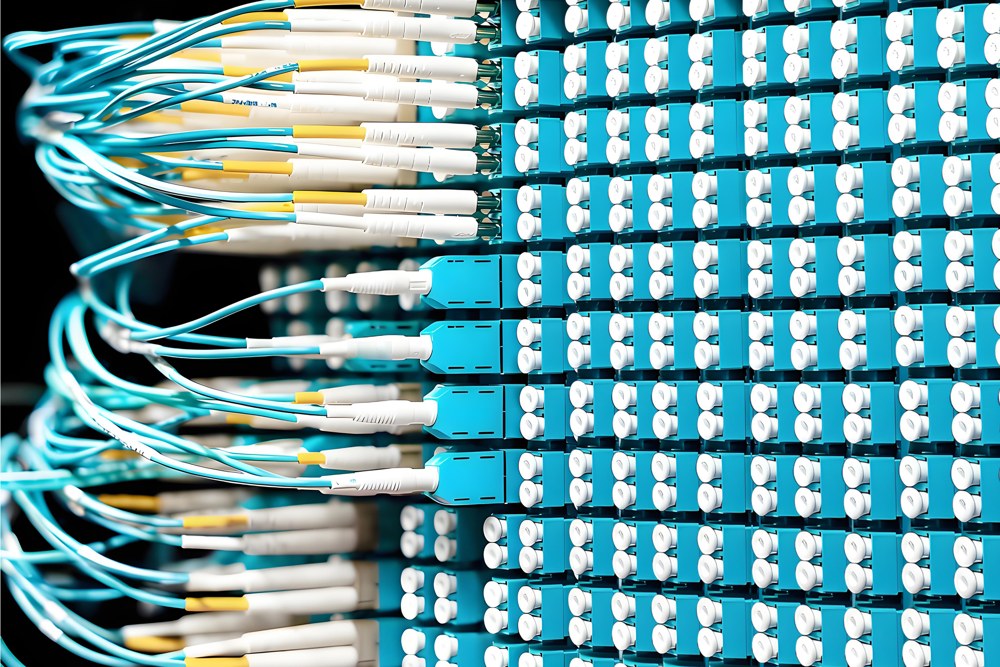 Optical Cabling Systems
View More
Optical Cabling Systems
View More
 Optical Transceivers & Interconnect
View More
Optical Transceivers & Interconnect
View More
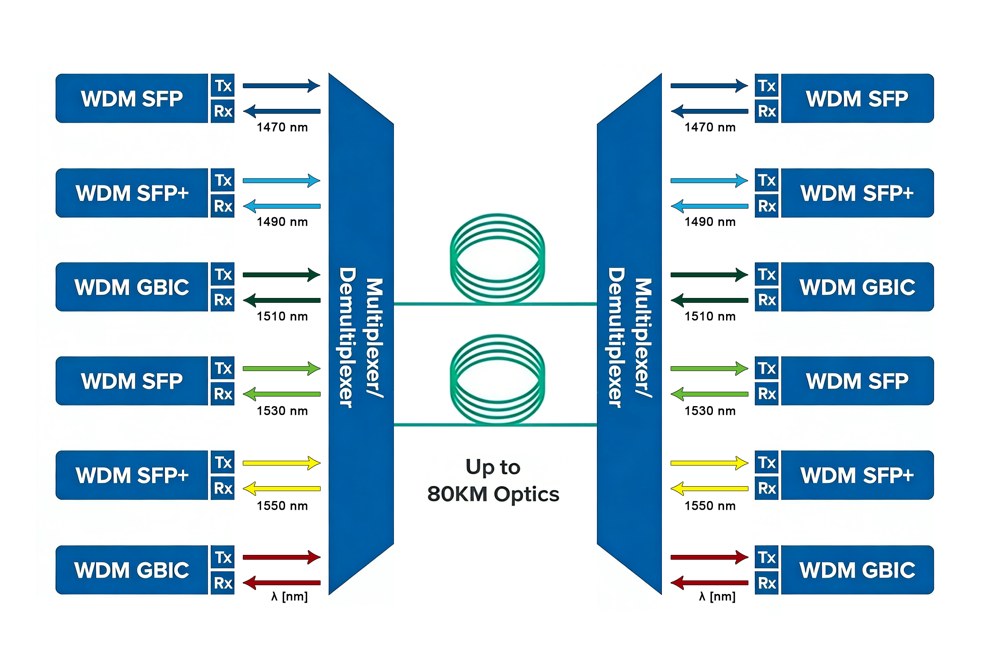 WDM & High-Capacity Transmission
View More
WDM & High-Capacity Transmission
View More
+86-755-21034367