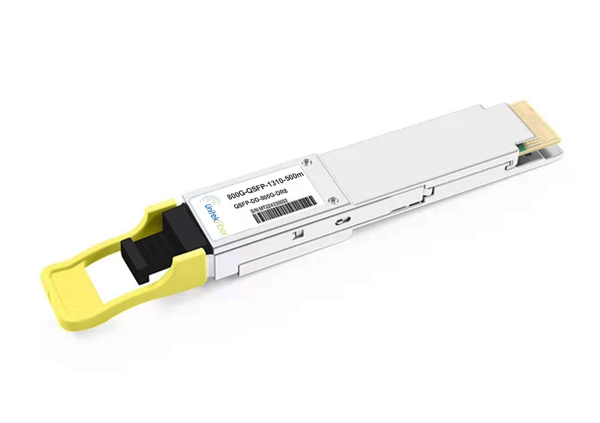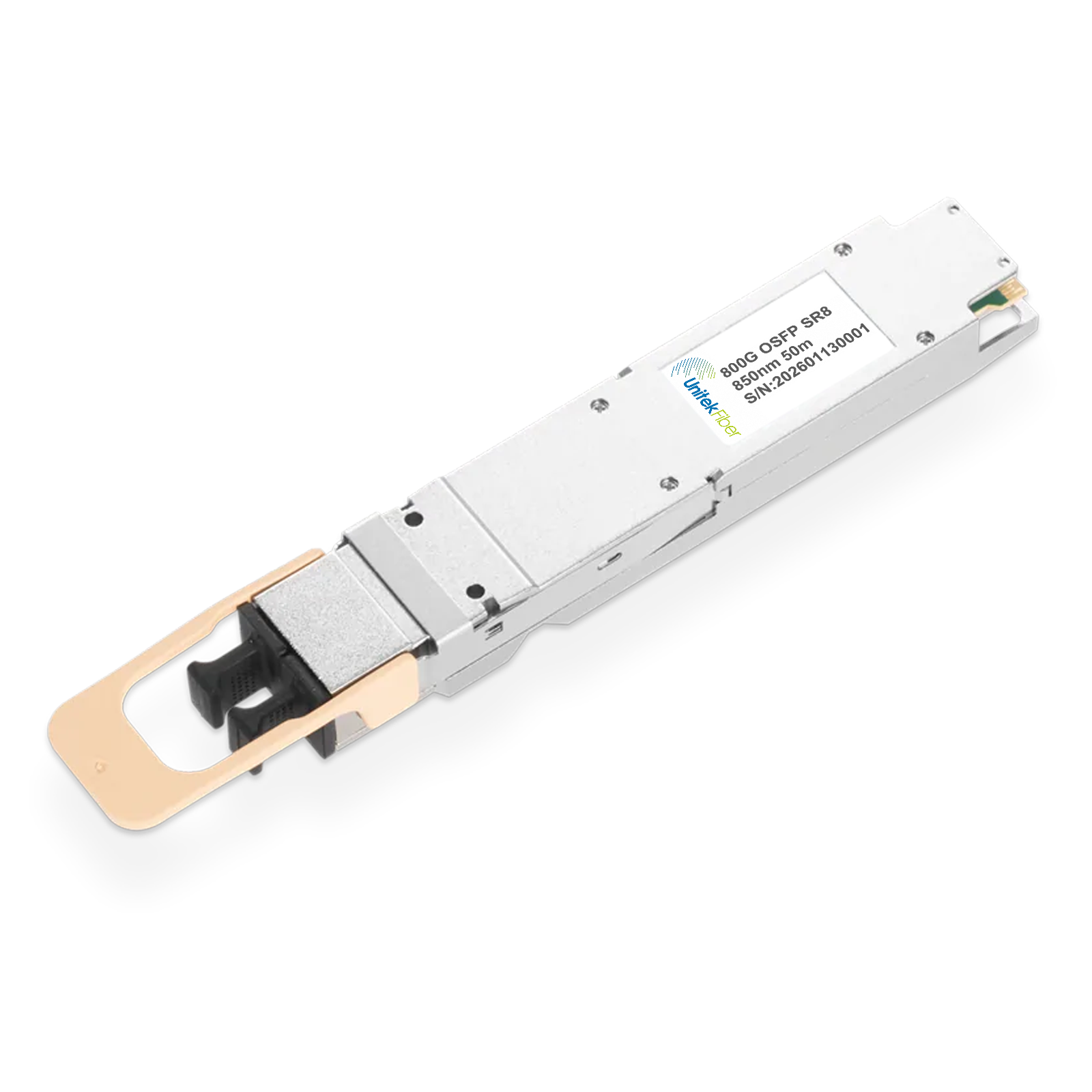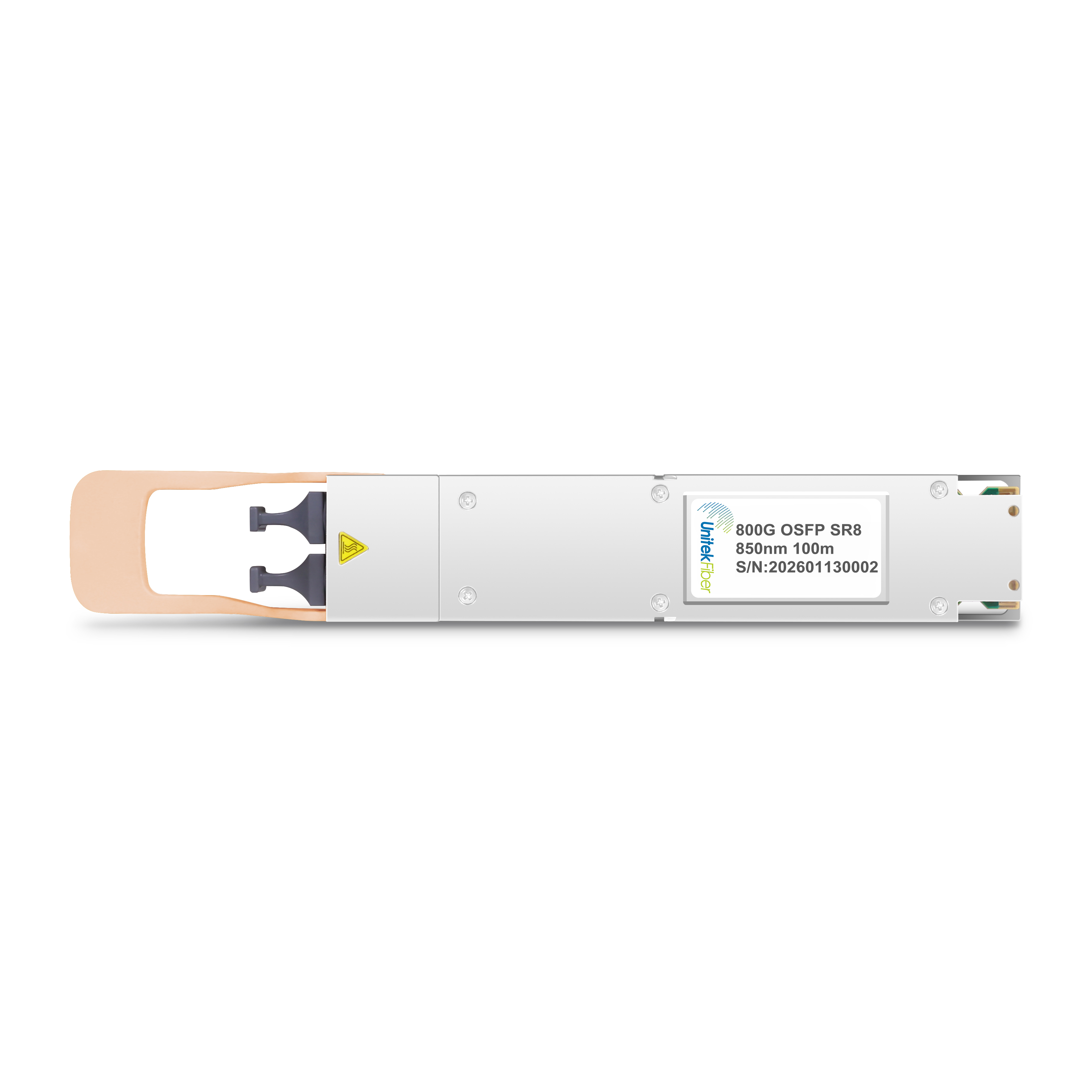

With the continuous development of technologies such as cloud computing, artificial intelligence, and big data, the volume of data transmission within and between data centers has increased dramatically. Traditional optical transceivers can no longer meet the demand, and As a professional 800G optical transceiver supplier, Unitekfiber offers a full range of high-performance 800G modules, including multimode 800G SR8 and single-mode 800G DR8, FR4, FR8 transceivers, perfectly addressing the high-bandwidth, ultra-low latency needs of data centers, 5G networks and metropolitan area networks.
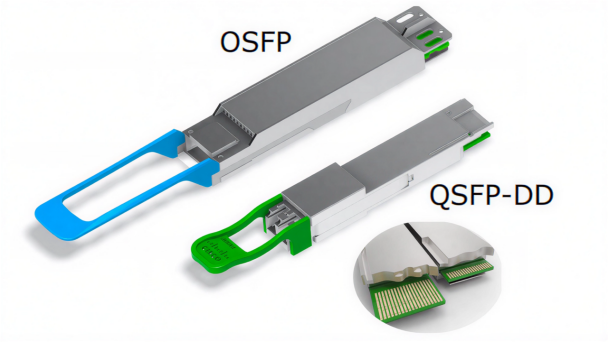
In terms of applications, data centers are the main application scenario for 800G optical modules. They can meet the demand for high-speed data exchange between switches and storage devices. In 5G networks, they also help to achieve high-capacity data transmission between base stations and the core network. From an industry analysis perspective, internet companies and telecommunications operators have a strong demand for 800G optical transceivers modules to build more efficient and competitive network infrastructure.
Multimode 800G optical transceivers primarily include different types based on multimode fiber. Among them is the 800G SR8 fiber optical transceiver, which is suitable for short-distance transmission, typically used in scenarios such as inter-rack connections within data centers. It features relatively low cost and ease of installation. The 800G SR8 uses an 8x106.25Gb/s PAM4 scheme on the electrical interface side and 2x400GBASE-SR4 on the optical interface side, with dual MPO-12 APC optical connectors, a non-hermetic COB optical design, 3.3V power supply, and power consumption < 16W. This product is currently one of the most widely shipped products.
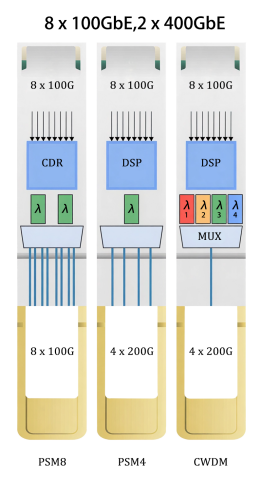
Single-mode 800G optical transceivers primarily transmit over longer distances at the 1310nm wavelength and are used for medium-to-long-distance data transmission, such as interconnections between data centers. They can ensure high-speed data transmission over longer distances and are suitable for metropolitan area networks and other scenarios. Currently, the main types of single-mode 800G optical fiber transceivers include:
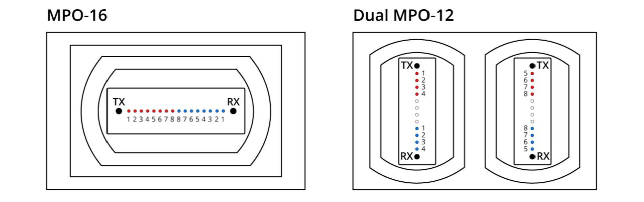
800G DR8, 800G 2xDR4, 800G PSM8: These three standards have similar internal architectures, including 8 Tx and 8 Rx channels, with a single-channel data rate of 100Gbps, requiring 16 optical fibers.
800G 2xFR4 and 800G 2xLR4: These two standards have similar internal structures, containing 4 wavelengths, with a single-channel data rate of 100Gbps. The number of fibers is reduced through multiplexing, requiring 4 optical fibers.
800G FR4: This solution uses four wavelengths, with a single-channel data rate of 200Gbps, requiring two optical fibers and supporting a transmission distance of 2km.
800G FR8: This solution uses eight wavelengths, each with a data rate of 100Gbps, requiring two optical fibers and supporting a transmission distance of 2km. The eight wavelength channels are 1271/1291/1311/1331/1351/1371/1391/1411nm.
Technology research and development costs are a significant factor influencing price. Because 800G optical transceivers involve advanced optoelectronic technology development, the substantial R&D investment is reflected in the product price. The quality and supply of raw materials also affect the price, such as high-performance chips and optical fibers. Furthermore, the degree of market competition has a significant impact on price; if there are many suppliers in the market, prices are likely to decrease due to competition.
Technological maturity is one of the key factors for mass production. Mass production can only be achieved when the design, manufacturing processes, and other technologies of 800G optical transceivers reach a stable and reliable level. The sophistication and capacity of production equipment also limit the scale of mass production; advanced production equipment can improve production efficiency and product quality. At the same time, supply chain collaboration is crucial; all stages, from chip manufacturing to module packaging, need to work closely together.
800G optical transceivers modules will remain at the forefront of technology for the next few years. With continuous technological advancements, their application scenarios will further expand. Currently, relevant companies should seize this opportunity, increase R&D investment to improve technological capabilities and reduce costs; strengthen cooperation across the supply chain to improve production efficiency; and simultaneously monitor market demand dynamics and adjust product strategies accordingly, thereby securing a favorable position in the 800G optical transceivers market. If you have any questions or need, please feel much free to contact us at Email sales@unitekfiber.com.
 5G 6G Fronthaul & Backhaul
View More
5G 6G Fronthaul & Backhaul
View More
 Data Center & Cloud Interconnect
View More
Data Center & Cloud Interconnect
View More
 Enterprise & Industrial Optical
View More
Enterprise & Industrial Optical
View More
 FTTx & Access Solutions
View More
FTTx & Access Solutions
View More
 Metro & Access Networks
View More
Metro & Access Networks
View More
 Optical Cabling Systems
View More
Optical Cabling Systems
View More
 Optical Transceivers & Interconnect
View More
Optical Transceivers & Interconnect
View More
 WDM & High-Capacity Transmission
View More
WDM & High-Capacity Transmission
View More
+86-755-21034367