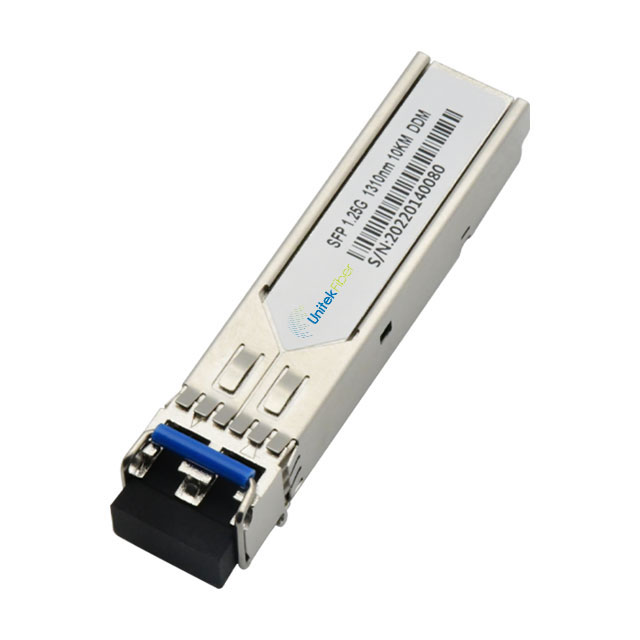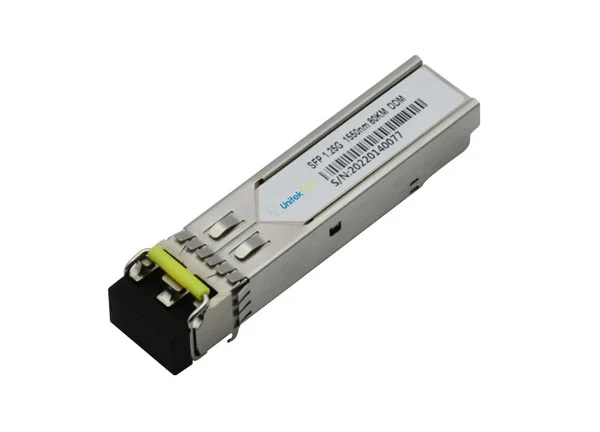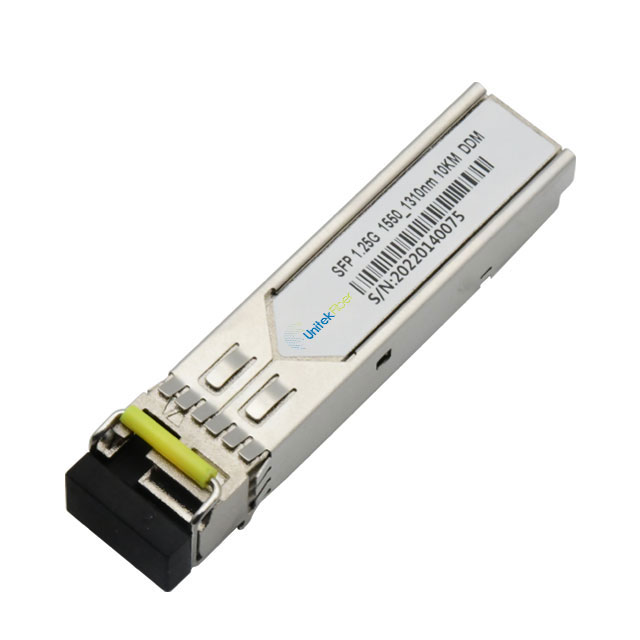

In modern IT infrastructure, the selection of optical modules directly affects network reliability, efficiency, and scalability. As enterprises progressively migrate to high-bandwidth environments, 10G fiber optical modules remain one of the most widely adopted solutions in data centers, enterprise backbone networks, and metropolitan area networks. One of the most common deployment challenges is choosing between short-reach (SR) and long-reach (LR) optical modules. An inappropriate choice can lead to unnecessary costs, network instability, or performance bottlenecks. This article provides a systematic comparison of the technical features, application scenarios, and key decision factors associated with 10G SR and 10G LR optical modules, helping organizations build efficient and future-ready network architectures.
In optical communications, SR and LR SFP optical modules are among the most widely deployed solutions, distinguished primarily by their transmission distance, wavelength, and required fiber type. When comparing short-reach and long-reach options, the choice largely depends on the deployment environment.
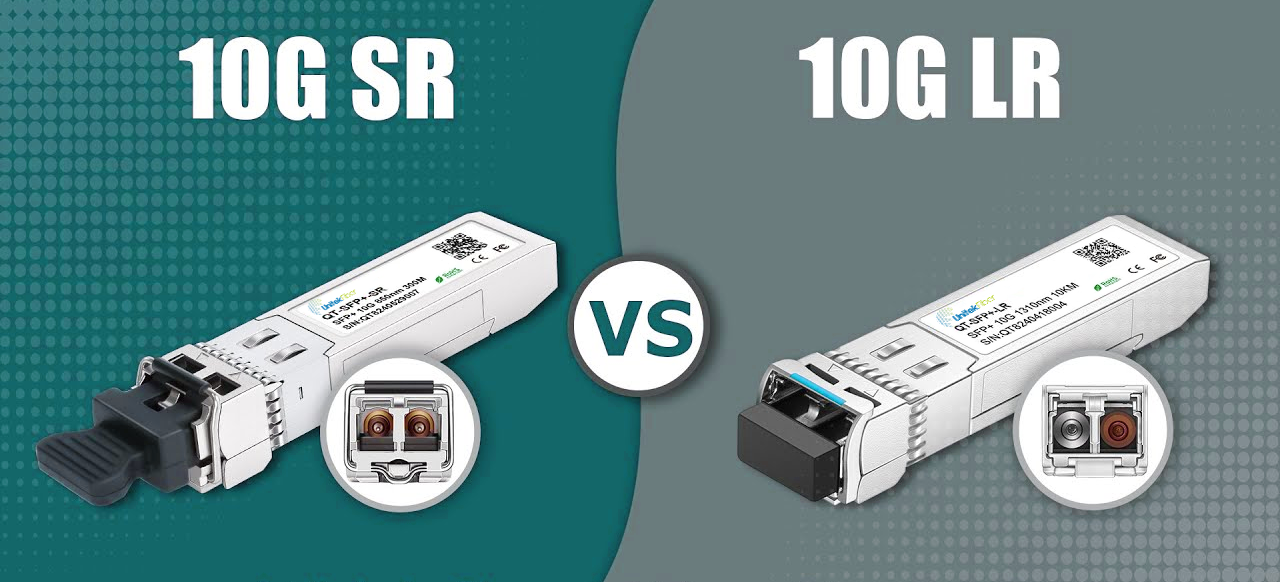
The SFP-10G-SR is a 10GBASE-SR SFP+ optical module that typically operates at an 850nm wavelength and uses multimode fiber (MMF) as the transmission medium. Designed for stable connections ranging from a few meters to several hundred meters, it is ideal for intra–data center deployments. For example, the 10G SFP+ SR module supports transmission distances of up to 300 meters over OM3 fiber and up to 400 meters over OM4 fiber. Based on VCSEL technology, it offers a low-cost and low-power consumption solution. It is commonly used for server-to-switch connections within the same rack or short-reach links on the same floor.

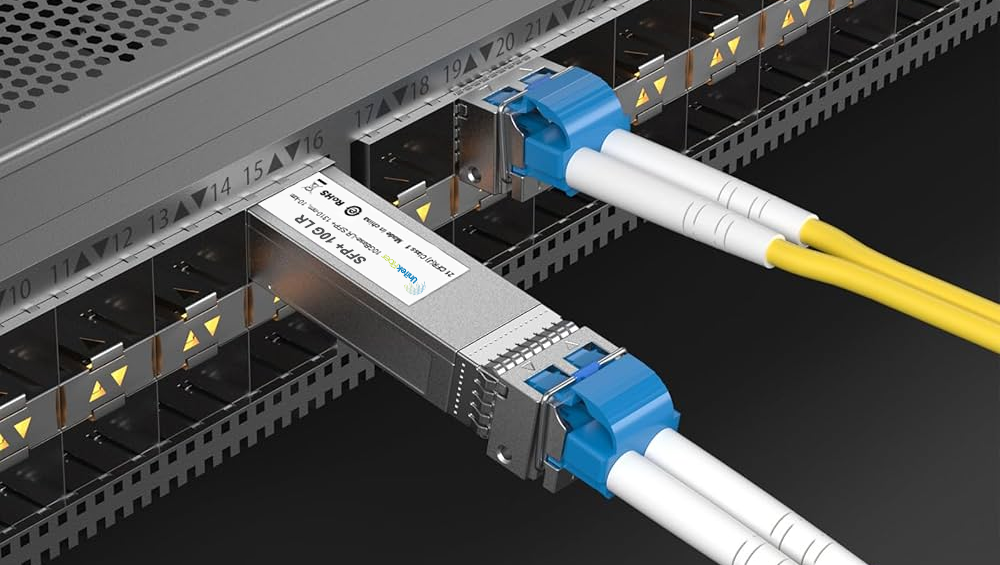
The SFP-10G-LR is a 10GBASE-LR SFP+ optical module equipped with a Distributed Feedback laser (DFB). It operates at a nominal wavelength of 1310nm and supports transmission distances of up to 10 km over Single-Mode Fiber (SMF). These optical modules are ideal for building-to-building connections, campus networks, or Metropolitan Area Networks (MANs), and are commonly deployed for data center interconnects or long-haul backbone links.
Features | SFP+ 10G SR (Short-Reach) | SFP+ 10G LR (Long-Reach) |
Form Factor | SFP+ | SFP+ |
Data Rate | 10 Gbps | 10 Gbps |
Wavelength | 850 nm | 1310 nm |
Transmission Distance | 300m (OM3), 400m (OM4) | 10KM |
Fiber Type | MMF | SMF |
DOM | Yes | Yes |
Laser Type | 850nm VCSEL | DFB 1310nm |
Power Consumption | <1 W | 1–1.5 W |
Applications | For short-distance connections | For long-distance connections |
In summary, short-reach optical transceiver modules are more cost-effective for high-density, short-distance environments, while long-reach modules deliver reliable connectivity over extended distances. When making deployment decisions, organizations should consider required transmission distance, budget, and future scalability to ensure an optimal balance between performance and cost.
Having understood the distinctions between SFP+ 10G LR and SR optical modules, the ultimate selection still hinges on specific requirements. The following key points can help inform a clearer decision:
SFP+ 10G SR: Designed for links up to 300 meters on OM3 fiber and 400 meters on OM4, the SFP+ 10G SR fiber optical module is ideal for rack-to-rack or intra–data center connections. If your network deployment is primarily within a data center—such as server-to-switch connections, Top-of-Rack (ToR) to core switch links, where cabling ranging from a few meters to several hundred meters, then the 10G SFP+ SR optical module is the optimal choice.
SFP+ 10G LR: When network coverage requires longer distances, such as for inter-building connectivity, campus networks, or data center interconnects, the 10G SFP+ LR fiber optical module becomes essential. Operating at a 1310nm wavelength over single-mode fiber, it supports reliable transmission of up to 10 km, meeting the demands of high-bandwidth, low-latency network architectures spanning different geographic areas.
SFP+ 10G SR: Both the optical module and multimode fiber are generally delivers a lower total cost, making it a more cost-effective solution for short-reach applications.
SFP+ 10G LR: While requiring a higher initial investment for the optical module and single-mode fiber, it provides greater long-term value for long-distance networks.
SFP+ 10G SR: Features lower power consumption (typically under 1W), helping reduce heat generation in high-density environments.
SFP+ 10G LR: Consumes slightly more power, which may impact cooling efficiency in dense deployments.
SFP+ 10G SR: Remains a sufficient solution if network requirements are consistently confined within the data center.
SFP+ 10G LR: Offers greater future-proofing if expansion plans involve cross-building or inter-campus connectivity.
Q: Can SR optical transceiver modules be used with single-mode fiber?
A: No. SR fiber optical transceivers are designed specifically for multimode fiber. A stable link cannot be established using single-mode fiber.
Q: Is it possible to use LR optical transceiver modules with multimode fiber?
A: Not recommended. LR optical transceivers are optimized for single-mode fiber, and stable transmission cannot be guaranteed over multimode fiber.
Q: Do both SR and LR optical transceiver modules support hot-plugging?
A: Yes. Both support hot-plugging, allowing for maintenance and replacement without system interruption.
Q: What is the recommended solution for link distances exceeding 10km?
A: Higher-specification modules should be considered, such as 10G ER (40 km) or 10G ZR (80 km).
Q: Can SR and LR optical transceiver modules be mixed on opposite ends of a link?
A: No. Both ends of a link must use the same optical module type (SR-SR or LR-LR). Mixing different types will result in link failure.
Both short-reach and long-reach 10G fiber optical modules offer distinct advantages. The final choice should take into account link distance, budget, power and thermal management, as well as future network expansion needs, ensuring an optimal balance between performance and cost. As an experienced optical module manufacturer, UnitekFiber provides high-quality, cost-effective 10G modules. For any inquiries or assistance, please feel free to contact us.
 5G 6G Fronthaul & Backhaul
View More
5G 6G Fronthaul & Backhaul
View More
 Data Center & Cloud Interconnect
View More
Data Center & Cloud Interconnect
View More
 Enterprise & Industrial Optical
View More
Enterprise & Industrial Optical
View More
 FTTx & Access Solutions
View More
FTTx & Access Solutions
View More
 Metro & Access Networks
View More
Metro & Access Networks
View More
 Optical Cabling Systems
View More
Optical Cabling Systems
View More
 Optical Transceivers & Interconnect
View More
Optical Transceivers & Interconnect
View More
 WDM & High-Capacity Transmission
View More
WDM & High-Capacity Transmission
View More
+86-755-21034367