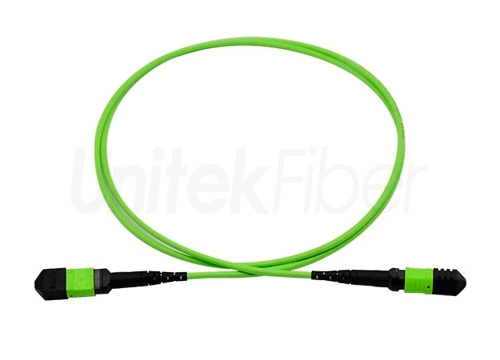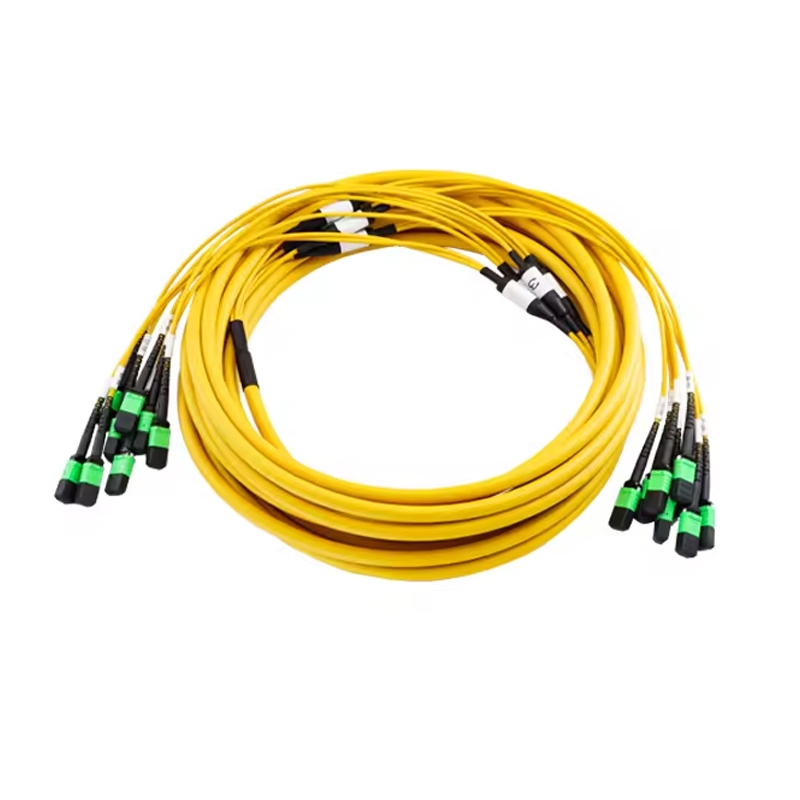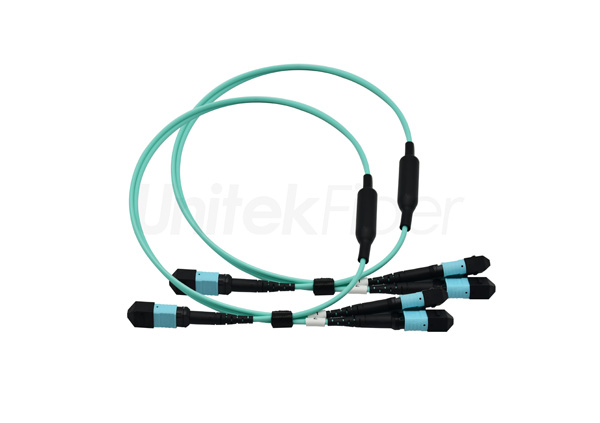

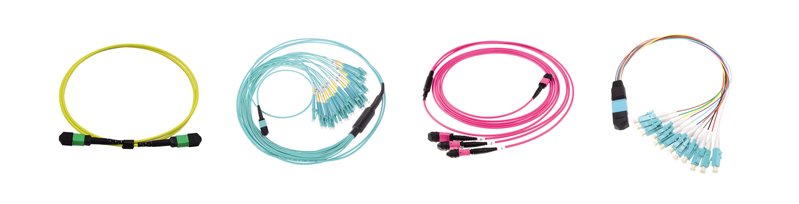
To select the right breakout MPO/MTP cables, you need to take into account core count, fiber mode, polarity standard, and connector gender. Common fiber modes include multimode and single mode, polarity options cover Type A, Type B and Type C, and connector versions are male or female for accurate mating. All these factors should match your current usage requirements and future network scalability.
Breakout MPO/MTP cables play a pivotal role in high density fiber networks, as they split multi-fiber connections into individual channels to enable flexible and efficient connectivity. Choosing the appropriate MPO/MTP cable is crucial to ensuring stable signal transmission, seamless compatibility, and future network scalability. As a professional MPO/MTP cables manufacturer, UnitekFiber will provide a comprehensive guide in this article to help you choose the right breakout MPO/MTP cables.
The fiber core count of breakout MPO/MTP fiber cables directly determines their transmission capacity and application scope, making it a primary consideration for selection.
Ideal for 40G network deployments, the 8C breakout MPO/MTP cable can split a single port into four 10G signal channels. Its typical application scenarios include enterprise campus network upgrades and small to medium sized data centers, where moderate bandwidth and flexible connectivity are required.
As a standard configuration, 12C MPO cable/MTP cable supports 40G/100G direct connections or parallel connections (e.g., QSFP28 100G SR4). Due to its balanced performance and wide compatibility, 12C breakout MPO/MTP cable has become the mainstream choice for interconnections within data centers.
24Cores MPO/MTP cable provides redundant channels to enhance network reliability and can accommodate future network evolution toward 400G/800G. 24C MPO/MTP cable is commonly deployed in the core layer of hyperscale data centers, where high reliability and scalability are critical.
The choice of fiber type falls into multimode and single mode, and it depends on network transmission distance and application.
Single mode MPO/MTP cables are suitable for long distance transmission, such as in Metropolitan Area Networks (MANs). For example, an 8C single mode breakout MPO/MTP fiber cable can support 100G Ethernet backbone links over distances of up to 10 kilometers, enabling high speed data interconnection across the entire metropolitan area.
Multimode MPO/MTP fiber cables are designed for short-distance and high-density connections, such as those within data centers. Among them, the multimode OM4 breakout MPO/MTP fiber cable supports 8K video transmission over distances of up to 100 meters, effectively preventing signal attenuation and ensuring high quality data transmission.
UnitekFiber supplies a full range of fiber types to meet diverse network requirements, including single-mode G657A1, G657A2, G657B1, G657B2 and G657B3, as well as multimode OM1, OM2, OM3, OM4 and OM5 from YOFC and Corning.
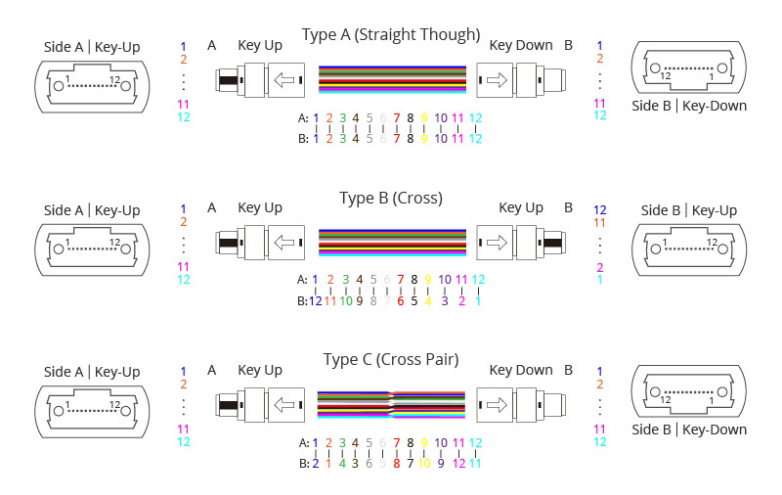
Polarity determines the fiber core alignment between the two ends of the cable, which is essential for ensuring correct signal transmission. Breakout MPO/MTP cables are available in three polarity types to meet different connection requirements.
The core 1 at one end corresponds directly to core 1 at the other end, with an identical core sequence. This type is suitable for direct switch-to-switch connections, where the orientation of the MPO/MTP connectors at both ends is the same.
The arrangement of fiber cores at the two ends of the interleaved MPO/MTP cable is reversed. Specifically, core 1 at one end corresponds to core 12 at the other, and core 12 at one end corresponds to core 1 at the other. This type is used for switch-to-server connections, where the MPO/MTP connector at one end is rotated 180 degrees.
In Type C MPO/MTP cables, adjacent fiber core positions are crossed. Specifically, fiber core 1 on one end aligns with core 2 on the opposite end, while core 12 on one end matches core 11 on the other end. Furthermore, the key tab orientation at the two ends is reversed, with the key facing up on one side and facing down on the other. This polarity type is well suited for complex network topologies that demand flexible and versatile connection methods.
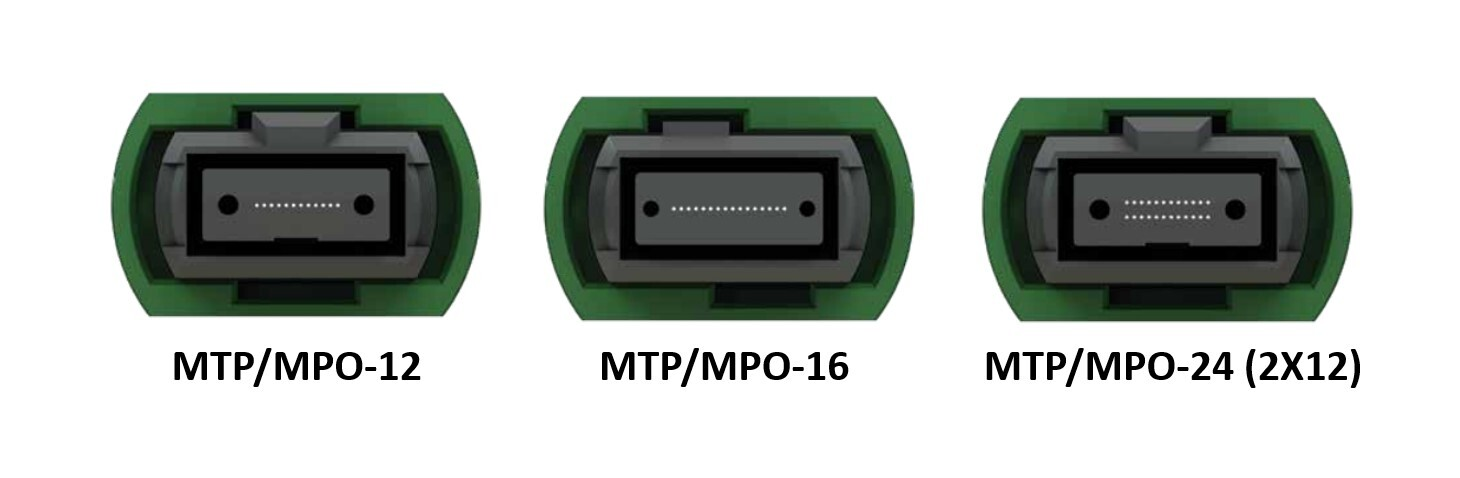
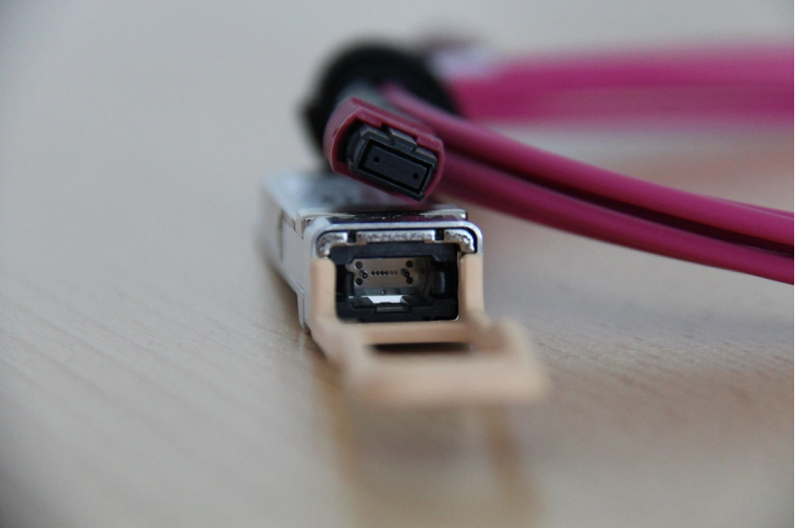
MPO/MTP connectors are divided into male (with guide pins) and female (without pins) types. Selecting the correct connector type is critical to ensuring proper mating and optimal optical performance.
Typically, optical transceivers with MPO/MTP interface is male type, which require female breakout MPO/MTP cables for proper connection. In trunk connections, one end should be male and the other female to achieve accurate alignment. Incorrect selection of connector type may lead to connection failure or increased insertion loss, affecting overall network performance.
Choosing the right breakout MPO/MTP cable is essential for building a reliable and efficient high density fiber network. As an industry leading fiber patch cable manufacturer, UnitekFiber is committed to delivering high quality MPO/MTP cables, LC/SC fiber patchcord, fiber optic pigtails, distribution fiber patchcord, providing comprehensive support for your network construction and upgrade needs. If you need any support, please kindly feel free to contact us via sales@unitekfiber.com
 5G 6G Fronthaul & Backhaul
View More
5G 6G Fronthaul & Backhaul
View More
 Data Center & Cloud Interconnect
View More
Data Center & Cloud Interconnect
View More
 Enterprise & Industrial Optical
View More
Enterprise & Industrial Optical
View More
 FTTx & Access Solutions
View More
FTTx & Access Solutions
View More
 Metro & Access Networks
View More
Metro & Access Networks
View More
 Optical Cabling Systems
View More
Optical Cabling Systems
View More
 Optical Transceivers & Interconnect
View More
Optical Transceivers & Interconnect
View More
 WDM & High-Capacity Transmission
View More
WDM & High-Capacity Transmission
View More
+86-755-21034367