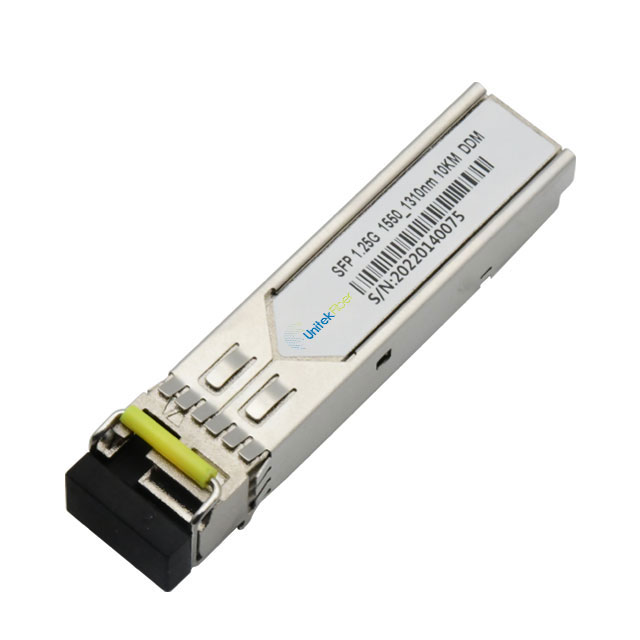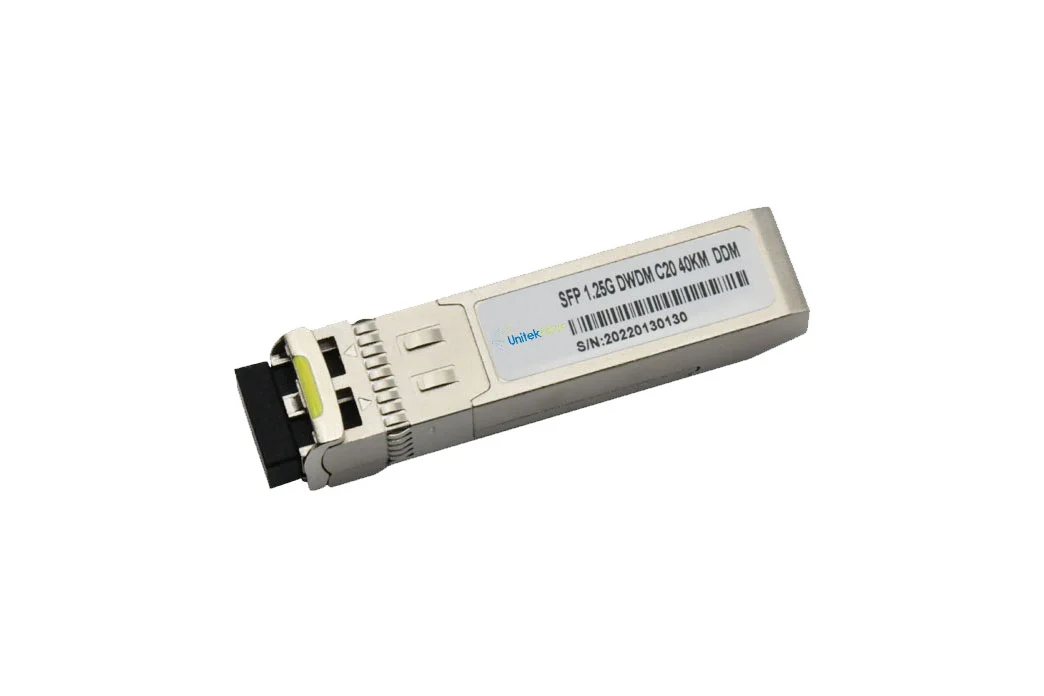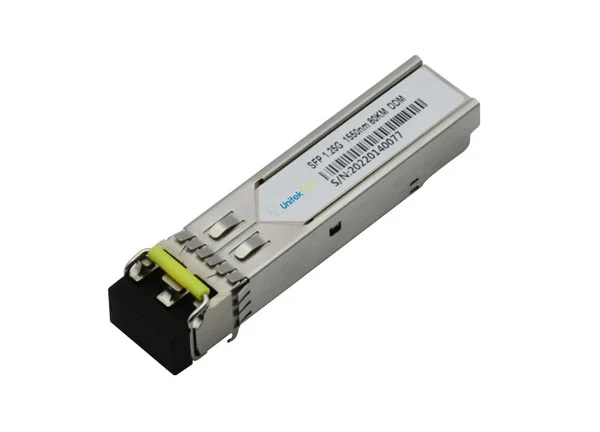

With the rapid development of data centers, the demand for high-speed, high-density data transmission is increasing. SFP (Small Form-factor Pluggable) transceivers, as a type of miniaturized, high-performance optical transceiver module, have become an important component of data center network connectivity.
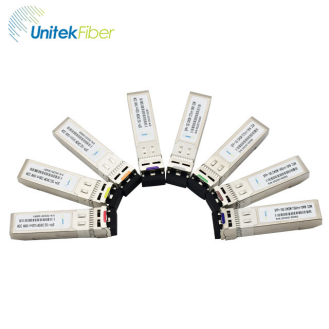
An SFP transceiver is a pluggable optical transceiver module that conforms to the SFF-8472 standard. It has a size of 10x10mm, making it smaller than traditional GBIC (Gigabit Interface Converter) modules. SFP modules support various data rates and distances for fiber optic connections, including 100Mbps, 1Gbps, and 10Gbps, and are suitable for a variety of network environments.
Compact design: SFP transceivers are small in size, saving space and facilitating deployment in high-density data center environments.
Flexibility: Supports multiple data rates and protocols, allowing for flexible selection based on network requirements.
Compatibility: Compatible with a variety of devices, including switches, routers, and servers.
Cost-effectiveness: Compared to other types of optical transceiver modules, SFP modules are less expensive, helping to reduce the total cost of ownership (TCO) for data centers.
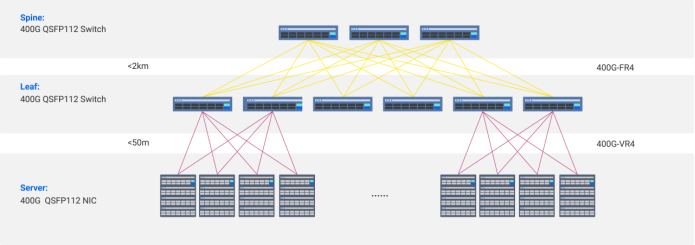
In data centers, the connections between servers are a core part of the network. SFP transceivers can be used to connect servers and switches, enabling high-speed data transmission. For example, using 10G SFP+ modules can provide a transmission rate of 10Gbps, meeting the needs of high-performance computing and big data processing.
A SAN is a network used for storing data in a data center. SFP modules can be used to connect Fibre Channel (FC) devices within a SAN, providing high-speed, reliable data transmission. SFP transceivers support various fiber types, including single-mode and multi-mode fiber, to accommodate different transmission distances and bandwidth requirements.
In a data center network architecture, the aggregation layer is responsible for connecting the access layer and the core layer. SFP transceivers can be used for connections between aggregation layer switches, improving network reliability and scalability. By using SFP modules, connections of different speeds and distances can be achieved, allowing for flexible adaptation to network upgrades and expansions.
As data centers grow in size, network expansion becomes inevitable. SFP transceivers can be used to expand networks, connecting new servers, storage devices, and network equipment. Due to the compatibility and flexibility of SFP modules, seamless network expansion can be easily achieved.
In cloud computing and virtualization environments, data centers need to handle a large number of virtual machines and virtual networks. SFP transceivers can be used to connect virtualization platforms and physical networks, providing high-speed, low-latency data transmission and ensuring the performance and stability of the virtualization environment.
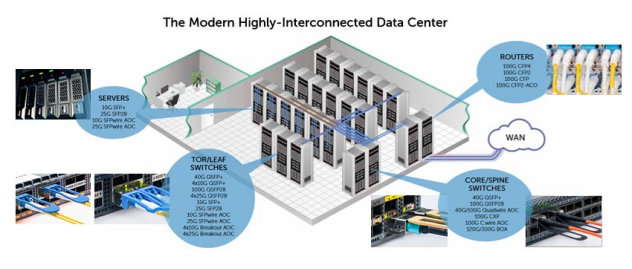
SFP transceivers come in various types, including SFP, SFP+, and SFP28, supporting different data rates and protocols. When choosing an SFP module, the following factors should be considered:
Data Rate: Choose the appropriate data rate based on the data center's bandwidth requirements, such as 1Gbps, 10Gbps, or higher.
Distance: Select the appropriate fiber optic cable type based on the connection distance, such as OM1, OM2, OM3, OM4, or single-mode fiber.
Compatibility: Ensure that the SFP module is compatible with the data center's equipment.
Cost: Consider the cost-effectiveness of the SFP transceiver and choose a product with a high price-performance ratio.
SFP transceivers are becoming increasingly popular in data centers due to their small size, high performance, and flexibility. With continuous technological advancements, SFP transceivers will continue to play a crucial role in data center network connectivity, supporting the high-speed, high-density, and high-reliability requirements of data centers. Please contact us at Email sales@unitekfiber.com,if you have any inquiry or need any need.
 5G 6G Fronthaul & Backhaul
View More
5G 6G Fronthaul & Backhaul
View More
 Data Center & Cloud Interconnect
View More
Data Center & Cloud Interconnect
View More
 Enterprise & Industrial Optical
View More
Enterprise & Industrial Optical
View More
 FTTx & Access Solutions
View More
FTTx & Access Solutions
View More
 Metro & Access Networks
View More
Metro & Access Networks
View More
 Optical Cabling Systems
View More
Optical Cabling Systems
View More
 Optical Transceivers & Interconnect
View More
Optical Transceivers & Interconnect
View More
 WDM & High-Capacity Transmission
View More
WDM & High-Capacity Transmission
View More
+86-755-21034367