
ADSS cables can typically span between 100 to 300 meters depending on fiber count, cable diameter, and environmental conditions. For example, a standard 48‑fiber ADSS cable supports up to 200 meters under moderate wind loads (35 m/s) according to IEC 60794‑1‑1 [9].
ADSS cables are all‑dielectric, meaning they contain no metallic components. This eliminates the risk of lightning strikes traveling along the cable, providing inherent immunity and reducing grounding requirements. In regions with high flash density, ADSS reduces maintenance costs by up to 40% compared to OPGW [10].
For 5G x‑haul, both ITU‑T G.652.D (standard single‑mode) and G.657.A2 (bend‑insensitive) fibers are recommended. G.657.A2 is advantageous in tight bends near towers, while G.652.D offers lower attenuation for longer spans. A study by OFS found that using G.657.A2 in 5G front‑haul reduces splice losses by 0.1 dB per connection [11].
 5G 6G Fronthaul & Backhaul
View More
5G 6G Fronthaul & Backhaul
View More
 Data Center & Cloud Interconnect
View More
Data Center & Cloud Interconnect
View More
 Enterprise & Industrial Optical
View More
Enterprise & Industrial Optical
View More
 FTTx & Access Solutions
View More
FTTx & Access Solutions
View More
 Metro & Access Networks
View More
Metro & Access Networks
View More
 Optical Cabling Systems
View More
Optical Cabling Systems
View More
 Optical Transceivers & Interconnect
View More
Optical Transceivers & Interconnect
View More
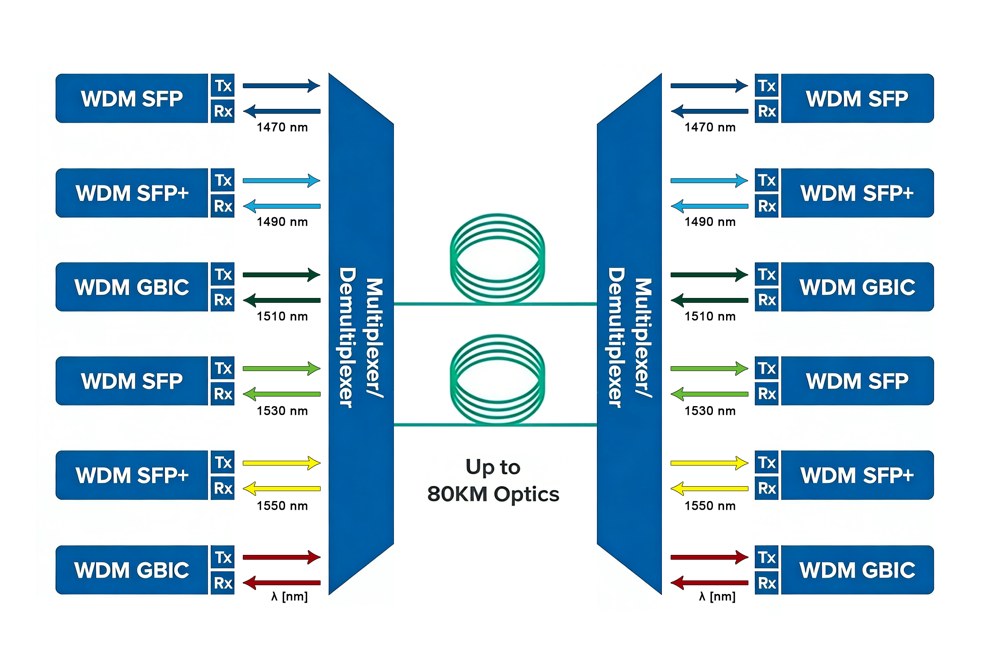 WDM & High-Capacity Transmission
View More
WDM & High-Capacity Transmission
View More
+86-755-21034367