
With rapid technological advancements, data centers are evolving from 100G and 400G toward the 800G era, driving an ever-growing demand for high-speed data transmission. Choosing efficient and reliable cabling solutions has therefore become essential for 800G data center infrastructure. This article explores the three mainstream cabling solutions for 800G data centers—Direct Attach Cables (DAC), Active Optical Cables (AOC), and fiber optic patch cords—and examines how they enhance performance and support the increasing demands of modern data centers.
Direct Attach Copper Cables (DAC) include Passive Copper Cables, Active Copper Cables (ACC), and Active Electrical Cables (AEC). They are significantly more cost-effective than optical fiber solutions and can substantially reduce cabling expenses in data centers. Compared with DAC cables, Active Optical Cables (AOC) are more compact form factor, offer lower bit error rates, and support longer transmission distances. Both DAC cables and AOC solutions are widely used for short-reach interconnections among NICs, switches, servers, supercomputers, cloud computing systems, and data centers.
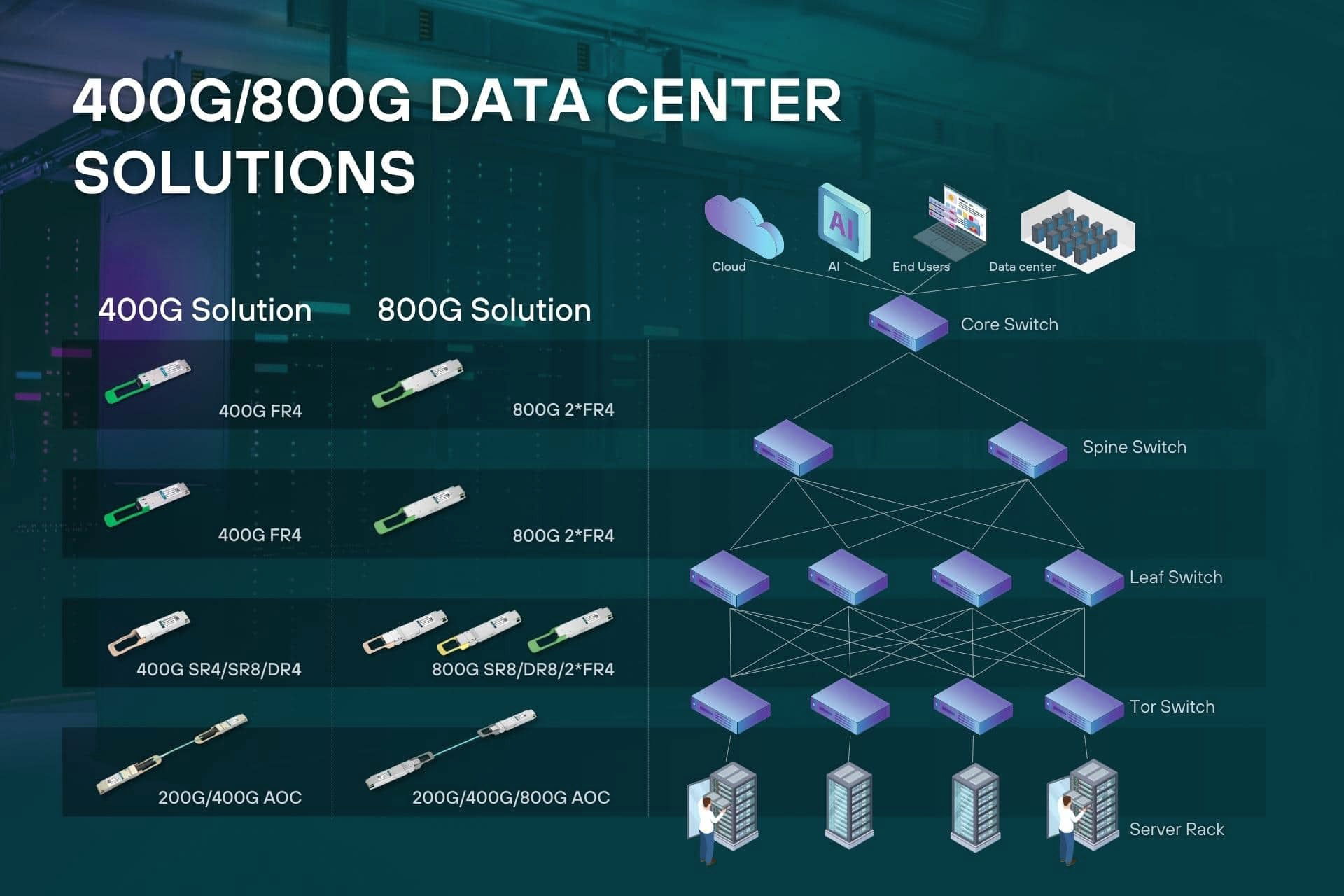
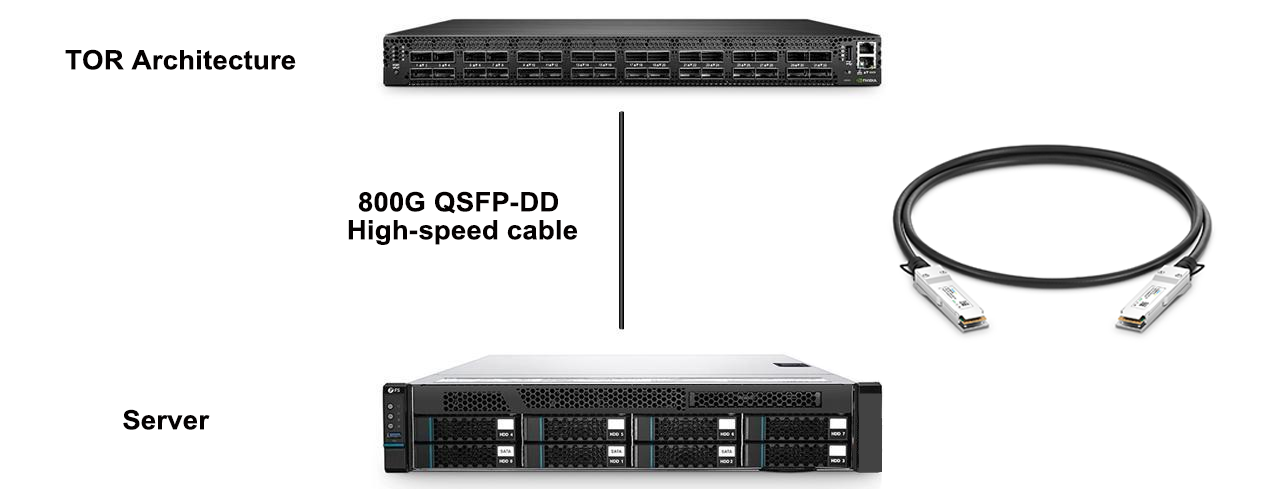
With the rise of large-scale and hyperscale data centers, power consumption per server rack has increased significantly while vertical cabling space have decreased. As a result, 800G data centers widely adopt DAC cabling solutions for intra-rack server connections. This solution deliver high-quality connectivity without requiring additional power. They are available in two configurations—direct-attach and breakout—to support OSFP and QSFP-DD form factors.
DAC cables are hot-swappable, feature low power consumption, and offer a small bend radius for flexible routing. They provide high stability, cost efficiency, space savings, and excellent heat dissipation, making them well-suited for data center cabling environments. DAC cables integrate seamlessly with switches, routers, and servers, ensuring flexible network design and compatibility for device interoperability.
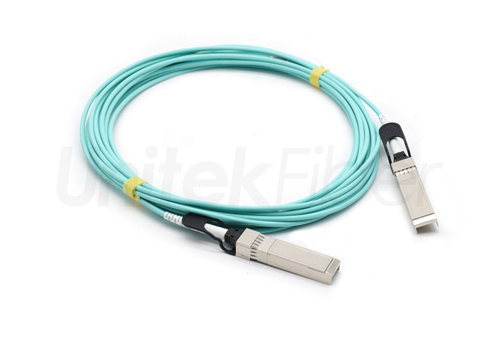
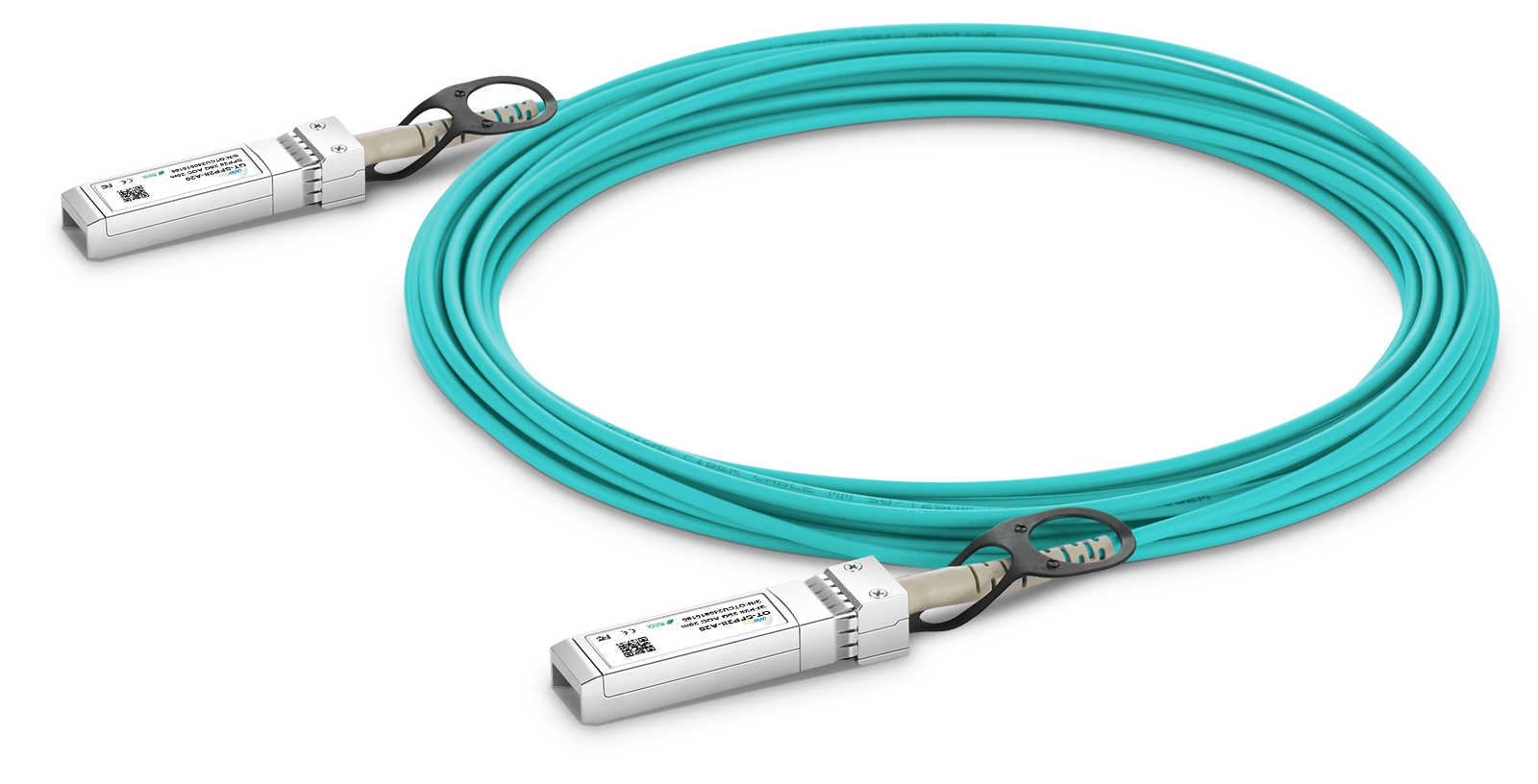
800G AOC cable optimizes performance by increasing bandwidth, reducing latency, and minimizing power consumption, making it ideally suited for decentralized data centers and cloud environments. In addition, the integration of VCSEL and PAM4 DSP technology boosts performance while reducing cost and system complexity.
Currently available 800G AOC cables support point-to-point interconnects of up to 800Gbps, achieving transmission distances of up to 100 meters. They also utilize breakout cabling to connect a single 800Gbps interface to two 400G QSFP-DD optical transceivers without requiring additional conversion or mapping. This makes them an excellent solution for linking next-generation switches operating at 800Gbps to existing 400 Gbps ports.
Compared to DAC and AOC cables, 800G fiber optic patch cords deliver superior performance and efficiency for high-speed data transmission, making them well-suited for high-density cabling solutions. They offer clear advantages in latency, power consumption, and long-distance transmission, ensuring stability and reliability over extended distances.
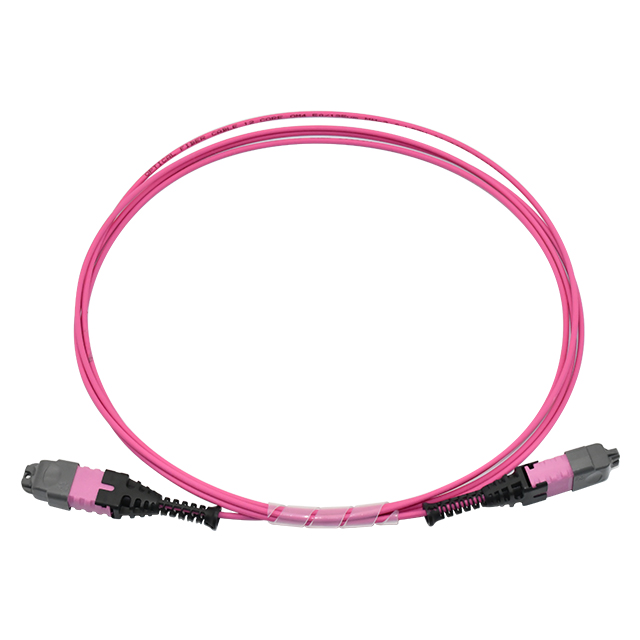
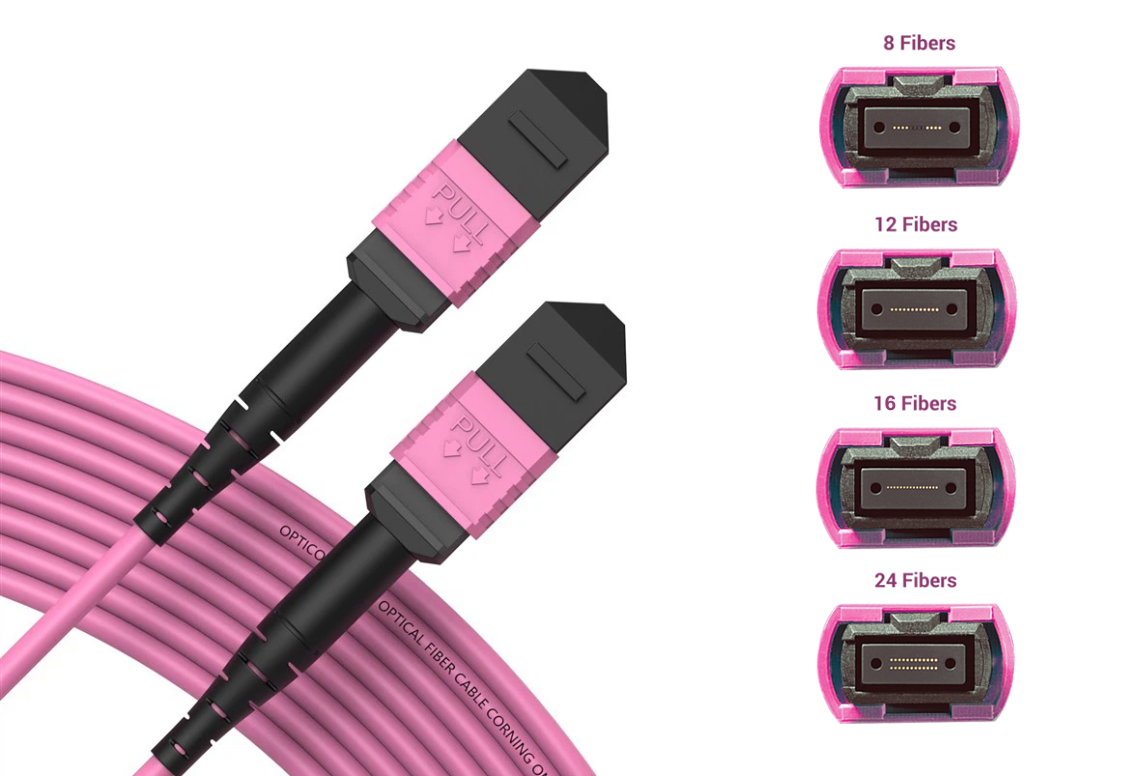
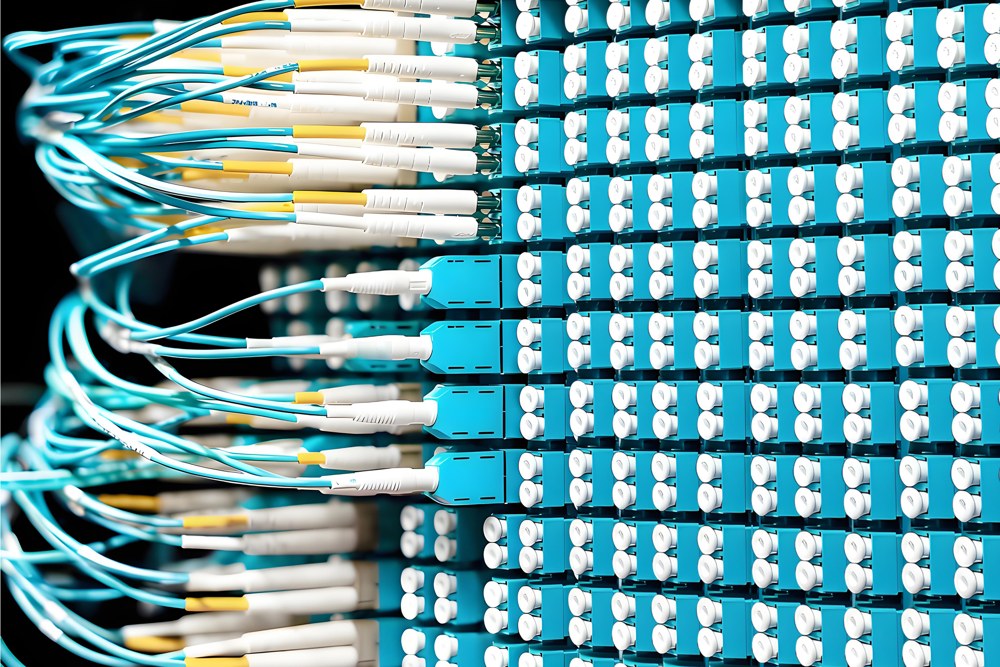
MTP/MPO fiber patchcords are commonly available in 8, 12, 16, and 24-fiber counts. The 12-fiber MTP/MPO fiber patchcord is an ideal choice for data center cabling, offering space savings and simplified cable management. The 16-fiber MTP/MPO fiber optic patch cord is specifically designed for direct connection with 800G QSFP-DD/OSFP DR8 and 800G OSFP XDR8 optical transceivers.
MTP/MPO cabling solutions provide high density, reliability, and flexibility for data center interconnections, offering plug-and-play deployment, ease of management, excellent bend and crush resistance, and support seamless upgrades to 100G/400G/800G, making them a preferred option for modern 800G data center cabling. Additionally, US Conec MTP connectors are fully comply with the MPO standard and deliver superior performance compared to standard MPO connectors.
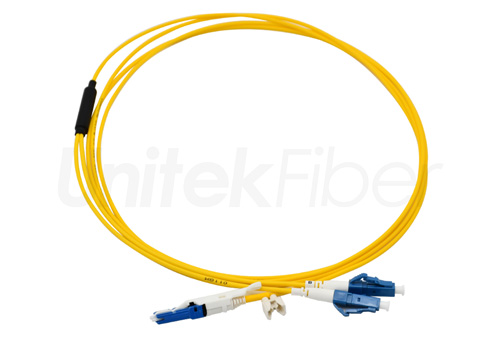
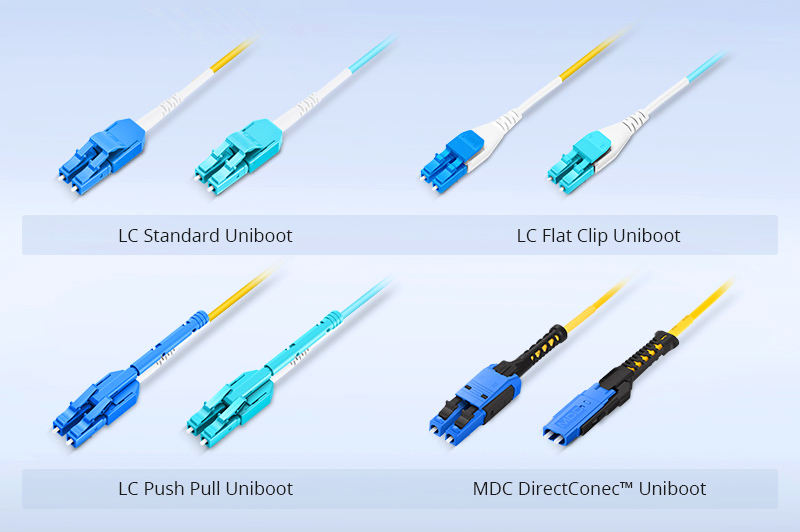
Uniboot fiber patchcords transmit two fiber signals over a single cable, effectively reducing cabling volume. Featuring Very Small Form Factor (VSFF) connectors, they support 200G/400G/800G Ethernet and increase fiber density by 1.5 times compared with standard LC duplex cabling. These fiber patch cords are specifically designed for 200G/400G/800G data centers that require space savings and simplified cable management. With a smaller, lighter construction, Uniboot fiber optic patch cords are easy to install and maintain, significantly enhancing overall network performance.
Optimizing cabling for 800G data centers requires selecting the right solution based on specific network needs. DAC cables offer cost-effective short-reach connectivity, AOC cables provide high-speed and low-latency performance, and fiber patchcords deliver exceptional low latency and reliability over long distances. By balancing factors such as bandwidth, distance, and cost, data centers can improve overall efficiency and facilitate future network infrastructure upgrades and expansion. For more information on customized cabling solutions and professional advice, please feel free to contact UnitekFiber to explore comprehensive range of cabling products and solutions.
 5G 6G Fronthaul & Backhaul
View More
5G 6G Fronthaul & Backhaul
View More
 Data Center & Cloud Interconnect
View More
Data Center & Cloud Interconnect
View More
 Enterprise & Industrial Optical
View More
Enterprise & Industrial Optical
View More
 FTTx & Access Solutions
View More
FTTx & Access Solutions
View More
 Metro & Access Networks
View More
Metro & Access Networks
View More
 Optical Cabling Systems
View More
Optical Cabling Systems
View More
 Optical Transceivers & Interconnect
View More
Optical Transceivers & Interconnect
View More
 WDM & High-Capacity Transmission
View More
WDM & High-Capacity Transmission
View More
+86-755-21034367