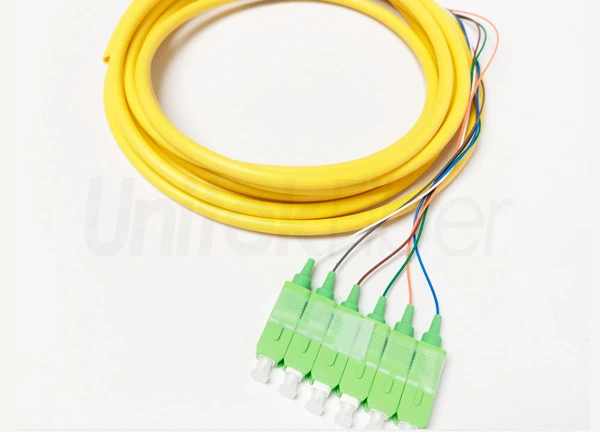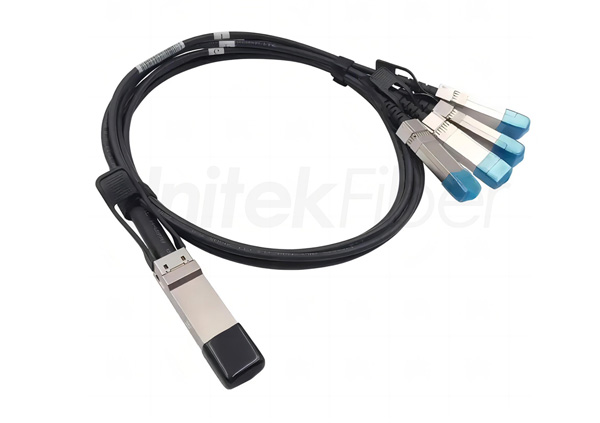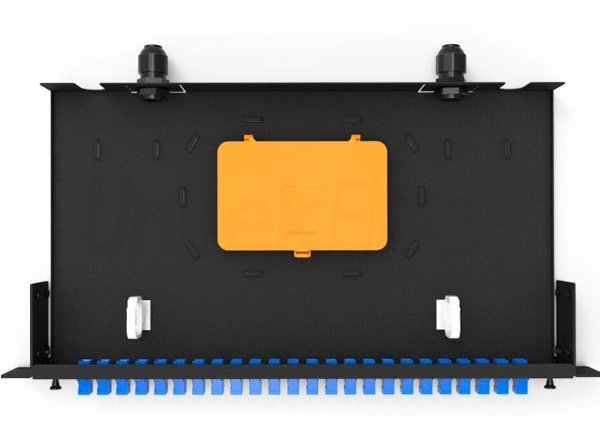

Selecting armored and waterproof fiber patch cables for outdoor Outside Plant (OSP) environments requires balancing mechanical protection against moisture ingress. Engineering teams must prioritize IP67 or IP68 ratings alongside stainless steel tape or braid armoring to mitigate signal loss caused by environmental stress. This technical guide evaluates specific standards to ensure 25-year network longevity in harsh deployments.
IP68 certification is essential for components subjected to temporary submersion or high-pressure water jets.
Stainless steel micro-armoring provides superior crush resistance (up to 3000N/100mm) without compromising flexibility.
ITU-T G.657.A2 fibers are preferred for compact outdoor enclosures due to their 7.5mm minimum bend radius.
Thermoplastic Polyurethane (TPU) jackets offer 40% better abrasion resistance compared to standard Polyethylene (PE) in industrial zones.
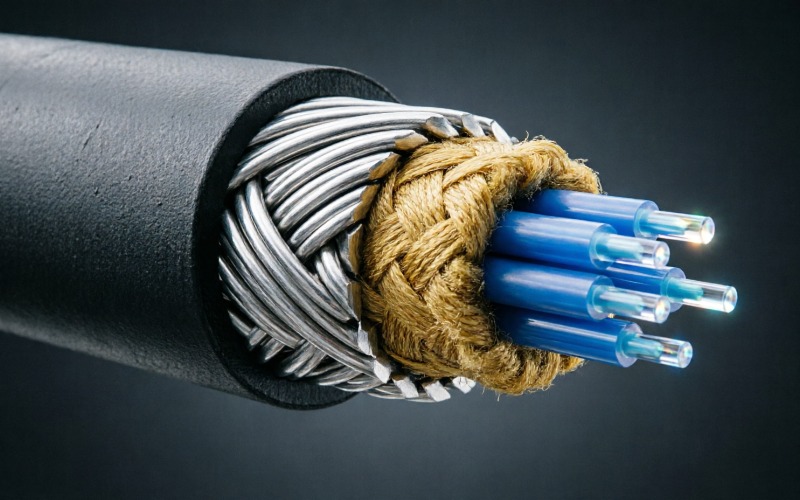
Outdoor fiber deployments face unique mechanical threats that indoor cabling rarely encounters. Rodent damage remains a leading cause of network downtime in rural and suburban infrastructure. According to a 2024 study by the Fiber Optic Association (FOA), mechanical damage from wildlife accounts for nearly 12% of all unscheduled maintenance in aerial and buried plant environments. Armored and waterproof fiber patch cables utilize a protective layer, typically a helical stainless steel tape, to prevent rodent incisors from reaching the glass core.
Beyond wildlife, crush resistance is critical during installation and long-term service. In the TIA-568.3-D standard, cables must withstand specific compressive loads to maintain signal integrity. Standard patch cords often fail when compressed by heavy mounting hardware or environmental debris. Armored variants distribute these loads across the metallic layer, protecting the delicate 125μm cladding from micro-bending. This protection ensures that the attenuation remains below the 0.35 dB/km threshold required for high-speed 400G transmissions.
The International Electrotechnical Commission (IEC) defines the IP rating system under standard IEC 60529. For outdoor fiber applications, the two digits represent protection against solid particles and liquids respectively. An IP68 rating indicates that the cable assembly is dust-tight and protected against continuous immersion in water under conditions specified by the manufacturer. Typically, this means the connector can withstand submersion at depths of 1.5 meters for over 30 minutes without liquid ingress into the optical ferrule.
Moisture ingress is a silent killer of optical networks. When water reaches the glass surface, it can cause hydroxyl ion absorption, leading to a phenomenon known as "hydrogen darkening." Research from the University of Southampton (.edu) indicates that hydrogen diffusion can increase attenuation by up to 0.5 dB at the 1383nm water peak. To combat this, high-quality waterproof patch cables utilize O-ring seals and gel-blocked components. These features ensure that the refractive index remains stable across varying humidity levels found in coastal or tropical regions.
Micro-armoring technology uses a thin layer of SUS304 or SUS316 stainless steel. This layer provides a high strength-to-weight ratio, allowing the cable to maintain a small outer diameter. According to internal laboratory testing at Unitekfiber, micro-armored cables demonstrate a 50% increase in tensile strength compared to standard aramid-reinforced cables. This added strength is vital for vertical runs on telecommunication towers where wind loading and ice accumulation can stress the assembly.
Furthermore, the armoring provides an EMI/RFI shielding effect. In environments like electrical substations or near high-voltage lines, metallic armor helps mitigate interference that might affect the electronic components of the transceiver. While the fiber itself is immune to electromagnetic interference, the protective housing of the armored connector prevents localized static buildup. This holistic approach to shielding ensures a stable signal-to-noise ratio in heavy industrial zones.
| Feature | LSZH (Indoor) | PE (Outdoor Standard) | TPU (Industrial/Outdoor) |
|---|---|---|---|
| Water Resistance | Low | High | Excellent |
| UV Resistance | Moderate | High | Excellent |
| Abrasion Resistance | Low | Moderate | Very High |
| Operating Temperature | -20°C to +70°C | -40°C to +85°C | -45°C to +105°C |
| Chemical Resistance | Poor | Good | Excellent |
When selecting fibers for outdoor patch cables, engineers must choose between ITU-T G.652.D and G.657.A1/A2 standards. The G.652.D fiber is the industry standard for long-haul transmission, offering a balance of cost and performance. However, for outdoor enclosures where space is at a premium, G.657.A2 (Bend Insensitive Single Mode Fiber) is the superior choice. This fiber type allows for a minimum bend radius of 7.5mm, compared to the 30mm required by traditional G.652.D fibers.
A study published by the IEEE (Institute of Electrical and Electronics Engineers) shows that using bend-insensitive fiber reduces macro-bending loss by nearly 90% in tight-radius applications. For OSP engineers, this means fewer failures during the cable routing phase within small-form-factor waterproof boxes. By choosing G.657.A2, technicians can ensure that the total link budget remains within the 1.0 dB loss margin typically allocated for local distribution networks.
Thermoplastic Polyurethane (TPU) is often 20% to 35% more expensive than standard Polyethylene (PE) or Polyvinyl Chloride (PVC). However, the Total Cost of Ownership (TCO) is frequently lower in harsh environments. According to data from the U.S. Department of Transportation (.gov), cable failures in roadside cabinets cost an average of $2,500 per incident when considering truck rolls and labor. TPU jackets resist oil, ozone, and microbial growth, which are common in underground conduits and coastal installations.
In contrast, PE jackets are excellent for direct burial due to their moisture barrier properties but lack the flexibility required for frequent handling. If the patch cable will be moved or reconfigured often, such as in temporary military or broadcast setups, TPU is the logical investment. Engineers must weigh the initial capital expenditure against the operational expense of replacing degraded cables every 3-5 years. In high-reliability sectors, the durability of TPU armoring is a prerequisite for mission-critical uptime.
Testing armored and waterproof fiber patch cables requires specialized equipment to ensure the sealing integrity is not compromised. Standard Insertion Loss (IL) and Return Loss (RL) tests must be performed using an Optical Time Domain Reflectometer (OTDR). According to IEC 61300-3-34, the maximum insertion loss for a high-quality single-mode connector should be ≤0.30 dB. If the reading exceeds this, it may indicate a misalignment caused by debris within the waterproof connector housing.
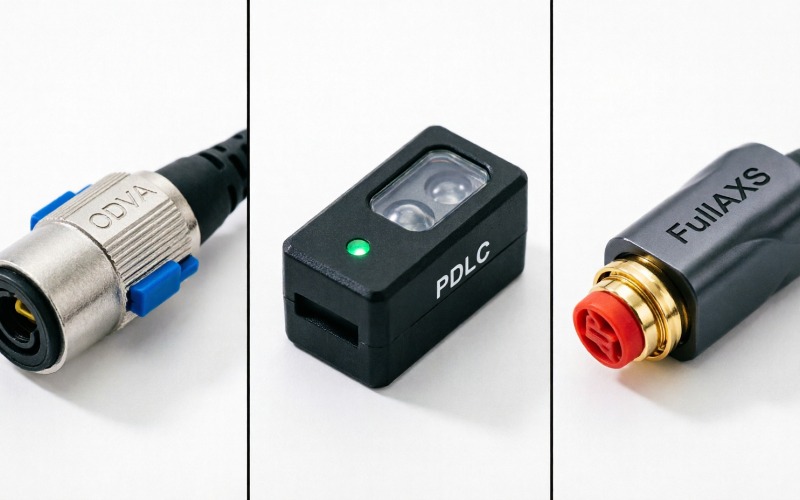
Field engineers should also verify the Return Loss, which should be ≥50 dB for UPC connectors and ≥60 dB for APC connectors. Low return loss often points to poor physical contact or contamination. When working with waterproof assemblies like ODVA or PDLC, it is critical to use a digital fiber inspection scope before mating. Even a single speck of dust can be trapped within the waterproof seal, causing permanent damage to the ceramic ferrule during the connection process.
No, indoor armored cables lack the UV-resistant jackets and moisture-blocking materials required for outdoor exposure. Indoor LSZH (Low Smoke Zero Halogen) jackets will degrade rapidly under solar radiation, leading to cracks that allow water ingress. Always ensure the cable is specifically rated for OSP use.
The choice depends on the density of the equipment. LC connectors are favored for high-density SFP+ and QSFP transceivers, while SC connectors offer a more robust locking mechanism. For waterproof applications, both are typically housed within an outer protective shell like the FullAXS or AARC systems to provide IP67 protection.
When properly installed and maintained, high-quality armored and waterproof fiber patch cables are designed for a 20 to 25-year service life. This lifespan is contingent on using UV-stabilized materials and ensuring that the bend radius is never exceeded during the installation process.
 5G 6G Fronthaul & Backhaul
View More
5G 6G Fronthaul & Backhaul
View More
 Data Center & Cloud Interconnect
View More
Data Center & Cloud Interconnect
View More
 Enterprise & Industrial Optical
View More
Enterprise & Industrial Optical
View More
 FTTx & Access Solutions
View More
FTTx & Access Solutions
View More
 Metro & Access Networks
View More
Metro & Access Networks
View More
 Optical Cabling Systems
View More
Optical Cabling Systems
View More
 Optical Transceivers & Interconnect
View More
Optical Transceivers & Interconnect
View More
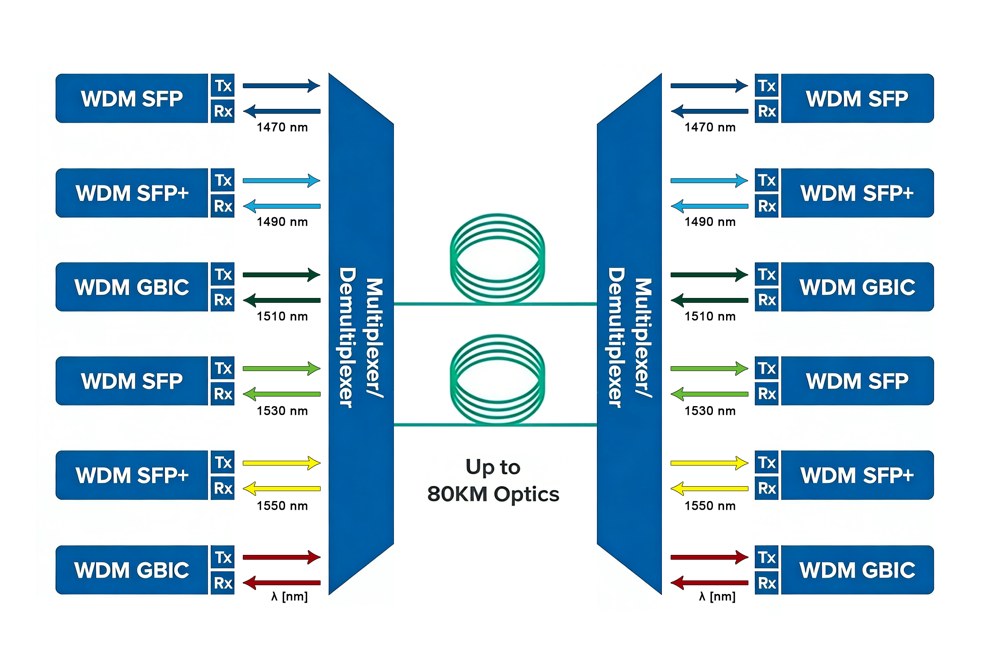 WDM & High-Capacity Transmission
View More
WDM & High-Capacity Transmission
View More
+86-755-21034367